Embracing a low carb lifestyle doesn’t mean saying goodbye to delicious food or feeling deprived. In fact, it’s an opportunity to discover exciting new ingredients and cooking methods that can enhance your health and culinary experience. Many people find that smart low carb swaps are the key to sustainable healthy eating, helping them manage weight, improve energy, and support overall well-being.
If you’re looking to cut carbs without sacrificing flavor or variety, you’re in the right place. We’ve compiled 9 incredibly clever and easy low carb substitutions that will make your meals more vibrant, nutritious, and satisfying. Get ready to revitalize your plate and enjoy guilt-free goodness!
The 9 Smart Low Carb Swaps to Transform Your Meals
Here are nine simple yet impactful changes you can make to reduce your carbohydrate intake while keeping your meals delicious and fulfilling.
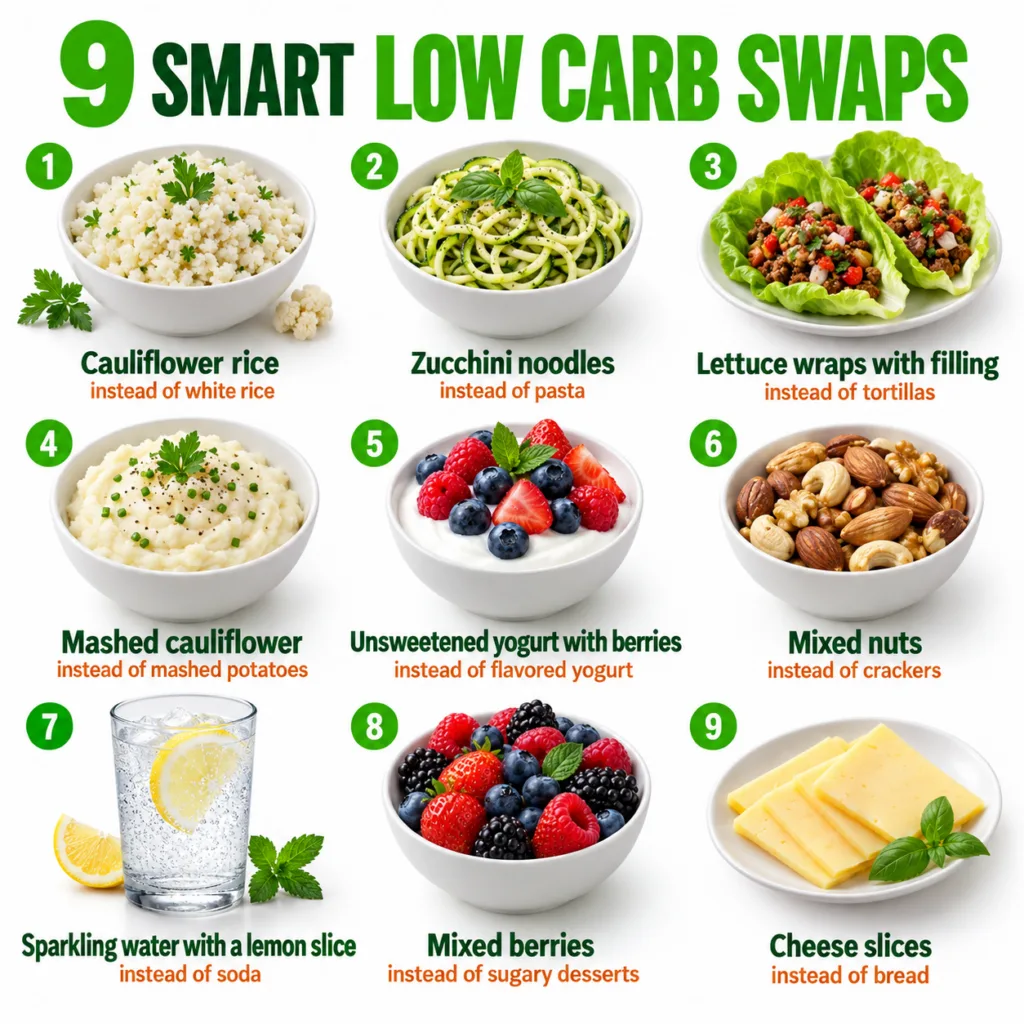
1. Cauliflower Rice Instead of White Rice
Cauliflower rice has become a staple for anyone looking to reduce carbs without missing out on the texture and versatility of traditional rice. Made by finely grating or food-processing cauliflower florets, it’s incredibly low in calories and carbs, while being rich in Vitamin C, K, and fiber. It’s an excellent base for stir-fries, curries, or as a side dish.
- How to use: Sauté in a pan with a little olive oil until tender, or microwave for a quick preparation. Season with herbs and spices to match your meal.
- Benefits: Supports digestion, provides antioxidants, and significantly lowers the glycemic load of your meal.
2. Zucchini Noodles Instead of Pasta
Zucchini noodles, often called ‘zoodles,’ are a fantastic gluten-free and low-carb alternative to wheat pasta. They offer a refreshing crunch and a mild flavor that pairs beautifully with a wide range of sauces, from pesto to marinara. Using a spiralizer makes preparation a breeze.
- How to use: Lightly sauté or steam zoodles for just a few minutes until al dente. Overcooking can make them watery. Toss with your favorite sauce and protein.
- Benefits: Hydrating, rich in vitamins A and C, and adds a serving of vegetables to your meal without heavy carbs.
3. Lettuce Wraps Instead of Bread
Swap out carb-heavy bread, buns, or tortillas for crisp lettuce leaves. Large, sturdy leaves from butter lettuce, romaine, or iceberg work perfectly as edible wrappers for burgers, tacos, or sandwich fillings. They provide a refreshing crunch and help you enjoy your favorite flavors without the extra carbs.
- How to use: Choose large, fresh lettuce leaves. Fill with cooked ground meat, grilled chicken, tuna salad, or any sandwich filling.
- Benefits: Adds fresh greens to your diet, virtually carb-free, and keeps your hands clean while eating.
4. Berry Yogurt Instead of Fruit-on-the-Bottom Yogurt
Many fruit-on-the-bottom yogurts are loaded with added sugars. A smarter swap is to choose plain, unsweetened Greek yogurt and add your own fresh berries. Berries like blueberries, raspberries, and strawberries are relatively low in carbs, high in fiber, and packed with antioxidants.
- How to use: Combine 1/2 cup plain Greek yogurt with 1/4 cup mixed fresh berries. Sweeten with a tiny dash of stevia or monk fruit if desired.
- Benefits: Controls sugar intake, boosts protein (from Greek yogurt), and provides natural vitamins and fiber from the berries.
5. Avocado Instead of Croutons
Croutons can add unnecessary carbs and unhealthy fats to your salad. Diced avocado, on the other hand, provides a creamy texture, healthy monounsaturated fats, and a wealth of vitamins and minerals. It adds richness and satiety to any salad or soup.
- How to use: Dice 1/4 to 1/2 an avocado and add to salads, scrambled eggs, or even atop a bowl of chili.
- Benefits: Promotes heart health, aids nutrient absorption, and keeps you feeling full longer thanks to its healthy fat content.
6. Cheese Crisps Instead of Crackers
When you’re craving a crunchy snack, skip the carb-laden crackers and opt for homemade cheese crisps. They are incredibly easy to make and offer a satisfying crunch with a savory flavor that’s perfect for dipping or enjoying on their own. Choose low-moisture, full-fat cheese varieties like cheddar, Parmesan, or provolone.
- How to use: Place small piles of shredded cheese on a parchment-lined baking sheet and bake at 350°F (175°C) for 5-8 minutes until golden and crispy.
- Benefits: High in protein and healthy fats, virtually carb-free, and a great source of calcium.
7. Almond Flour Instead of Wheat Flour
For baking and cooking, almond flour is an excellent low-carb, gluten-free alternative to traditional wheat flour. It’s made from finely ground almonds, making it rich in protein, fiber, and healthy fats. Its delicate flavor and texture make it suitable for a variety of recipes.
- How to use: Substitute for wheat flour in recipes like muffins, pancakes, and coatings for meats. Note that it behaves differently than wheat flour, so look for recipes specifically designed for almond flour.
- Benefits: Lower in carbs, higher in protein and fiber, and a good source of Vitamin E and magnesium.
8. Nut Butter Instead of Sugary Spreads
Many commercially available spreads contain hidden sugars. Opt for natural, unsweetened nut butter (almond, peanut, or cashew) as a low carb, protein-rich alternative. Always check the ingredient list to ensure there are no added sugars or unnecessary oils.
- How to use: Spread on celery sticks, apple slices, or add a spoonful to smoothies for a boost of healthy fats and protein.
- Benefits: Provides healthy fats, protein, and essential nutrients like Vitamin E, helping to keep you satisfied.
9. Sparkling Water with Lemon Instead of Soda
Sugary sodas are a major source of empty calories and carbs. A simple yet powerful swap is sparkling water with a squeeze of fresh lemon or lime. It offers the fizziness without any of the sugar or artificial ingredients, keeping you hydrated and refreshed.
- How to use: Add a slice of lemon, lime, cucumber, or a few mint leaves to plain sparkling water for a flavorful, carb-free drink.
- Benefits: Excellent for hydration, helps cut down on sugar intake, and supports overall health without artificial additives.
Why Embrace Low Carb Swaps?
Incorporating low carb swaps into your diet can offer a multitude of benefits beyond just weight management. These alternatives often come with increased fiber, healthy fats, and essential nutrients, contributing to:
- Stable Blood Sugar: Reducing carbohydrate intake can help prevent spikes and crashes, leading to more sustained energy throughout the day.
- Improved Satiety: Foods rich in protein, fiber, and healthy fats tend to keep you feeling full longer, which can help in managing appetite.
- Enhanced Nutrient Intake: Many low carb swaps, like vegetables and nuts, are nutrient-dense, providing vital vitamins and minerals.
- Increased Energy Levels: By stabilizing blood sugar and providing sustained energy, many people experience improved focus and vitality.
Making Smart Swaps a Lifestyle
Transitioning to a low carb lifestyle through smart swaps doesn’t have to be drastic. Start small, try one or two swaps at a time, and gradually integrate more as you discover what works best for you. Focus on whole, unprocessed foods, and always read nutrition labels to avoid hidden sugars and carbs. These simple changes can lead to significant improvements in your health and well-being, making healthy eating both enjoyable and sustainable.
Final Thoughts
These 9 smart low carb swaps are a testament to how flavorful and varied a low carb diet can be. By replacing high-carb staples with nutrient-dense alternatives, you’re not just cutting carbs; you’re upgrading your nutrition, boosting your energy, and paving the way for a healthier, more vibrant you. Start experimenting with these swaps today and discover a world of delicious possibilities!
Medical Disclaimer
The information provided in this article is for general knowledge and informational purposes only, and does not constitute medical advice. It is essential to consult with a qualified healthcare professional or registered dietitian before making any significant dietary changes, especially if you have existing health conditions or concerns. Individual nutritional needs may vary.