Most people walk past comfrey (Symphytum officinale) in their gardens or local herbal shops without realizing the potent, natural remedy held within its fuzzy leaves and roots. Often called ‘knitbone,’ this herb has a long history in traditional practices for its remarkable ability to support the body’s natural healing processes, especially when it comes to soothing minor aches, sprains, and skin irritations.
However, despite its traditional fame, comfrey is a plant that demands respect and proper handling. While widely celebrated for external applications, one small preparation mistake or misunderstanding of its properties can change its effectiveness, or worse, lead to misuse. We’re going to dive deep into how to safely and effectively harness comfrey’s potential, focusing on a versatile preparation: comfrey infused oil.
 From garden to bottle: The versatile comfrey plant and its infused oil.
What It Is: Comfrey, the ‘Knitbone’ Herb
Comfrey, scientifically known as Symphytum officinale, is a perennial herb native to Europe and Asia. Its common name, ‘knitbone,’ points directly to its historical use in traditional folk medicine for supporting bone and tissue health. The plant is characterized by its large, hairy leaves and bell-shaped flowers that can range in color from purple to white. The key compounds in comfrey, particularly allantoin, are believed to contribute to its tissue-regenerative properties.
However, it’s crucial to understand that comfrey contains pyrrolizidine alkaloids (PAs), which can be toxic to the liver if ingested. For this reason, comfrey should NEVER be taken internally. All uses discussed here are strictly for external application. When used topically, comfrey’s PAs are generally not absorbed into the bloodstream in significant amounts, making it a safe and effective external remedy when used correctly.
Ingredients for Comfrey Infused Oil
Making your own comfrey infused oil is a straightforward process, allowing you to capture the beneficial compounds of the plant in a soothing carrier. Here’s what you’ll need:
- Comfrey Plant Material: You can use either fresh or thoroughly dried leaves, or even roots. Fresh leaves are often preferred for their ease of access during growing season, but dried material is excellent for year-round use and can offer a more concentrated infusion.
- Carrier Oil: A good quality, cold-pressed carrier oil. Popular choices include:
- Olive Oil: Affordable, stable, and widely available.
- Sweet Almond Oil: Lighter texture, good for sensitive skin.
- Jojoba Oil: Mimics skin’s natural sebum, very stable.
- Sunflower Oil: Inexpensive and rich in Vitamin E.
Approximate Measurements
- For Fresh Comfrey: Roughly fill a clean, dry glass jar about two-thirds to three-quarters full with chopped fresh leaves and/or roots.
- For Dried Comfrey: Fill a clean, dry glass jar about half full with dried comfrey leaves and/or roots.
- Carrier Oil: Enough to completely cover the comfrey material, leaving about an inch of headspace at the top of the jar.
Formula / Recipe: Comfrey Infused Oil (Warm Infusion Method)
While cold infusion is possible, a gentle warm infusion extracts the beneficial compounds more efficiently, especially from roots, without degrading the oil or comfrey too much.
Step-by-Step Method
- Prepare Your Comfrey: If using fresh comfrey, wash the leaves gently and then spread them out to dry completely for at least 24-48 hours. This step is critical to prevent mold. Chop the leaves and/or roots into small pieces (about 1/2 to 1 inch). If using dried comfrey, simply ensure it’s free from debris.
- Fill the Jar: Place your prepared comfrey material into a clean, dry, heat-safe glass jar (like a Mason jar).
- Cover with Oil: Pour your chosen carrier oil over the comfrey, making sure all plant material is submerged. Use a clean knife or spoon to release any air bubbles, pressing the plant material down if necessary. The oil should cover the plant material by at least an inch to prevent spoilage.
- Set Up a Double Boiler: Place a folded cloth or canning ring at the bottom of a saucepan. Place the open jar of comfrey and oil on top of the cloth. Fill the saucepan with water, ensuring the water level comes about halfway up the side of your jar.
- Gentle Heat: Heat the water in the saucepan on low heat. The goal is a very gentle warmth, not boiling. You want the oil in the jar to be warm to the touch, not hot. Maintain this gentle heat for 2-4 hours. Do not let the water boil vigorously.
- Cool and Strain: Carefully remove the jar from the saucepan. Once cooled, tightly cap the jar and let it sit in a cool, dark place for another 1-2 weeks, shaking gently daily. After this period, strain the oil through a fine-mesh sieve lined with cheesecloth. Squeeze out every last drop of oil from the plant material.
- Store: Transfer the strained comfrey infused oil into clean, dark glass bottles. Label clearly with the date and ingredients.
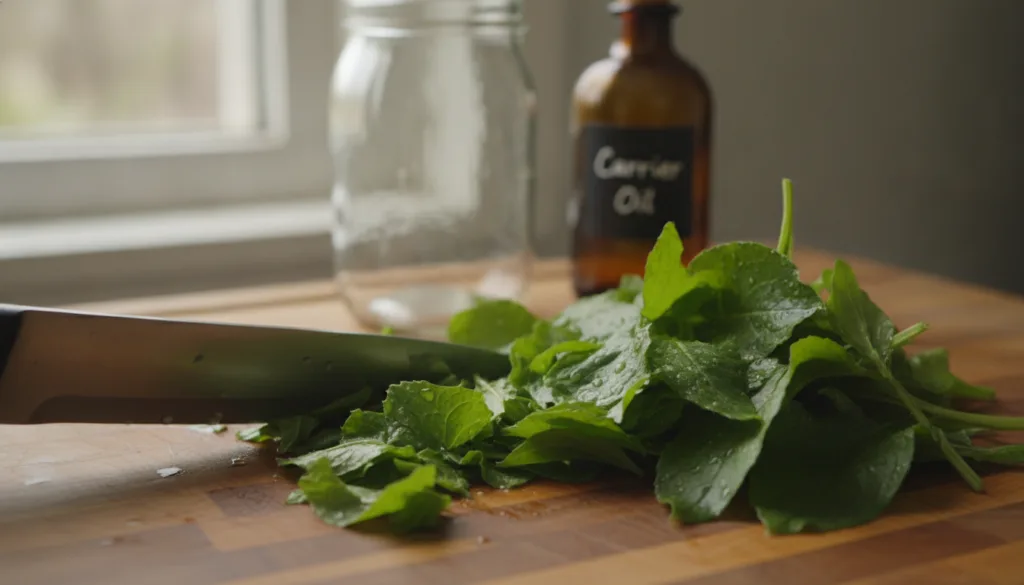 Properly preparing comfrey leaves is the first step to a potent infused oil.
Fresh vs. Dried Comfrey Comparison
FeatureFresh ComfreyDried ComfreyAvailabilitySeasonal (growing season)Year-roundPreparationRequires thorough drying to prevent moldReady to usePotencyPotentially higher if used quickly after harvest and proper dryingConcentrated, reliable potencyShelf LifeHigher risk of spoilage if not dried correctlyLower risk of spoilage in infusionVolume NeededMore volume needed to fill jar (due to water content)Less volume needed (concentrated)
How to Use Comfrey Infused Oil
Comfrey infused oil is a versatile topical remedy. Remember, it is for external use only.
- For Minor Bruises and Sprains: Gently massage a small amount of oil into the affected area. The allantoin in comfrey is believed to help support tissue repair and reduce discomfort.
- Muscle Soreness: Apply to tired or sore muscles after exertion.
- Dry, Irritated Skin: Can be used to soothe dry patches or minor skin irritations. Always perform a patch test first.
- Joint Discomfort: Massage around joints to help ease minor stiffness or discomfort.
How Often to Use
Apply 2-3 times a day to the affected area. Continue use for a few days or until the discomfort subsides. For chronic issues, consult with a healthcare professional before prolonged use.
How to Buy / How to Choose Ingredients
- Comfrey: If harvesting from your garden, ensure it’s positively identified as Symphytum officinale and hasn’t been sprayed with pesticides or herbicides. If buying, seek out reputable herbal suppliers for dried leaves or roots.
- Carrier Oils: Choose cold-pressed, organic oils whenever possible. Quality matters for the efficacy and shelf life of your infused oil.
Quick Tip: Labeling is Key!
Always label your finished infused oil with the date it was made and the ingredients used. This helps you track its freshness and avoid confusion.
Storage
Store your comfrey infused oil in a cool, dark place, ideally in dark glass bottles. This helps to protect it from light degradation, which can cause the oil to go rancid faster. Properly stored, comfrey infused oil can last for up to 1 year, or as long as the shelf life of your carrier oil, whichever comes first. If it smells rancid or develops any mold, discard it immediately.
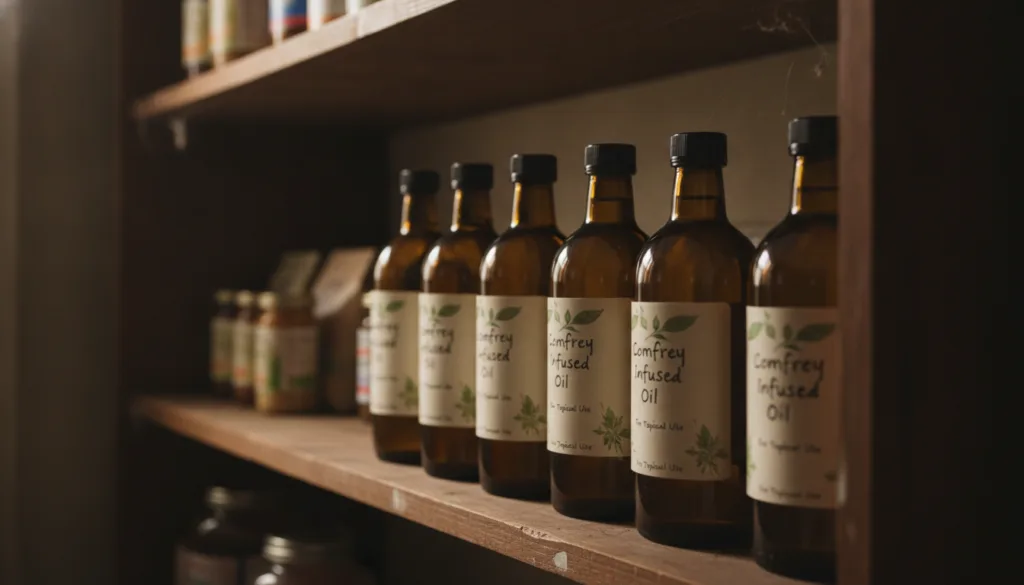 Store your comfrey oil in dark bottles in a cool, dark place for maximum shelf life.
Practical Tips
- Patch Test: Before widespread application, always test a small amount of the oil on a discreet area of your skin to check for any allergic reaction.
- Sterilize Your Equipment: Ensure all jars, bottles, and utensils are thoroughly cleaned and sterilized before use to prevent bacterial growth and extend shelf life.
- Dry Fresh Leaves Completely: This cannot be stressed enough. Any residual moisture can lead to mold and ruin your batch.
- Use a Filter: For a clearer oil, filter it twice. Once through cheesecloth and then again through an unbleached coffee filter.
Common Mistakes
Ignoring these common pitfalls can impact both the safety and effectiveness of your comfrey oil:
- Using Comfrey Internally: This is the most dangerous mistake due to the pyrrolizidine alkaloids. Always remember: external use ONLY.
- Not Drying Fresh Comfrey Properly: Leads to mold growth in your oil, making it unusable and potentially harmful.
- Using Comfrey on Broken Skin: Comfrey can sometimes heal too quickly on the surface, trapping infection underneath. Avoid using it on open wounds or broken skin.
- Boiling the Oil: Excessive heat can degrade the beneficial compounds in comfrey and shorten the shelf life of the carrier oil.
- Using Sprayed Plants: Always ensure your comfrey source is free from pesticides or herbicides.
- Skipping the Patch Test: Everyone’s skin is different; a patch test is a simple way to avoid a full-blown reaction.
Cautions / Who Should Avoid It
While generally safe for external use, certain individuals should avoid comfrey:
- Pregnant or Breastfeeding Individuals: Due to the potential absorption of PAs, it’s best to avoid comfrey during these periods.
- Individuals with Liver Conditions: PAs can exacerbate liver issues, even with external use in some sensitive individuals.
- Broken Skin/Open Wounds: As mentioned, avoid applying to open wounds, deep cuts, or heavily abraded skin.
- Children: Use with caution, and ideally, under the guidance of a qualified herbalist or healthcare provider.
Quick Summary
- Best Preparation: Comfrey Infused Oil (gentle warm infusion recommended).
- Best Use-Case: External application for minor bruises, sprains, muscle soreness, and minor skin irritations.
- Storage: Dark glass bottles, cool, dark place, up to 1 year.
- When to Use: 2-3 times daily on affected areas, avoiding open wounds.
- What to Avoid: Internal consumption, use on broken skin, use by pregnant/breastfeeding individuals or those with liver conditions.
FAQ
- Can I use fresh or dried comfrey for the oil?
- Both can be used. Fresh comfrey requires thorough drying (wilting) to prevent mold, while dried comfrey is ready to use and offers consistent potency.
- How long does comfrey infused oil last?
- Typically, up to 1 year when stored properly in a cool, dark place. The shelf life is often determined by the carrier oil used.
- Can I refrigerate comfrey oil?
- Refrigeration can extend the shelf life of some oils, but for comfrey oil, a cool, dark cupboard is usually sufficient and prevents the oil from solidifying.
- How often should I use comfrey oil?
- Apply 2-3 times daily to the affected area.
- What part of the comfrey plant is best to use?
- Leaves are commonly used for infusions, but roots can also be used, often yielding a more potent product, though they require more effort to clean and chop.
- Can I reuse the comfrey plant material after infusion?
- No, once infused, the beneficial compounds have been extracted, and the spent plant material should be discarded.
- When should I avoid using comfrey oil?
- Avoid on broken skin, during pregnancy or breastfeeding, and if you have liver conditions. Always perform a patch test.
- What if my infused oil develops mold?
- If you see any signs of mold, discard the entire batch immediately. This indicates moisture was present during the infusion process.
Conclusion
Comfrey, the ‘knitbone’ herb, offers a natural and powerful solution for external relief from everyday bumps, bruises, and muscle discomfort. By understanding its specific properties and following careful preparation methods for an infused oil, you can safely integrate this traditional remedy into your home health kit. Remember the golden rule: external application only, and always listen to your body and consult professionals when in doubt. With knowledge and respect, comfrey can become a truly valuable ally for your well-being.