Ever wondered why you’re not hitting your fitness goals, even when you’re putting in the work? Sometimes, the subtle signals your body sends can point to something more fundamental: nutrient deficiencies. These aren’t always glaring issues; often, they manifest as common discomforts that, over time, can significantly impact your energy, performance, and overall well-being. Recognizing these signs and knowing how to address them with the right foods can be a game-changer for your health and your fitness journey.
This guide dives into six common body signs that might indicate you’re missing essential nutrients. We’ll explore practical food solutions to help you feel more energized, focused, and ready to tackle your day – and your fitness test!
Quick Overview
- Main topic: Identifying signs of nutrient deficiencies
- Best for: Anyone seeking to improve energy, focus, and physical well-being through diet, especially those interested in fitness performance.
- Number of sections: 6 key signs with food solutions
- Prep style: Informational guide with food suggestions
- Reader benefit: Empowering readers to identify potential nutritional gaps and make informed food choices.
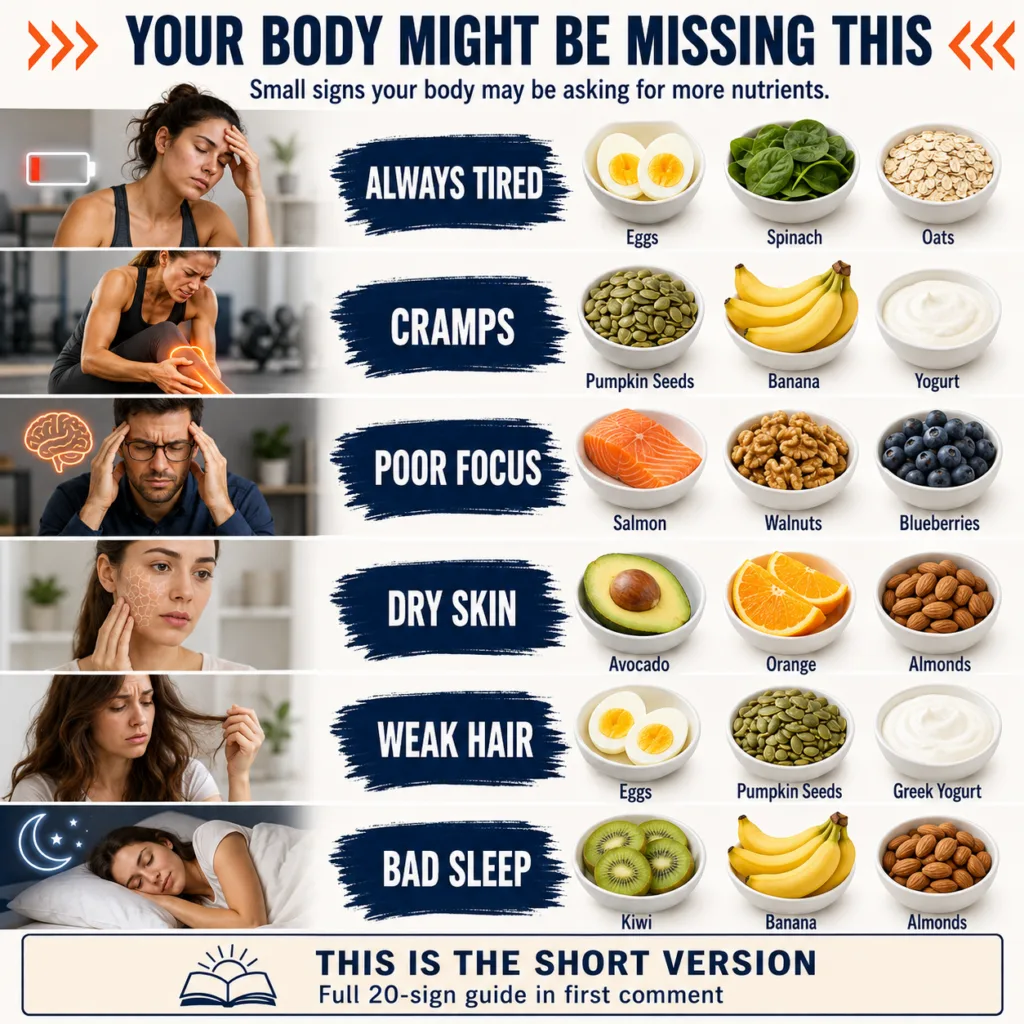
Always Tired? Fuel Your Energy
Feeling perpetually drained, even after a full night’s sleep? Chronic tiredness isn’t just an inconvenience; it can signal that your body needs more essential nutrients to produce energy efficiently. This can significantly hinder your motivation and performance during workouts.

Foods to Consider:
- Eggs: Rich in B vitamins, iron, and protein, eggs provide sustained energy.
- Spinach: An excellent source of iron, crucial for oxygen transport and energy production, and magnesium, which helps convert food into energy.
- Oats: Complex carbohydrates that release energy slowly, preventing sugar crashes. They also contain B vitamins.
Usage Note:
Start your day with an omelet and a side of oats, or add spinach to your smoothies and stir-fries.
Muscle Cramps Interfering with Your Workout?
Unexpected muscle cramps, especially during or after exercise, can be a frustrating sign that your electrolyte balance or mineral intake might be off. Key minerals play vital roles in muscle function and relaxation.

Foods to Consider:
- Banana: Famous for its potassium content, essential for muscle contraction and fluid balance.
- Almonds: A good source of magnesium, which helps relax muscles and prevent spasms.
- Avocado: Provides potassium and magnesium, along with healthy fats that support overall cell function.
Usage Note:
Enjoy a banana before or after your workout, snack on a handful of almonds, or add avocado to your salads and sandwiches.
Struggling with Focus? Boost Brain Power
If you find yourself easily distracted or struggling to concentrate, your brain might be craving specific nutrients that support cognitive function, memory, and focus. Optimal brain health is key for both mental clarity and executing complex fitness routines.

Foods to Consider:
- Walnuts: Rich in omega-3 fatty acids, which are crucial for brain health and cognitive function.
- Blueberries: Packed with antioxidants that protect brain cells from damage and improve memory.
- Salmon: An excellent source of DHA, a type of omega-3 fatty acid vital for brain structure and function.
Usage Note:
Add walnuts to your oatmeal, snack on blueberries, or incorporate salmon into your weekly meal plan.
Dry Skin Making You Feel Dull?
Beyond external hydration, your skin’s health is largely a reflection of your internal nutrition. Persistent dry, flaky skin could indicate a lack of vitamins and healthy fats that maintain skin barrier integrity and hydration.

Foods to Consider:
- Sweet Potatoes: High in beta-carotene, which converts to Vitamin A, promoting healthy skin cell turnover and protection.
- Berries (like Strawberries, Raspberries): Rich in Vitamin C, essential for collagen production and antioxidant protection.
- Fatty Fish (like Salmon, Mackerel): Provides omega-3 fatty acids that help maintain skin moisture and reduce inflammation.
Usage Note:
Enjoy sweet potatoes as a side dish, snack on a mix of berries, and include fatty fish in your diet a few times a week.
Weak or Brittle Hair? Strengthen from Within
Your hair’s strength and luster depend on a steady supply of nutrients. If your hair feels weak, brittle, or seems to be shedding more than usual, it might be signaling a need for specific proteins, vitamins, and minerals that support hair follicle health.

Foods to Consider:
- Lentils: An excellent plant-based source of protein, iron, and biotin, all crucial for hair growth and strength.
- Berries (like Blueberries, Blackberries): Supply Vitamin C, which helps absorb iron and produce collagen, strengthening hair.
- Eggs: Rich in protein and biotin, two powerhouse nutrients for hair health and preventing brittleness.
Usage Note:
Incorporate lentils into soups, stews, or salads. Enjoy berries as a snack, and include eggs in your breakfast or as a protein source.
Restless Nights? Improve Your Sleep Quality
Poor sleep can derail your fitness progress and overall health. If you consistently struggle to fall asleep or stay asleep, your diet might be lacking nutrients that support relaxation and the production of sleep-regulating hormones.

Foods to Consider:
- Kiwi: Contains antioxidants and serotonin, which may help improve sleep quality.
- Cherries (especially tart cherries): A natural source of melatonin, a hormone that regulates sleep-wake cycles.
- Whole Grains (like oats, whole wheat bread): Provide complex carbohydrates that support serotonin production and contain magnesium.
Usage Note:
Have a kiwi or a small serving of tart cherries an hour before bed. A small bowl of oatmeal can also be a calming evening snack.
Simple Tips for Best Results
- Listen to Your Body: Pay attention to persistent symptoms as they are often your body’s way of communicating needs.
- Eat a Varied Diet: Aim for a wide range of colorful fruits, vegetables, lean proteins, and whole grains to ensure a broad spectrum of nutrients.
- Stay Hydrated: Water is crucial for nutrient transport and absorption, affecting everything from energy to skin health.
- Consider Food Quality: Choose whole, unprocessed foods whenever possible to maximize nutrient intake.
- Consult a Professional: If symptoms persist or worsen, always consult a healthcare professional or a registered dietitian.
FAQ
Can I get all necessary nutrients from food alone?
For most healthy individuals, a balanced and varied diet provides all the necessary nutrients. However, certain conditions, dietary restrictions, or lifestyle factors might warrant supplementation, always under professional guidance.
How quickly can I expect to see improvements after changing my diet?
The timeline varies depending on the deficiency and individual metabolism. Some people might feel more energized within days, while others may take weeks or months to notice significant improvements in skin, hair, or sleep patterns.
Are these foods suitable for everyone?
Generally, the suggested foods are healthy and safe for most people. However, if you have allergies, specific health conditions, or dietary restrictions, always consult with your doctor or a dietitian before making significant dietary changes.
Final Thoughts
Your body is an incredible machine, constantly working to keep you healthy and performing at your best. By learning to recognize the subtle signs of nutrient deficiencies and making informed dietary choices, you can support your well-being, boost your fitness, and enhance your quality of life. Start by incorporating these nutrient-rich foods into your routine, and take a proactive step towards a healthier, more vibrant you.
MEDICAL DISCLAIMER:
This article is intended for informational purposes only and does not constitute medical advice. Always consult with a qualified healthcare professional before making any changes to your diet, exercise routine, or if you have any medical conditions or concerns. Individual results may vary.