Have you ever looked into your spice cabinet or herb garden and wondered if those everyday ingredients hold secrets to feeling better? It turns out, many common herbs and spices are more than just flavor enhancers; they are natural powerhouses, ready to support your body’s comfort and overall wellness. It’s truly amazing what nature provides!
Why These Natural Wonders Matter for Your Well-being
In our fast-paced lives, it’s easy to experience occasional aches, stiffness, or general discomfort. Often, these feelings are linked to underlying inflammation in the body. While inflammation is a natural protective response, chronic low-grade inflammation can impact long-term health and vitality. Many people are seeking gentle, natural ways to support their body’s balance, and that’s where the magic of herbs and spices comes in.
These plant-based allies have been used for centuries in traditional medicine systems across the globe, long before modern science began to unravel their complex compounds. Today, research is increasingly supporting what ancient cultures have known for generations: that these humble ingredients can play a significant role in promoting comfort and reducing inflammation. They offer a comforting, accessible, and often delicious path to natural wellness.
Delving into Nature’s Soothing Kitchen Remedies
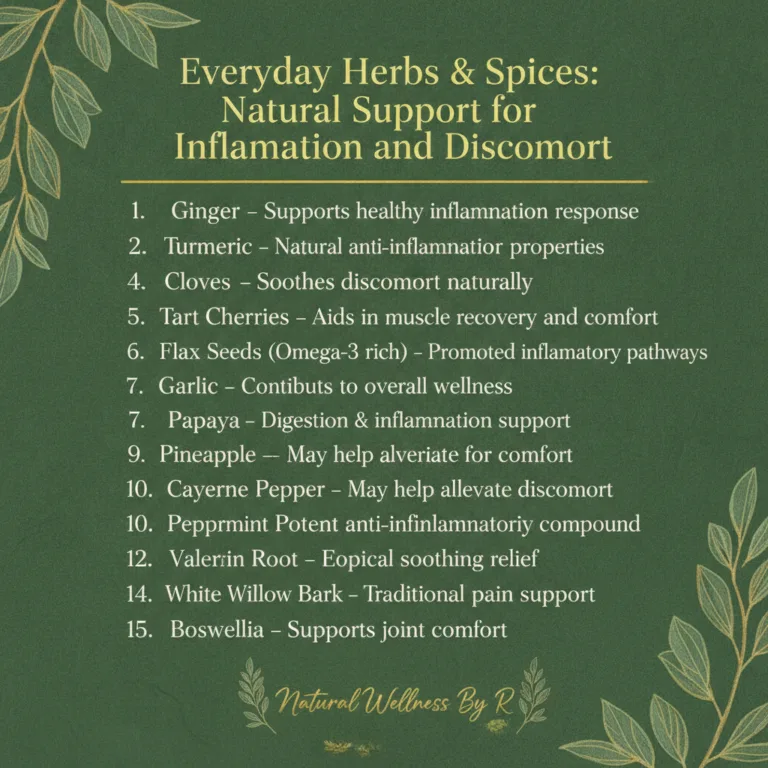
Let’s explore some of these fantastic kitchen staples and understand how they may help you feel more comfortable and vibrant.
Ginger: The Warming Soother
Perhaps one of the most beloved and versatile spices, ginger has a long history of use for its warming and soothing properties. From ancient Indian Ayurvedic practices to traditional Chinese medicine, ginger has been a go-to for digestive upset and various forms of discomfort.
- Traditional Use: Commonly used for nausea, motion sickness, digestive support, and to ease muscle soreness and joint discomfort.
- Modern Understanding: Ginger contains bioactive compounds called gingerols and shogaols, which are believed to give it its powerful antioxidant and anti-inflammatory effects. Some studies suggest ginger may help inhibit the production of inflammatory molecules in the body.
Turmeric: The Golden Healer
Known for its vibrant golden hue and earthy flavor, turmeric is much more than just a spice for curries. It’s often hailed as one of the most potent natural anti-inflammatory agents.
- Traditional Use: A cornerstone of Ayurvedic medicine, turmeric has been used for centuries to support skin health, digestive function, and reduce inflammation throughout the body.
- Modern Understanding: The key active compound in turmeric is curcumin. Research has extensively explored curcumin’s potential to modulate inflammatory pathways, act as a powerful antioxidant, and support overall cellular health. Its bioavailability can be enhanced when consumed with black pepper (piperine).
Cloves: The Aromatic Aid
These fragrant flower buds are more than just a holiday spice. Cloves possess a remarkable ability to provide comfort, especially when it comes to soothing discomfort.
- Traditional Use: Often used as a natural remedy for toothache and gum discomfort due to its mild anesthetic properties. In traditional medicine, it was also used for digestive issues.
- Modern Understanding: Cloves are rich in eugenol, a compound known for its antioxidant, anti-inflammatory, and antimicrobial effects. This is why you often find clove oil in natural oral care products.
Flax Seeds: Tiny Seeds, Big Benefits
While not strictly a spice, flax seeds are a nutritional powerhouse often found in the kitchen, offering excellent support for internal balance.
- Traditional Use: Historically used as a bulk-forming laxative and for soothing digestive tracts.
- Modern Understanding: Flax seeds are an excellent source of alpha-linolenic acid (ALA), an omega-3 fatty acid, which is known for its anti-inflammatory properties. They also contain lignans, which are antioxidants, and a good amount of fiber, beneficial for gut health.
Practical Ways to Welcome These Allies into Your Life
Incorporating these natural helpers into your daily routine can be simple and delicious!
Ginger
- Ginger Tea: Steep fresh ginger slices in hot water with a squeeze of lemon and a touch of honey for a soothing drink.
- Cooking: Add fresh or ground ginger to stir-fries, soups, smoothies, and baked goods.
- Compress: For muscle discomfort, a warm ginger compress (grated ginger wrapped in cloth, steeped in hot water, then applied) is a traditional remedy.
Turmeric
- Golden Milk: A popular and comforting drink made with warm milk (dairy or plant-based), turmeric, a pinch of black pepper, and other spices like cinnamon.
- Cooking: Add to curries, stews, roasted vegetables, and even scrambled eggs.
- Smoothies: A small amount of ground turmeric can be a great addition to your morning smoothie.
Cloves
- Spice Blends: Incorporate ground cloves into warming spice blends for baking or savory dishes.
- Oral Rinse: Steep a few whole cloves in hot water, let cool, and use as a soothing mouthwash.
- Flavoring: Add a whole clove to slow-cooked dishes or mulled drinks for a comforting aroma and flavor.
Flax Seeds
- Smoothies: Add 1-2 tablespoons of ground flax seeds to your daily smoothie for an omega-3 boost.
- Oatmeal & Yogurt: Sprinkle ground flax seeds over your morning oatmeal or yogurt.
- Baking: Use ground flax seeds as an egg replacer (1 tbsp ground flax + 3 tbsp water = 1 egg) or add to muffins and breads.
Safety & Precautions: A Gentle Reminder
While natural, these herbs and spices are potent. It’s always wise to exercise caution and listen to your body.
- Consult Your Doctor: If you are pregnant, nursing, have existing medical conditions (like gallstones, bleeding disorders, diabetes, or autoimmune diseases), or are taking medications (especially blood thinners), consult your healthcare professional before significantly increasing your intake or using these for therapeutic purposes.
- Allergies: Be aware of any potential allergies.
- Dosage: Start with small amounts and observe how your body responds. More is not always better.
- Quality: Opt for high-quality, organic herbs and spices when possible.
Remember, natural remedies are meant to support your well-being, not replace medical advice or prescribed treatments.
Key Takeaways for Natural Comfort
- Many everyday herbs and spices offer natural support for inflammation and discomfort.
- Ginger provides warming, soothing relief, especially for digestion and muscle soreness.
- Turmeric, with its active compound curcumin, is a powerful anti-inflammatory and antioxidant.
- Cloves contain eugenol, offering comforting and antimicrobial properties.
- Flax seeds are a source of anti-inflammatory omega-3s and beneficial fiber.
- Easily incorporate these into teas, meals, smoothies, and even topical applications.
- Always consult a healthcare professional, especially if you have health conditions or take medications.
Frequently Asked Questions
Q1: Can I use these herbs and spices every day?
Yes, many people safely incorporate these into their daily diet in culinary amounts. For therapeutic doses, it’s best to consult with a healthcare professional.
Q2: Is fresh or dried ginger better?
Both fresh and dried ginger offer benefits. Fresh ginger tends to be more potent for some uses, while dried ginger has a more concentrated flavor profile for others. Both contain beneficial compounds.
Q3: How much turmeric should I consume for anti-inflammatory benefits?
Culinary amounts (a teaspoon or two daily) can contribute to overall wellness. For specific anti-inflammatory effects, standardized curcumin supplements are often used, but consult your doctor for appropriate dosages.
Q4: Do flax seeds need to be ground to be effective?
Yes, it’s best to consume flax seeds ground. Whole flax seeds can pass through the digestive system undigested, preventing your body from absorbing their beneficial omega-3s and lignans.
Q5: Can these herbs replace my pain medication?
Absolutely not. These herbs and spices may offer natural support for discomfort and inflammation but should never replace prescribed medications or treatments without the guidance of a healthcare professional. Always consult your doctor.
Explore More Natural Wellness Insights!
The world of natural wellness is vast and full of incredible discoveries. If you enjoyed learning about these everyday heroes, you might also be interested in:
- The Power of Adaptogens: Herbs for Stress Resilience
- Eating for Energy: Top Foods to Boost Your Vitality Naturally
- Simple Home Remedies for Common Ailments
- Boosting Your Immune System with Herbal Teas
- Understanding Gut Health: The Foundation of Wellness