When it comes to building a healthier plate, the choice between different food sources can be empowering. Today, we’re diving into a fascinating comparison that often sparks curiosity: duck vs. chicken eggs. While chicken eggs are a pantry staple for many, duck eggs are gaining popularity for their unique flavor and distinct nutritional profile. Understanding these nutritional nuances is key to aligning your plate with your personal health goals.
Both duck and chicken eggs offer a wealth of nutrients, contributing to energy, stamina, brain health, heart well-being, and immunity. But subtle differences can make one a better fit for certain dietary needs or culinary uses. Join us as we explore the full spectrum of benefits each egg type brings, helping you make an informed choice for your table.
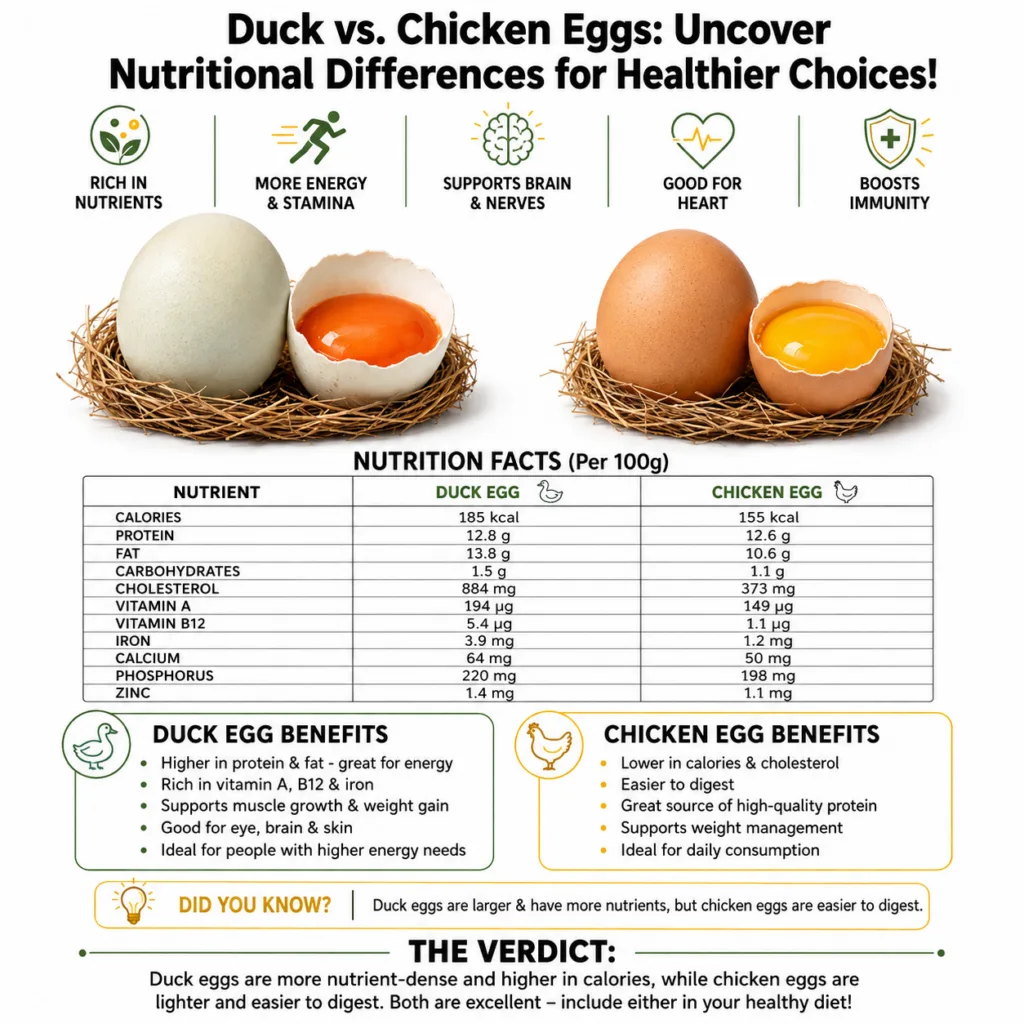
Duck vs. Chicken Eggs: A Head-to-Head Nutritional Showdown
At first glance, eggs might seem interchangeable, but a closer look at their nutritional makeup reveals distinct differences between duck and chicken varieties. These variations can influence not only their impact on your health but also their best uses in the kitchen.
The Visual Difference: Size, Shell, and Yolk
Beyond nutrition, duck eggs typically boast a larger size and a slightly thicker, often off-white shell compared to chicken eggs, which commonly feature brown or white shells. Crack them open, and you’ll notice another striking difference: duck egg yolks are generally larger and exhibit a richer, deeper orange hue, while chicken egg yolks are usually bright yellow.
Unpacking the Nutrition Facts: Per 100g Comparison
Let’s delve into the specific nutritional values (per 100g) to understand the core differences:
- Calories: Duck eggs tend to be slightly higher in calories (around 185 kcal) compared to chicken eggs (approximately 155 kcal), reflecting their larger size and richer composition.
- Protein: Both are excellent protein sources. Duck eggs provide about 13g of protein, while chicken eggs offer around 13g, making them equally powerful for muscle growth and repair.
- Fat: Duck eggs contain more fat (around 14g), which contributes to their creaminess and richness, whereas chicken eggs have less fat (about 11g).
- Cholesterol: This is a notable difference. Duck eggs contain significantly more cholesterol (around 884mg) than chicken eggs (about 373mg).
- Vitamins:
- Vitamin A: Duck eggs are richer (around 160 mcg RAE) than chicken eggs (about 149 mcg RAE), essential for vision and immune function.
- Vitamin B12: Duck eggs offer a substantial amount (around 5.4 mcg), surpassing chicken eggs (about 0.89 mcg), vital for nerve function and energy.
- Vitamin D: Both provide Vitamin D, with duck eggs offering slightly more (around 1.7 mcg) than chicken eggs (about 1.6 mcg), crucial for bone health and immunity.
- Minerals:
- Selenium: Duck eggs contain more (around 30.2 mcg) than chicken eggs (about 18 mcg), acting as a powerful antioxidant.
- Choline: Duck eggs are exceptionally rich (around 263 mg) compared to chicken eggs (about 251 mg), important for brain health and metabolism.
- Iron: Duck eggs provide more (around 3.4 mg) than chicken eggs (about 1.2 mg), vital for oxygen transport.
- Calcium: Both offer similar amounts, with chicken eggs having a slight edge (around 50 mg) over duck eggs (about 46 mg), for bone and muscle health.
Diving Deeper: Unique Benefits of Duck Eggs
Duck eggs, with their robust nutritional profile, offer several distinct advantages that make them a compelling choice for many health-conscious individuals.
- High Protein & Micronutrient Density: They are an excellent source of protein, essential for muscle building and satiety. Beyond protein, duck eggs are particularly rich in vitamins B12, A, and D, and minerals such as iron and selenium, which contribute to overall vitality and well-being.
- Brain & Immune Support: The high content of choline in duck eggs is crucial for brain development and neurotransmitter function. Additionally, the abundance of vitamins and minerals, including selenium and Vitamin A, plays a significant role in bolstering the immune system.
- Sustained Energy & Rich Flavor: Thanks to their higher fat content, duck eggs can provide a more sustained release of energy throughout the day. Did you know their richer, creamier yolk makes them exceptionally popular in baking? They can add a superior texture and richness to pastries, custards, and cakes that chicken eggs simply can’t match.
The Classic Choice: Advantages of Chicken Eggs
Chicken eggs remain a cornerstone of diets worldwide for good reason. They are versatile, accessible, and pack a powerful nutritional punch that supports a balanced lifestyle.
- Balanced Nutrition & Accessibility: Chicken eggs are a good source of protein, containing essential amino acids vital for the body. They also provide a range of vitamins (A, D, B12) and minerals (selenium, iron), making them a well-rounded nutritional choice that is readily available and affordable.
- Supporting Muscle Health: Like duck eggs, chicken eggs contribute significantly to muscle growth and repair due to their high-quality protein content. They are a go-to for athletes and those seeking to maintain muscle mass.
- Lower Fat & Cholesterol Profile: For individuals monitoring their fat and cholesterol intake, chicken eggs present a favorable option. They are lower in both total fat and cholesterol compared to duck eggs, making them a suitable choice for daily consumption within a balanced diet.
Making Your Healthier Choice: Which Egg is Right for You?
Ultimately, the “better” egg depends on your individual dietary needs, health goals, and culinary preferences. Both duck and chicken eggs offer valuable nutrients, but their unique profiles cater to different priorities.
- Consider Your Dietary Needs: If you’re looking for higher protein, more concentrated vitamins (especially B12), and minerals like iron and selenium, and don’t mind a higher fat and cholesterol content, duck eggs might be your preferred choice. If you prioritize a lower fat and cholesterol option for daily consumption, chicken eggs are an excellent, accessible alternative.
- Culinary Uses: Duck eggs, with their rich and creamy yolks, are often favored for baking, adding moisture and richness to dishes. Chicken eggs, being lighter in flavor and texture, are incredibly versatile for everyday cooking, from omelets to scrambles.
- Availability and Preference: Chicken eggs are widely available in most grocery stores, making them a convenient option. Duck eggs may require a trip to a specialty store or farmers’ market. Your personal taste preference also plays a significant role; some prefer the richer, more intense flavor of duck eggs, while others enjoy the milder taste of chicken eggs.

Final Thoughts
Whether you choose duck eggs or chicken eggs, both are incredibly nutritious additions to a balanced diet. Duck eggs shine with their higher concentration of certain vitamins and minerals, and their rich flavor makes them a baker’s delight. Chicken eggs, on the other hand, offer a balanced nutritional profile with lower fat and cholesterol, making them an accessible and versatile staple for everyday meals. Understanding these differences empowers you to make healthier choices that best suit your individual needs and culinary adventures. So, go ahead, crack open an egg—whichever kind you prefer—and enjoy its wholesome goodness!