Unlock Endless Freshness: 15 Vegetables & Herbs to Regrow and Rejuvenate Your Harvest
Imagine stepping into your garden or even your kitchen, snipping off a few fresh greens, and knowing that the plant will simply keep on giving. The idea of an endless supply of fresh produce isn’t just a gardener’s dream; it’s a practical reality for many common vegetables and herbs! By understanding how specific plants regenerate, you can dramatically extend your harvest, reduce food waste, and enjoy a continuous bounty right from your windowsill or garden bed. It’s a simple, sustainable trick that connects you more deeply to your food, turning everyday kitchen scraps and thoughtful harvesting into a rewarding cycle of growth.
Whether you’re looking to maximize a small space, stretch your grocery budget, or simply marvel at the magic of nature, learning how to encourage continuous growth is a game-changer. Get ready to discover the secrets behind 15 popular greens and herbs that can be coaxed into producing again and again, transforming your approach to gardening and cooking.
The Art of Continuous Harvest: Beyond a Single Snip
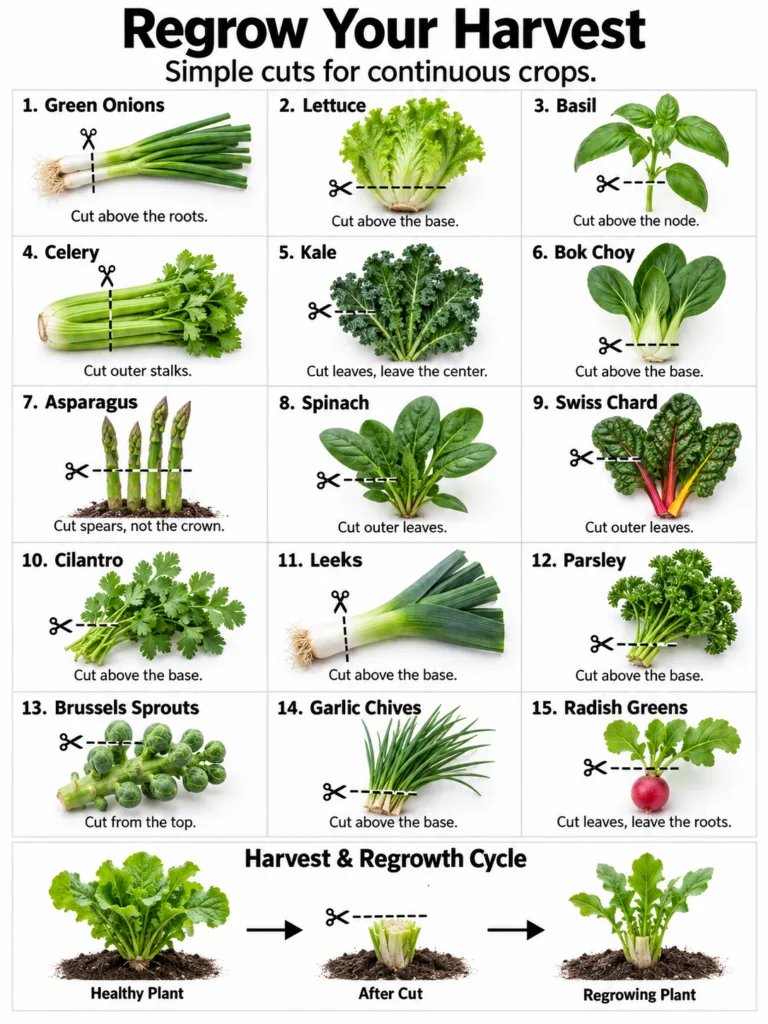
The concept of ‘regrowing’ often conjures images of placing a celery base in water, but continuous harvest encompasses a broader range of techniques. Some plants genuinely regrow from a cut base or root section (true regeneration), while others are best harvested using a ‘cut-and-come-again’ method, where you take outer leaves or stems, leaving the core to produce more. Still others are perennial powerhouses that naturally yield multiple harvests from an established root system.
Understanding these distinctions is key to success. Proper technique ensures the plant remains healthy, productive, and continues to provide you with delicious, homegrown goodness. Always ensure your plants have adequate light, water, and nutrient-rich soil to fuel their renewed growth.
15 Plants for an Extended, Abundant Harvest
Let’s dive into how you can keep your favorite vegetables and herbs thriving and producing. For each plant, we’ll outline the best method to encourage regrowth or continuous harvesting.
1. Green Onions (Scallions)
One of the easiest and most satisfying plants to regrow! Green onions (Allium fistulosum) are excellent for true regeneration. Simply keep the white base with about 1 inch of green stalk attached. Place the bases root-side down in a shallow glass of water on a sunny windowsill. Within days, you’ll see new green shoots emerge. Once roots are well-developed (about a week), transplant them into soil for stronger, sustained growth. They are perennial in USDA Zones 6-9, but easily grown as an annual or indoors anywhere.
- Practical Tip: Plant several bases in a small pot for a continuous supply. Harvest by snipping the green tops about an inch above the soil line.
2. Lettuce (Romaine & Leafy Types)
While you might not get a full, tight head of lettuce (Lactuca sativa) from a regrown core, you can absolutely get a bonus harvest of tender inner leaves. Cut the base of a head of lettuce about 1 inch from the bottom. Place it in a shallow bowl of water, ensuring the water covers only the very bottom. Keep it in a sunny spot, changing the water daily. New leaves will sprout from the center. Once a few inches tall, you can harvest them or transplant the core into soil for slightly stronger, though often looser, growth. Best for Zones 2-11 as an annual.
- Practical Tip: For ‘cut-and-come-again’ varieties, harvest outer leaves rather than the whole head to encourage continuous production.
3. Basil
Basil (Ocimum basilicum) is a quintessential ‘cut-and-come-again’ herb, not typically regrown from a single base. For continuous harvesting, pinch off leaves or snip stems just above a set of two small leaves (a node). This encourages the plant to branch out, becoming bushier and producing more foliage. You can also root basil stem cuttings in water or moist soil for new plants. Best grown as an annual in most climates or indoors.
- Practical Tip: Regular harvesting (pruning) is key to preventing basil from flowering too early and becoming leggy.
4. Celery
Like lettuce, celery (Apium graveolens) can offer a bonus harvest from its base. Cut the base of the celery stalk about 1-2 inches from the bottom. Place it in a shallow bowl of water, cut-side up, ensuring the water covers only the very bottom. Keep it in a sunny spot, changing the water every day or two. New leaves will emerge from the center. Once robust roots and small stalks have formed, transplant into soil for more substantial growth. Celery is a biennial, often grown as an annual in Zones 3-10.
- Practical Tip: For best results, use organic celery, as conventional celery may have growth inhibitors.
5. Kale
Kale (Brassica oleracea var. sabellica) is a classic ‘cut-and-come-again’ leafy green. To ensure continuous harvests, always pick the outer, older leaves first, working your way around the plant. Leave the central crown and at least 4-5 inner leaves intact. This allows the plant to continue photosynthesizing and producing new growth. Kale is typically grown as an annual, but can overwinter in milder climates (Zones 7-10) and continue to produce. Some varieties are biennial.
- Practical Tip: Harvest regularly to encourage tender new leaves and prevent the plant from bolting (going to seed) too early in warm weather.
6. Bok Choy
Similar to lettuce, bok choy (Brassica rapa subsp. chinensis) can be regrown from its base. Cut the head about 1-2 inches from the root end. Place the base in a shallow bowl of water, ensuring the cut side faces up. New leaves will emerge from the center. Once the roots are developed and new growth is visible, transplant it into nutrient-rich soil for better and more sustained production. Bok choy is an annual, best grown in cool weather (Zones 2-11).
- Practical Tip: Young bok choy leaves are incredibly tender and delicious in salads or stir-fries.
7. Asparagus
Asparagus (Asparagus officinalis) is a perennial vegetable, meaning it grows back year after year from an established crown, not from a cut spear. Once an asparagus patch is established (which takes 2-3 years), you can harvest spears for 6-8 weeks in spring. Cut spears when they are 6-10 inches tall and about 1/2 inch thick, snipping them at or just below the soil line. Stop harvesting when the spears become thin, allowing the remaining spears to fern out and replenish the crown’s energy for the next year. Hardy in Zones 3-8.
- Practical Tip: Patience is key with asparagus; a well-maintained bed will produce for decades.
8. Spinach
Spinach (Spinacia oleracea) is another excellent ‘cut-and-come-again’ leafy green. Harvest by picking the outer leaves first, leaving the central crown and inner leaves intact. You can also use scissors to snip off leaves about an inch above the soil line, being careful not to damage the growth point. This method allows the plant to produce multiple flushes of leaves. Spinach is an annual, thriving in cool weather (Zones 2-10).
- Practical Tip: Succession plant spinach every few weeks to ensure a continuous supply throughout its growing season.
9. Swiss Chard
Swiss chard (Beta vulgaris subsp. vulgaris, Cicla Group) is incredibly productive and perfectly suited for ‘cut-and-come-again’ harvesting. Simply snip or snap off the outer, older leaves at the base of the plant, leaving the central core and inner leaves to continue growing. It’s a biennial typically grown as an annual, but can overwinter in mild climates (Zones 4-10).
- Practical Tip: The colorful stems of Swiss chard are edible and add visual appeal to dishes.
10. Cilantro
Cilantro (Coriandrum sativum) benefits from regular harvesting to encourage continuous growth and delay bolting. Instead of cutting the entire plant, snip off individual stems or bunches of leaves from the outer parts of the plant, always leaving the inner leaves and the growing point intact. You can also pinch back stems above a node. Like basil, you can root stem cuttings to start new plants. Cilantro is an annual that prefers cool weather (Zones 2-11).
- Practical Tip: Plant cilantro in a slightly shaded spot during warmer months to help prevent it from bolting.
11. Leeks
Similar to green onions, leeks (Allium ampeloprasum) can regrow from their white base. When harvesting, cut the leek about 1-2 inches above the root end. Place the root end in a shallow glass of water on a sunny windowsill. New green shoots will emerge. Once substantial roots and greens have formed, transplant the base into soil. Leeks are biennials, usually grown as annuals (Zones 2-10).
- Practical Tip: Ensure the soil is mounded around the base of the leek as it grows to blanch the lower portion, making it more tender and flavorful.
12. Parsley
Parsley (Petroselinum crispum) is another fantastic herb for continuous harvest. To encourage new growth, snip the outer stems at their base, close to the soil line. Avoid cutting the central, newest growth. This method, often called ‘harvesting from the outside in,’ will keep the plant producing fresh leaves. Parsley is a biennial, often grown as an annual (Zones 3-9).
- Practical Tip: Pinch off any flowering stems to prolong leaf production, as the flavor can become bitter after flowering.
13. Brussels Sprouts
Brussels sprouts (Brassica oleracea var. gemmifera) are harvested by picking the individual sprouts that form along the main stem. As sprouts mature from the bottom of the stem upwards, twist or cut them off. The plant continues to produce sprouts over a long season, often into fall and early winter. This isn’t regrowth from a cut base, but rather a sustained harvest from a single, tall-growing plant. Brussels sprouts are biennials, grown as annuals (Zones 2-10).
- Practical Tip: For a faster, more uniform harvest, some gardeners pinch off the top growing point of the plant about a month before harvest, diverting energy to the developing sprouts.
14. Garlic Chives
Garlic chives (Allium tuberosum) are incredibly resilient and excellent for continuous harvest. Snip the leaves about 1-2 inches above the soil line. The plant will quickly send up new shoots. You can harvest them repeatedly throughout the growing season. Garlic chives are perennial, hardy in Zones 3-9.
- Practical Tip: They can spread vigorously by seed, so deadhead spent flowers if you want to control their spread.
15. Radish Greens
While radishes (Raphanus sativus) are primarily grown for their roots, their greens are also edible and nutritious. For a continuous supply of greens, you can sow radish seeds thickly and harvest young leaves by ‘cutting-and-coming-again’ before the roots fully develop. Alternatively, if growing for roots, you can snip a few outer leaves from mature plants, but be mindful not to take too many, as the leaves are essential for root development. Radishes are annuals that prefer cool weather (Zones 2-11).
- Practical Tip: Radish greens have a peppery flavor, perfect for salads or sautéing.
Common Mistakes to Avoid When Regrowing and Continuously Harvesting
Even with these easy methods, a few missteps can hinder your success:
- Insufficient Light: Most plants need ample sunlight to photosynthesize and regrow. A sunny window or grow light is crucial, especially for indoor propagation.
- Poor Drainage/Overwatering: If transplanting to soil, ensure pots have drainage holes. In water, change the water daily to prevent rot and provide fresh oxygen.
- Cutting Too Low or Too High: Understand where the growth point is for each plant. Cutting too low can damage the plant’s ability to regrow, while cutting too high might leave tough stems or miss the opportunity for new shoots.
- Expecting Full-Sized Plants from Scraps: While you get bonus harvests, plants regrown from scraps often produce smaller, weaker versions than fully seeded or propagated plants. Think of it as a bonus, not a replacement for a full garden.
- Ignoring Plant Health: Observe your plants. Yellowing leaves, wilting, or pest damage indicates stress. Address issues promptly with appropriate watering, light, or natural pest management.
- Neglecting Soil Nutrients: If transplanting into soil, ensure it’s rich in organic matter. Regrowing plants use energy and nutrients, so occasional feeding can boost their production.
Regional and Seasonal Considerations for U.S. Gardeners
While many of these regrowing techniques can be done indoors year-round, outdoor success depends on your local climate:
- Cool-Season Crops: Lettuce, spinach, kale, bok choy, radishes, and cilantro thrive in cooler spring and fall temperatures (Zones 3-8). In warmer climates (Zones 9-11), focus on growing them in late fall, winter, and early spring.
- Warm-Season Herbs: Basil grows best in warm weather (Zones 4-11, as an annual). Ensure soil temperatures are consistently above 60°F (15°C) before planting outdoors.
- Perennials: Asparagus, green onions, leeks, garlic chives, and parsley (as a biennial) are excellent choices for perennial beds in their suitable USDA hardiness zones. Their roots can survive winter cold and regrow each spring.
- Frost Dates: Always consult your local extension office for specific frost dates. This will guide when it’s safe to plant outdoors and when to bring tender regrowing plants inside.
Cultivate Confidence, Harvest Continuously
Embracing these simple techniques transforms your gardening experience. It’s about more than just food; it’s about connecting with the life cycle of plants, minimizing waste, and enjoying the freshest flavors right from your home. Each successful sprout builds confidence, turning you into a more observant and capable gardener. So, grab some kitchen scraps, pick up those garden scissors, and start experimenting. Your journey to a more abundant, sustainable, and satisfying harvest begins now!