Transform Your Backyard into a Multi-Functional Oasis: A Guide to Designing Outdoor Rooms
Imagine stepping into your backyard and feeling like you’ve entered a private retreat, a space custom-designed for relaxation, entertainment, and connection with nature. For many, the backyard is often an underutilized expanse of lawn, a blank canvas waiting for a vision. The opportunity to transform a simple patch of grass into a vibrant, multi-functional outdoor oasis is within reach for every gardener and homeowner. By thinking of your outdoor area not just as a yard, but as a series of inviting ‘rooms,’ you can unlock its full potential. This guide will walk you through the essential steps, from foundational design principles to thoughtful plant selection and crucial care tips, empowering you to create a backyard that truly feels like an extension of your home.
Vision to Reality: The Power of Outdoor Zoning
The secret to a multi-functional backyard lies in intelligent zoning – creating distinct areas, or ‘outdoor rooms,’ each with its own purpose. Just as your home has a kitchen, living room, and bedroom, your backyard can host an outdoor dining area, a cozy lounging spot, a productive garden, or a play zone. This approach helps maximize space, enhances usability, and adds visual interest. Start by sketching your existing yard, noting sun patterns, mature trees, and existing structures. Then, identify your needs: Do you want to host dinner parties, relax by a fire, grow vegetables, or simply enjoy a quiet reading nook? These desires will guide your zoning strategy, helping you delineate areas for dining, conversation, gardening, or peaceful contemplation.
Laying the Foundation: Hardscaping for Structure
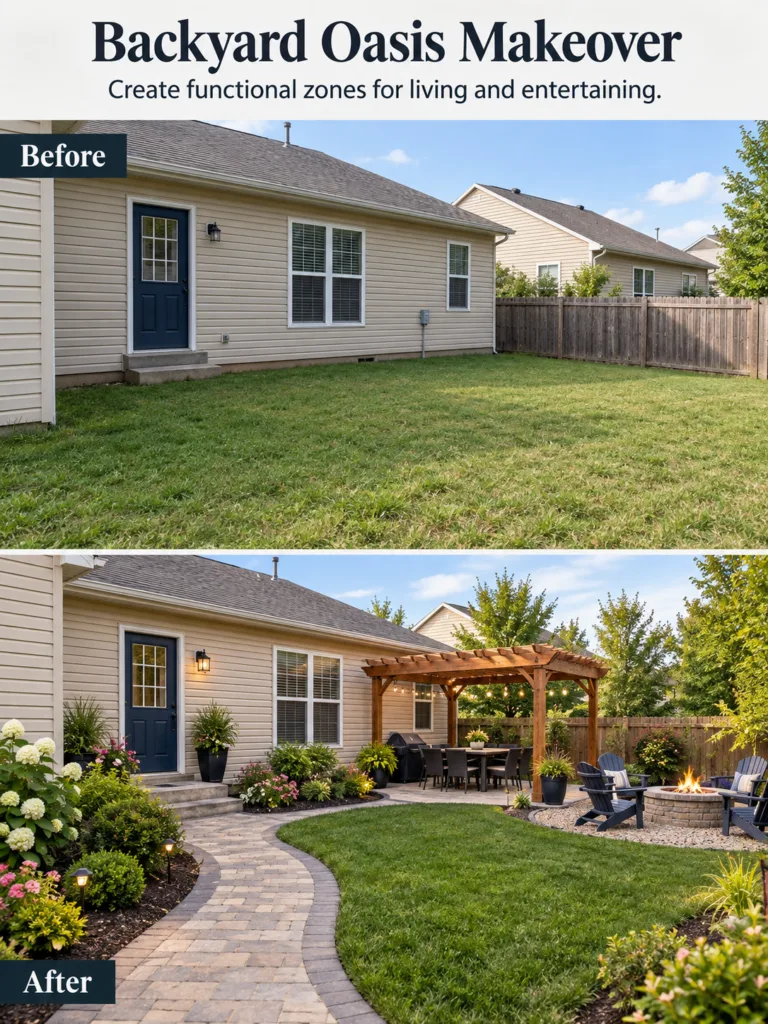
Hardscaping forms the backbone of your outdoor rooms, providing definition, pathways, and functional surfaces. This includes elements like patios, walkways, pergolas, and fire pit surrounds. A well-designed paver pathway, like the curving one shown in our inspiration, invites exploration and connects different areas seamlessly. Consider materials that complement your home’s architecture and withstand local climate conditions. For instance, natural stone pavers offer durability and timeless appeal, while gravel can create a charming, permeable surface for a fire pit area. A sturdy wooden pergola not only provides shade for a dining area but also creates a dramatic focal point, often adorned with string lights for evening ambiance.
- Pathways: Use pavers, gravel, or stepping stones to guide movement and define zones. Ensure paths are wide enough for comfortable passage.
- Patios & Decks: Create solid surfaces for dining and lounging. Material choice impacts maintenance and aesthetic.
- Overhead Structures: Pergolas or arbors add vertical interest, shade, and a sense of enclosure for outdoor ‘rooms.’
Crafting Your Green Canvas: Thoughtful Plant Selection
Plants are the soul of your outdoor oasis, softening hardscapes, providing privacy, and injecting vibrant life and color. When choosing plants, consider their mature size, light requirements, soil preferences, and USDA hardiness zones to ensure they thrive in your specific location. Aim for a mix of evergreen shrubs for year-round structure, flowering perennials for seasonal color, and annuals for continuous vibrancy in beds and containers.
Structural Shrubs and Trees
Evergreen shrubs offer consistent greenery and form the backbone of your garden beds. Consider varieties like boxwood (Buxus sempervirens) for formal hedges, hollies (Ilex spp.) for varied leaf textures, or junipers (Juniperus spp.) for low-maintenance groundcover or upright forms. These provide essential screening and definition. Deciduous flowering shrubs, such as hydrangeas (Hydrangea macrophylla or paniculata), deliver spectacular seasonal blooms. Hydrangeas, known for their large white, pink, or blue flower clusters, prefer morning sun and afternoon shade in warmer climates, along with consistently moist, well-draining soil.
Seasonal Color with Annuals and Perennials
To infuse your garden with vibrant, continuous color, incorporate annuals like petunias (Petunia x hybrida), impatiens (Impatiens walleriana), or marigolds (Tagetes spp.). Petunias, with their prolific pink, purple, or white blooms, are excellent for spilling from containers or trailing along garden edges, thriving in full sun and needing regular watering and feeding. For perennial color, coneflowers (Echinacea purpurea), hostas (Hosta spp.) for shade, or daylilies (Hemerocallis spp.) provide reliable blooms year after year. Thoughtful plant spacing is crucial to allow for mature growth and good air circulation, which helps prevent fungal diseases.
Container Gardening for Flexibility
Potted plants offer flexibility, allowing you to easily refresh your aesthetic or move plants according to sunlight needs or seasonal changes. Use large, well-draining containers for a mix of thrillers (tall focal plants), fillers (mounding plants), and spillers (trailing plants) to create dynamic arrangements. This is ideal for adding pops of color like the pink petunias seen, or for experimenting with tropical plants in cooler zones, bringing them indoors for winter.
Illuminating Your Oasis: Lighting for Ambiance and Safety
Effective lighting transforms your backyard into a magical space after sunset, enhancing both ambiance and safety. Strategically placed landscape lights along pathways illuminate your journey between outdoor rooms. String lights, draped across a pergola or between trees, create a festive, inviting glow for dining and entertaining. Spotlights can highlight a specimen tree or a beautiful garden feature, adding depth and drama. Consider low-voltage LED options for energy efficiency and ease of installation.
Designing Dedicated ‘Rooms’
The Dining Al Fresco Zone
A dedicated dining area makes outdoor meals a true pleasure. Under a pergola, as depicted, with a BBQ grill nearby and a comfortable dining set, this space becomes the heart of outdoor entertaining. Ensure it’s located conveniently close to your home’s kitchen for easy food prep and serving. Choose durable, weather-resistant furniture, and consider an outdoor rug to define the space and add comfort underfoot. String lights, as shown, are a simple yet effective way to create a warm and inviting atmosphere for evening gatherings.
The Cozy Fire Pit Retreat
There’s nothing quite like gathering around a crackling fire on a cool evening. A fire pit area, nestled on a bed of gravel and surrounded by comfortable Adirondack chairs, creates an instant cozy retreat. Locate your fire pit a safe distance from structures, overhanging branches, and flammable materials. The gravel base provides good drainage and a clean surface. This space encourages conversation, stargazing, and marshmallow roasting, offering a different kind of relaxation than the dining area.
Essential Care for Your Transformed Space
Once your outdoor oasis is complete, consistent plant care is key to its longevity and beauty. Regular watering, especially for newly planted shrubs, annuals, and container plants, is essential. Always check soil moisture by hand before watering, ensuring the top inch or two is dry. Good soil drainage is paramount for plant health; amending heavy clay soils with organic matter like compost improves structure. Fertilize according to plant needs and soil test results. Pruning helps maintain plant shape, promotes new growth, and encourages better flowering. Keep an eye out for common pests and diseases, addressing them promptly with the least disruptive methods first. Seasonal tasks, such as mulching in spring and fall, will protect roots, retain moisture, and suppress weeds.
Common Pitfalls to Avoid in Backyard Design
Transforming your backyard is an exciting project, but a few common mistakes can derail your efforts. Avoid overcrowding plants; while a dense look might be appealing initially, it leads to poor air circulation, disease, and stunted growth as plants mature. Don’t underestimate the importance of drainage, both for hardscaping and planting areas, to prevent water accumulation and root rot. Neglecting soil preparation is another pitfall; healthy plants start with healthy soil. Lastly, ensure your design is cohesive; avoid a patchwork of unrelated elements by choosing a consistent style and color palette for your hardscaping and decor.
Designing for Your Climate: USDA Zones and Regional Considerations
Understanding your USDA Plant Hardiness Zone is fundamental for selecting plants that will thrive in your area. These zones indicate the average annual extreme minimum winter temperature, guiding you on which perennials, shrubs, and trees will survive the winter cold. However, USDA zones don’t account for summer heat, rainfall, humidity, or local microclimates. For example, a plant that is perennial in Zones 7-9 might be grown as an annual in Zones 3-6 or as a houseplant in colder regions. Always check local extension services for specific plant recommendations and planting calendars tailored to your region. Factors like your yard’s sun exposure, proximity to heat-retaining structures, and prevailing winds will also influence plant success.
Your Journey to an Outdoor Paradise
Transforming a plain backyard into a multi-functional outdoor oasis is a rewarding journey that blends creativity with practical gardening knowledge. By thoughtfully planning your zones, selecting appropriate hardscaping and plant materials, and committing to consistent care, you can create a beautiful and functional space that caters to all your outdoor living desires. Whether you dream of lively dinner parties, serene evenings by the fire, or simply a lush green escape, your dream backyard awaits. Start with a vision, take it step by step, and enjoy the profound satisfaction of cultivating your very own outdoor paradise.