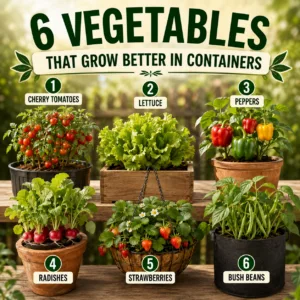
Container gardening is often seen as a compromise for small spaces, but for many popular crops, growing in pots actually produces healthier plants and higher yields than traditional garden beds.
Planting in containers gives you total control over soil quality, drainage, temperature, and pest exposure, eliminating the most common frustrations of in-ground gardening.
1. Cherry Tomatoes
In ground beds, heavy rains and slow-draining earth frequently lead to waterlogged soil, root rot, and soil-borne fungal issues like early blight.
-
Garden Bed Problem: Poor drainage causes soggy roots, waterlogging, and soil-borne blights splashed onto lower leaves.
-
Container Advantage: Pots filled with a loose, aerated potting mix amended with perlite and clay pebbles provide sharp drainage and abundant root oxygenation.
-
Growing Tip: Use a 5- to 7-gallon container with bottom drainage holes, add a central stake or small cage, and feed bi-weekly with a high-potassium organic fertilizer once flowering begins.
2. Lettuce & Salad Greens
Low-growing leafy greens planted directly in garden soil are prime targets for ground pests like slugs, snails, and cutworms, especially after rain.
-
Garden Bed Problem: Slugs and soil splash riddle delicate leaves with holes and dirt.
-
Container Advantage: Elevated wooden planter boxes (around 8×8 inches) lift greens off ground level, creating a physical barrier against crawling pests while keeping leaves spotless.
-
Growing Tip: Harvest using the “cut-and-come-again” method by trimming the outer leaves 1 inch above the soil line, allowing the central crown to generate continuous fresh salads for weeks.
3. Peppers (Bell & Chili Peppers)
Peppers are heat-loving crops that stall and turn pale when planted in cold, dense spring garden soil.
-
Garden Bed Problem: Cold, wet ground early in the season causes root shock, delayed blossoming, and stunted growth.
-
Container Advantage: Potting soil in containers warms up significantly faster in the spring sun, encouraging earlier root activity and consistent fruit set.
-
Growing Tip: Place containers against a south-facing wall or sunny patio slab to capture ambient radiant heat, ensuring peppers receive the 75°F to 85°F (24°C to 29°C) root zone temperature they crave.
4. Radishes
Radishes demand loose, stone-free earth to swell into uniform, round bulbs. Heavy clay or compacted ground stops root expansion in its tracks.
-
Garden Bed Problem: Compacted soil and hidden stones result in cracked, tough, or oddly deformed taproots.
-
Container Advantage: Deep potting mix offers zero resistance, allowing roots to expand uniformly into plump, crisp, perfectly spherical radishes.
-
Growing Tip: Sow seeds 1/2-inch deep and 2 inches apart in shallow troughs or wide pots. Keep the top layer evenly moist to prevent the radishes from turning woody or overly spicy.
5. Strawberries
When strawberry fruits rest directly on moist ground soil or damp mulch, they are highly prone to botrytis (gray mold), slug damage, and pillbug feeding.
-
Garden Bed Problem: Fruit rot, muddy berries, and pest infestation from direct soil contact.
-
Container Advantage: Hanging baskets and tiered strawberry planters allow fruiting runners to cascade cleanly over the edges in mid-air, keeping berries dry, clean, and fully exposed to ripening sunlight.
-
Growing Tip: Position hanging planters in full sun (6–8 hours daily) and ensure consistent morning watering to produce sweeter, perfectly ripened fruit.
6. Bush Beans
Bean seeds require warm, well-aerated conditions to sprout. Sowing them directly in cold, soggy garden beds often leads to seed rot before germination even starts.
-
Garden Bed Problem: Chilly, saturated spring soil causes slow, uneven germination and seed decay.
-
Container Advantage: Breathable fabric grow bags warm rapidly and self-prune roots, promoting faster vegetative growth and heavy pod yields.
-
Growing Tip: Fill a 5- to 10-gallon fabric grow bag with light organic compost mix and plant bush bean seeds 1 inch deep for a fast, concentrated harvest that needs no staking.
Essential Rules for Container Success
-
Prioritize Drainage: Always ensure pots have unobstructed drainage holes; never let container bases sit permanently in standing saucer water.
-
Water Consistently: Container soil dries out faster than ground soil—check moisture levels daily during peak summer heat.
-
Replenish Nutrients Regularly: Because frequent watering washes nutrients through the soil, feed container vegetables with balanced organic liquid fertilizer or slow-release granules every 2 to 3 weeks.