If you spend time watching DIY beauty videos, you’ve probably seen recipes promising incredibly youthful-looking skin from just a few inexpensive ingredients. The video above follows exactly that trend: a simple 3-ingredient mixture built around petroleum jelly, promoted as a homemade “collagen gel” to apply at night.
The finished mixture looks glossy, rich, and deeply moisturizing. But there’s one important point to understand before trying it:
This DIY gel does not literally replace collagen or make 70-year-old skin look 20.
What it can do—depending on the ingredients and your skin—is help reduce moisture loss and temporarily make dry skin appear softer, smoother, and more supple.
Here’s a practical guide to understanding this viral beauty hack.
🧴 What Is the Viral “Collagen Gel”?
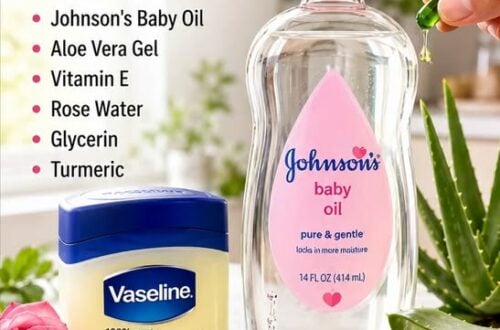
In the video, petroleum jelly is used as the main base.
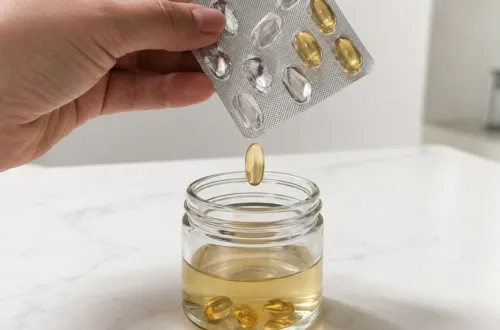
Additional clear or translucent ingredients are mixed into the container until everything becomes a smooth, glossy balm.
The mixture is then applied to the face as part of an evening skincare routine.
The basic concept is:
Petroleum Jelly + Additional Skincare Ingredients → Mix → Apply a Thin Layer at Night
This type of routine is closely related to the beauty trend often called slugging, where an occlusive product is applied over skincare to reduce overnight moisture loss.
✨ Why Petroleum Jelly?
Petroleum jelly is an occlusive.
Rather than adding large amounts of water to the skin itself, it creates a barrier over the surface that helps reduce transepidermal water loss.
For dry skin, this can make the complexion temporarily look:
- Softer
- Smoother
- More hydrated
- More supple
- Less flaky
- More luminous
Fine lines caused or emphasized by dehydration may also become less noticeable when the skin is properly moisturized.
🧬 But Does It Actually Boost Collagen?
This is where viral beauty marketing becomes misleading.
Calling something a “collagen gel” doesn’t mean it contains collagen or stimulates significant collagen production.
Petroleum jelly primarily works at the skin’s surface by helping prevent moisture loss.
Collagen, meanwhile, is a structural protein located deeper within the skin.
So:
Better hydration ≠ new collagen production.
Hydrated skin can certainly look plumper and smoother, but that’s very different from rebuilding lost collagen.
🥣 What Are the 3 Ingredients?
The video clearly shows petroleum jelly as the main ingredient, but the identity and exact concentration of the other components cannot be reliably confirmed from the visuals alone.
That’s important.
Don’t copy unidentified ingredients simply because they appear clear or gel-like in a short video.
For a safer version of this skincare concept, you don’t actually need three ingredients.
A simple routine using products you already know your skin tolerates is preferable.
🌙 The Simple Version
Instead of mixing unknown ingredients directly into a large petroleum jelly container, try this approach:
Step 1: Wash your face with a gentle cleanser.
Step 2: Apply your normal fragrance-free moisturizer.
Step 3: Allow it to settle briefly.
Step 4: Take a very small amount of plain petroleum jelly.
Step 5: Spread a thin film over dry areas.
That’s it.
You’re essentially using the petroleum jelly to help seal in the moisture from your regular skincare.
🧴 How Much Should You Apply?
More isn’t necessarily better.
You don’t need the thick amount sometimes demonstrated in viral videos.
Start with roughly a pea-sized amount for targeted areas and spread it into a very thin layer.
Pay particular attention to areas that tend to become dry.
The skin should feel protected—not buried underneath a heavy mask.
💧 Why Apply Moisturizer First?
Petroleum jelly is excellent at locking moisture in, but it isn’t a complete skincare routine by itself.
That’s why the sequence matters:
Clean Skin → Hydrating/Moisturizing Product → Petroleum Jelly
Think of the petroleum jelly as the final protective layer.
🌙 Why Is This Usually Done at Night?
An occlusive layer can feel shiny and heavy, making nighttime a convenient time to use it.
Your evening routine might look like:
Gentle Cleanser → Moisturizer → Thin Occlusive Layer → Sleep
By morning, very dry skin may feel noticeably softer.
✨ What Results Can You Realistically Expect?
If your skin tolerates the routine, the most immediate change will usually come from improved moisture retention.
You might notice skin that appears:
Softer → Smoother → Plumper → More Comfortable
These effects can be particularly noticeable when your skin was dry or dehydrated beforehand.
❌ Can It Really Make “70 Look 20”?
No.
The claim shown in the video is a classic viral beauty exaggeration.
Skin aging involves changes in:
- Collagen
- Elastin
- Pigmentation
- Skin thickness
- Facial fat
- Bone structure
- Repeated facial movement
- Cumulative sun exposure
No homemade petroleum jelly mixture can reverse 50 years of these changes.
It’s much more useful to view this as a moisture-locking technique, not an age-reversal treatment.
☀️ What Actually Matters for Long-Term Skin Aging?
If your goal is maintaining healthier-looking skin as you age, one of the most important habits is remarkably simple:
Protect your skin from UV exposure.
A practical routine could be:
Morning:
Gentle Cleanser → Moisturizer → Broad-Spectrum SPF 30+
Evening:
Gentle Cleanser → Moisturizer → Optional Thin Petroleum Jelly Layer
Evidence-based ingredients such as retinoids can also play a role in anti-aging skincare, although they aren’t appropriate for everyone.
⚠️ Be Careful When Combining It With Strong Actives
Occlusive products can change how other skincare ingredients behave on the skin.
Be cautious about applying a heavy occlusive layer over potentially irritating products such as strong exfoliating acids or retinoids unless you already know your skin tolerates the combination.
More ingredients don’t automatically produce better results.
🧪 Always Patch Test New Mixtures
If you’re adding anything to petroleum jelly, patch testing becomes even more important.
Apply a tiny amount to a small area first.
Stop using it if you develop:
- Burning
- Persistent itching
- Redness
- Swelling
- Rash
- Significant breakouts or irritation
Your skincare shouldn’t need to hurt to “work.”
🚫 Don’t Mix Unknown Ingredients Into the Whole Jar
The video demonstrates ingredients being mixed directly into a large petroleum jelly container.
For DIY skincare, that’s not something I’d recommend.
Adding water-based ingredients to a commercial product can change its formulation and introduce contamination concerns.
Instead, if you’re experimenting with compatible products:
Take out one application → Mix it in your palm → Use immediately
Leave the original container untouched.
🧼 Keep Everything Clean
Homemade skincare doesn’t go through the same stability, preservation, and microbial testing as professionally formulated cosmetics.
Avoid dipping dirty fingers or utensils repeatedly into your skincare.
And don’t make large batches of water-containing DIY products intended to sit around for weeks.
👩 Who Might Like This Technique?
A thin petroleum jelly layer may be particularly appealing for people dealing with:
Very Dry Skin
Flaky Areas
Cold-Weather Dryness
Dry Patches
However, not every skin type enjoys heavy occlusive products.
If you’re prone to acne, irritation, rosacea, eczema, or other skin conditions, introducing new DIY mixtures deserves extra caution.
💡 The Biggest Lesson From This Viral Recipe
The interesting part of this video isn’t really the sensational “collagen” claim.
It’s the much simpler skincare principle underneath it:
Hydrated skin often looks healthier.
When dry skin loses less water, it can temporarily appear smoother and more supple.
You don’t need an expensive miracle cream—or an exaggerated viral promise—to take advantage of that basic principle.
✨ Final Thoughts
This viral 3-Ingredient Petroleum Jelly Collagen Gel looks impressive on social media, but its realistic value comes primarily from moisture retention, not miraculous collagen regeneration.
Rather than focusing on:
“70 Years Old → 20 Years Old”
Think:
Cleanse → Moisturize → Seal In Moisture → Protect From Sun → Stay Consistent
That may sound less dramatic than a viral beauty hack, but it’s a much more realistic foundation for caring for your skin.
And if you want to try the petroleum jelly technique, you don’t necessarily need to mix anything into the jar at all.
Sometimes simple skincare really is enough. ✨🧴
Would you try this overnight beauty trick? Comment “GLOW” below and save this guide for later! 👇