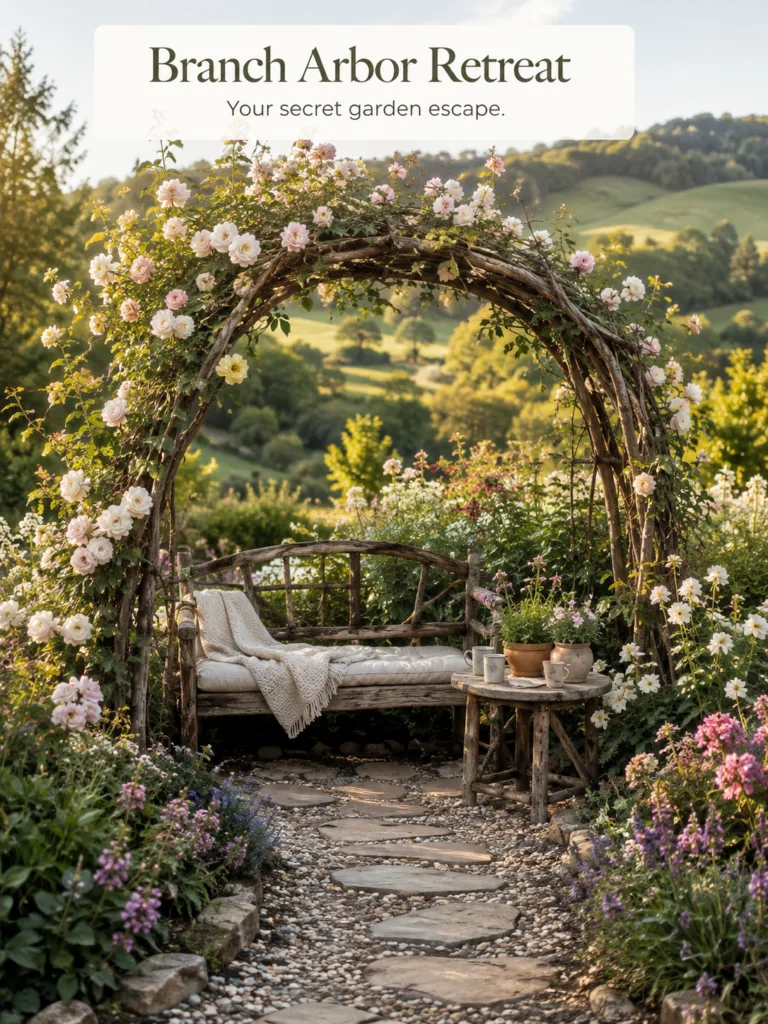
Imagine stepping into your backyard and finding a secluded, enchanting spot, a haven where you can unwind, read a book, or simply watch the bees visit your blooming flowers. This dream isn’t as far-fetched as it seems. Creating a personal garden retreat centered around a charming arbor, draped in fragrant climbing roses, offers not just beauty but a profound sense of peace and connection to nature. It’s a project that brings immense satisfaction, transforming an ordinary space into an extraordinary escape. This guide will walk you through designing, building, and planting your very own beautiful branch arbor, helping you cultivate a slice of paradise right at home.
The Magic of a Garden Arbor: More Than Just a Structure
An arbor is more than just an architectural feature; it’s a living gateway, a verdant tunnel, or a sheltered niche that invites you to pause and appreciate your garden’s beauty. When adorned with climbing plants, especially roses, it becomes a dynamic focal point, offering shade, fragrance, and a sense of enclosure that can make even a small garden feel grander and more intimate. Building a branch arbor emphasizes a natural, organic aesthetic, blending seamlessly with a cottage garden or a wilder, more informal landscape design.
Designing Your Rustic Branch Arbor
Before you begin gathering materials, consider the scale and placement of your arbor. Do you envision it as an entryway to another part of the garden, a backdrop for a seating area, or a standalone feature? Rustic branch arbors often use readily available materials, giving them a unique, handcrafted charm. Look for sturdy branches from fallen trees or pruned limbs, ensuring they are free of pests and diseases.
Materials and Tools for Your Arbor
- Sturdy Branches: Choose branches 3-4 inches in diameter for upright posts, and thinner, more flexible branches for cross-members and decorative elements.
- Fasteners: Heavy-duty screws, durable twine or wire, or even natural lashings for a truly rustic look.
- Tools: Saw, drill, level, measuring tape, and gardening gloves.
- Foundation: Digging tools, possibly concrete for setting posts if you want a permanent, extremely stable structure, especially in windy areas.
Placement and Size Considerations
Select a spot that receives adequate sunlight for your chosen climbing plants (most roses need at least 6 hours of direct sun). Ensure the size of the arbor is proportionate to your garden space and allows comfortable passage or seating beneath. A typical arbor opening might be 4-5 feet wide and 7-8 feet tall, allowing plenty of head clearance once plants grow over it.
Choosing and Cultivating Your Climbing Roses
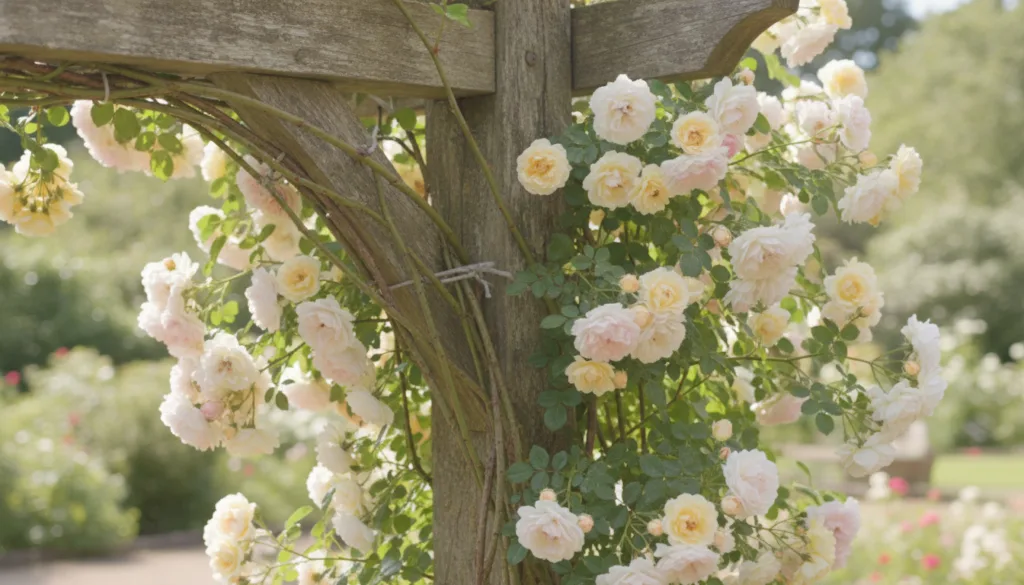
Climbing roses are the heart of a fragrant arbor. They are not true climbers in the sense of having tendrils, but rather have long, flexible canes that need to be trained and tied to a support structure. Select varieties known for their vigor, disease resistance, and enchanting fragrance.
Popular Climbing Rose Varieties for Arbors:
- ‘New Dawn’ (Rosa ‘New Dawn’): A vigorous, almost thornless climber with pale pink, fragrant blooms. Tolerates partial shade and is highly disease resistant.
- ‘America’ (Rosa ‘America’): Beautiful coral-pink flowers with a strong, spicy fragrance. A reliable performer.
- ‘Zephirine Drouhin’ (Rosa ‘Zephirine Drouhin’): A thornless Bourbon rose with deep pink, intensely fragrant blooms. Excellent for areas where thorns are a concern.
- ‘Eden Rose’ (Rosa ‘Pierre de Ronsard’): Known for its large, romantic, old-fashioned blooms in shades of cream, pink, and green.
Climbing Rose Care Essentials:
Hardiness: Most climbing roses are hardy in USDA Zones 5–9, but some can extend to Zone 4 with winter protection or Zone 10 in milder climates. Always check the specific variety’s hardiness.
Exposure: Full sun (at least 6 hours direct sunlight) is crucial for abundant blooms and healthy growth. Some varieties tolerate a bit of afternoon shade in hot climates.
Soil: Roses thrive in well-draining, rich loamy soil with a pH between 6.0 and 6.5. Amend heavy clay or sandy soils with plenty of compost before planting.
Watering: Water deeply and regularly, especially during dry spells and the first year after planting. Aim for moist, but not waterlogged, soil.
Spacing: Plant roses 1-2 feet from the base of the arbor posts, giving their roots room to establish without competing directly with the arbor structure.
Training and Pruning: This is key for climbing roses. As canes grow, gently tie them horizontally along the arbor supports using soft ties. Horizontal training encourages more lateral shoots and thus more flowers. Prune in late winter or early spring, removing dead, damaged, or crossing canes. For established plants, prune to maintain shape and encourage new growth. Remove spent flowers (deadhead) to promote continuous blooming for repeat-flowering varieties.
One Practical Care Tip: To encourage maximum blooms, train young rose canes horizontally rather than letting them shoot straight up. This stimulates more flowering side shoots along the entire length of the cane.
Warning: Be vigilant for common rose pests like aphids, spider mites, and diseases such as black spot and powdery mildew. Good air circulation through proper spacing and pruning helps prevent disease.
Enhancing Your Retreat with Companion Planting
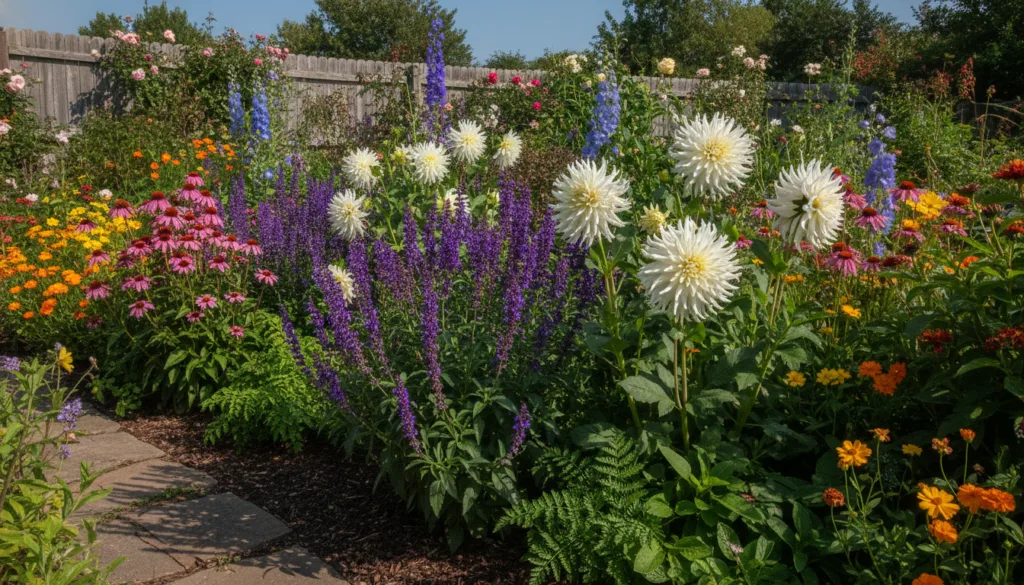
To create a lush, inviting garden retreat, surround your arbor with companion plants that complement your roses in color, texture, and bloom time. The image shows beautiful white dahlias and purple salvias, perfect choices for a cottage garden feel.
Dahlias (Dahlia spp.)
Dahlias offer spectacular, often dinner-plate-sized blooms in an incredible array of colors and forms. They are excellent for adding drama and continuous color from mid-summer until the first hard frost.
Plant Type: Tuberous perennial, often grown as an annual in colder climates.
Exposure: Full sun (at least 6 hours).
Soil: Rich, well-draining soil with a slightly acidic to neutral pH (6.5-7.0).
Watering: Keep soil consistently moist, especially during active growth and blooming.
Height: Varies greatly by cultivar, from 1 foot to over 6 feet.
One Practical Care Tip: Tall dahlia varieties almost always require staking to prevent their heavy blooms from snapping the stems. Install stakes at planting time to avoid damaging tubers later.
Warning: In USDA Zones 7 and colder, dahlia tubers generally need to be dug up and stored indoors over winter to protect them from freezing temperatures.
Salvia (Salvia nemorosa or Salvia spp.)
Salvias, particularly the perennial varieties like ‘May Night’ or ‘Caradonna’, provide spikes of vibrant purple or blue flowers that attract pollinators and bloom for an extended period, often from late spring through summer, especially with deadheading.
Plant Type: Perennial herb (many ornamental varieties are also perennials).
Hardiness: USDA Zones 4–9, depending on the species and cultivar.
Exposure: Full sun to light shade.
Soil: Well-draining soil is crucial; they tolerate a range of soil types once established.
Watering: Drought-tolerant once established, but perform best with regular watering during dry spells.
Height: 1.5 to 3 feet, with a similar spread.
One Practical Care Tip: Deadhead spent flower spikes regularly to encourage continuous blooming. A hard cut-back after the first flush of flowers can often lead to a second, strong bloom cycle.
Warning: While generally pest-resistant, ensure good air circulation to prevent powdery mildew in humid conditions.
Building Your Rustic Branch Arbor: Basic Steps
While specific construction can vary, here’s a general approach:
- Prepare the Site: Clear the area, ensuring it’s level. Mark the positions for your four main support posts.
- Set the Posts: Dig holes 18-24 inches deep for each main branch post. Place the branches, ensuring they are plumb (straight up and down) with a level. Backfill with soil, tamping firmly, or use concrete for extra stability.
- Add Crossbeams: Once the main posts are secure, attach horizontal branches across the top to connect the posts and create the roof structure. Use screws or strong lashing.
- Create Side Supports: Add thinner, more flexible branches between the main posts to form a lattice or natural framework for your climbing roses to twine around. These can be crisscrossed or run horizontally.
- Reinforce and Decorate: Ensure all connections are strong. You can add smaller, decorative branches or twists to enhance the rustic look.
Creating the Ultimate Garden Retreat Atmosphere
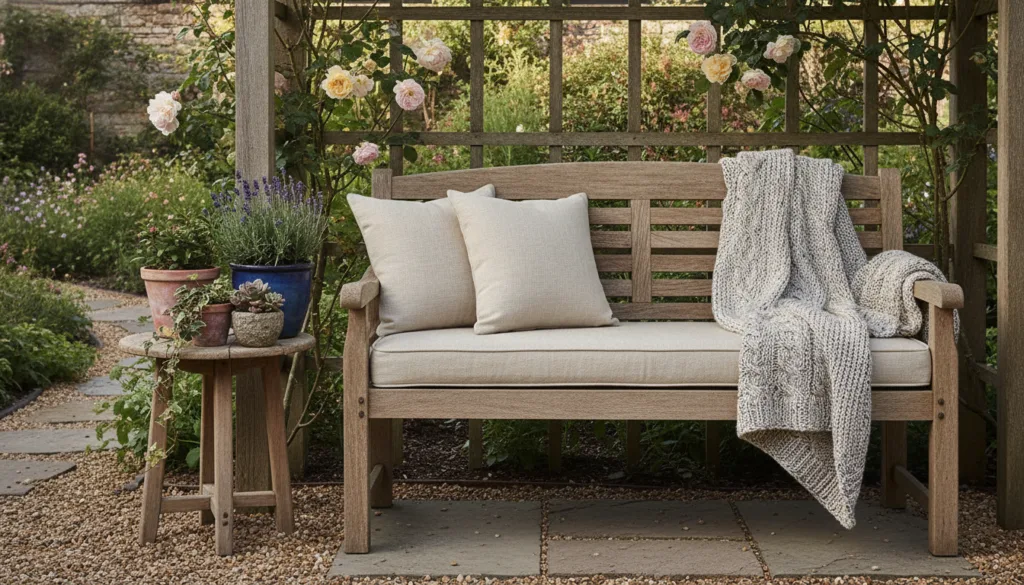
Once your arbor is built and planted, focus on the surrounding elements to complete your retreat. A simple wooden bench with comfortable cushions and a throw invites relaxation. A small rustic table for a drink or a book adds to the charm.
Pathways for a Gentle Approach
Consider adding a pathway leading to your arbor. Irregular stepping stones set into gravel or mulch create a natural, inviting approach that feels organic and welcoming, much like the one shown in our inspiration.
Common Mistakes to Avoid
- Underestimating Plant Growth: Climbing roses can become large and heavy. Ensure your arbor is sturdy enough to support their mature weight.
- Poor Drainage: Roses hate ‘wet feet.’ Always ensure the soil drains well to prevent root rot.
- Neglecting Training: Without proper training, climbing roses will send all their energy upwards, resulting in flowers only at the very top. Regular horizontal training is essential for a full, blooming arbor.
- Ignoring Local Climate: Always choose rose varieties and companion plants suited to your specific USDA hardiness zone and local climate conditions. For instance, in very hot, humid regions (e.g., Zones 9-11), choose heat-tolerant roses and ensure good air circulation to prevent fungal diseases. In colder regions (e.g., Zones 3-5), consider winter protection for roses or select extra cold-hardy varieties.
Conclusion: Your Sanctuary Awaits
Building a beautiful branch arbor and cultivating climbing roses is a rewarding journey that transforms your garden into a personal sanctuary. It’s a testament to the beauty of natural materials and the enduring charm of a thoughtfully designed outdoor space. By following these gardening tips on plant care, soil preparation, and thoughtful design, you’re not just building a structure; you’re creating a living, breathing retreat that will provide joy, beauty, and a quiet haven for years to come. Step by step, you can build a productive and sustainable garden that truly nurtures your soul. Happy gardening!