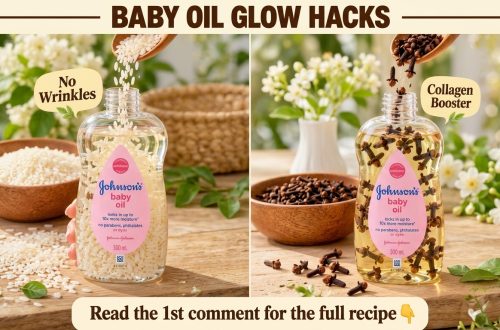
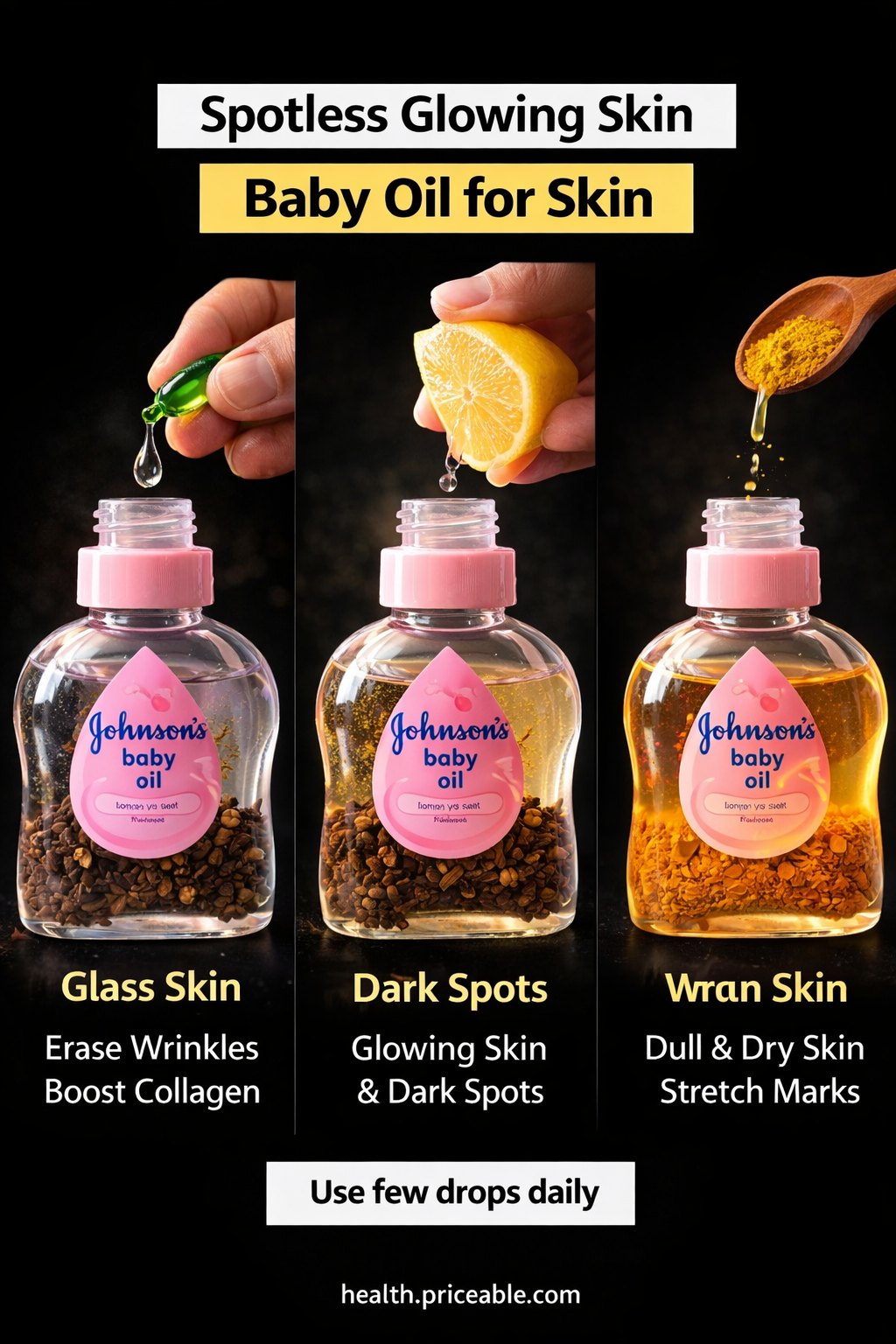
The most popular versions use clove, lemon, or turmeric, but each one needs a different safety approach.
The best way to use baby oil is simple: seal moisture, add shine, and keep strong add-ins away from delicate facial skin.
That makes it useful for glow, but not a complete skincare treatment.
Why baby oil gives fast-looking results
- It reflects light: shiny skin often looks smoother.
- It seals moisture: it works best after lotion or a shower.
- It spreads easily: a little covers a large body area.
- It is affordable: one bottle lasts a long time.
- It works well for body glow: legs, arms, and shoulders show the effect quickly.
For the face, use only the plainest version and patch test first. For lemon and turmeric blends, keep them body-only and rinse-off.
How to make baby oil skin recipes
These three versions match the viral glow idea while keeping the ratios more practical.
1. Clove baby oil for glassy body glow
- 3 tablespoons fragrance-free baby oil
- 3 whole cloves
- Add baby oil and whole cloves to a clean dry jar.
- Infuse for 24 hours only.
- Remove and discard the cloves.
- Apply a few drops to damp arms, legs, or shoulders.
2. Lemon baby oil body polish
- 1 tablespoon baby oil
- 1 teaspoon aloe vera gel
- 3 drops fresh lemon juice
- Mix fresh in a small bowl.
- Apply to rough body areas for 3 minutes.
- Rinse with cleanser.
- Use only at night and avoid sun exposure on that area afterward.
3. Turmeric baby oil dry-skin body blend
- 1 tablespoon baby oil
- 1 teaspoon plain yogurt or aloe gel
- 1 tiny pinch turmeric powder
- Mix until smooth.
- Apply to elbows, knees, or dull body patches.
- Leave on for 5 minutes.
- Rinse well and use an old towel.
Do not use lemon or turmeric baby oil as a leave-on face serum. Both can irritate or stain.
What to look for before you buy baby oil
The best baby oil for skin recipes is plain, low-fragrance, and easy to control.
- Fragrance-free label: better for sensitive skin and DIY mixing.
- Simple ingredient list: fewer extras reduce the chance of irritation.
- Clear oil: avoid shimmer or dyes for skincare recipes.
- Sealed bottle: do not buy leaking or opened packaging.
- Small pour opening: helps prevent overuse.
- Skin-use label: choose oil intended for topical use.
- Travel size option: useful for testing before buying a large bottle.
- Low scent: heavy perfume can clash with add-ins.
Best baby oil for glowing skin: simple selection guide
For glow, fragrance-free baby oil is usually the easiest choice because it layers well over lotion.
- For body glow: plain baby oil over damp skin works well.
- For dry patches: layer baby oil over lotion.
- For sensitive skin: avoid scented baby oil and citrus blends.
- For face use: use only a tiny amount and avoid acne-prone areas.
How to use baby oil for glass skin
The glass-skin effect comes from a thin reflective layer, not a thick coating.
- Cleanse or shower first.
- Apply lotion or moisturizer while skin is slightly damp.
- Add 2 to 3 drops of baby oil to your palms.
- Press onto the high points of the body or dry facial patches.
- Wait before dressing so the oil does not transfer.
If using on the face, start with one small dry area and avoid the eye area.
Common mistakes and quick fixes
- Mistake: using lemon oil or lemon juice as a leave-on. Why: it can irritate and increase sun sensitivity. Fix: keep lemon blends rinse-off and body-only.
- Mistake: adding too much turmeric. Why: it stains skin and towels. Fix: use only a tiny pinch.
- Mistake: leaving cloves in the oil for weeks. Why: the blend can become too strong. Fix: remove cloves after 24 hours.
- Mistake: applying thick layers. Why: the oil feels greasy. Fix: use a few drops only.
- Mistake: applying to dry skin without lotion. Why: oil seals better than it hydrates. Fix: apply over damp skin or lotion.
- Mistake: expecting dark spots to vanish. Why: baby oil does not fade pigmentation. Fix: use sunscreen and targeted skincare.
Baby oil skin recipes for dry skin: best uses
Baby oil is most useful on dry body areas such as legs, elbows, knees, heels, and hands.
For facial dryness, use a tiny amount over moisturizer and stop if you notice clogged pores, bumps, or irritation.
Safety note
Do not apply baby oil recipes to broken skin, fresh burns, active rashes, infected areas, or irritated breakouts.
Patch test all DIY blends. Be extra careful with lemon, clove, and turmeric because they can irritate sensitive skin.
Realistic glow timeline
- Same day: skin may look shinier and smoother from the oil finish.
- After 1 week: dry body areas may feel softer when baby oil is used after bathing.
- After 2 to 4 weeks: skin may look more polished with consistent lotion, oil, and sunscreen habits.
FAQ
What is the best baby oil for glowing skin?
Fragrance-free baby oil is usually best because it is simple, easy to layer, and less likely to irritate.
What should I look for before I buy baby oil?
Look for a simple ingredient list, fragrance-free labeling, sealed packaging, and a bottle that controls small amounts.
How do you make baby oil skin recipes?
Mix baby oil with gentle ingredients in small fresh batches. Keep clove infusions mild and use lemon or turmeric only in rinse-off body blends.
How do you use baby oil for glass skin?
Apply lotion first, then press a few drops of baby oil over damp skin for a glossy finish.
Are baby oil skin recipes good for dry skin?
They can help seal moisture on dry skin, especially when used over lotion or damp skin.
Can baby oil remove dark spots?
No. Baby oil can make skin look shiny, but it does not remove dark spots.
Can I use baby oil on my face every day?
Daily facial use may be too heavy for some people. Start with dry patches only.
Can turmeric baby oil stain?
Yes. Use a tiny amount, keep it body-only, rinse well, and use an old towel.
When choosing a bottle, compare fragrance-free options first. A plain baby oil gives you more control than a heavily scented version.
Final takeaway
- Best use-case: instant body glow and dry patch sealing.
- Simplest routine: lotion first, baby oil second.
- What to buy: fragrance-free baby oil, whole cloves, aloe gel, and a small turmeric container.
- What to avoid: lemon leave-on use, turmeric on the face, and thick oily layers.
- Next step: test the plain version before trying any add-ins.