Do you look out at your backyard and see less of a lush oasis and more of a muddy challenge, especially after a good rain? Many gardeners face the frustrating reality of poor drainage, turning dreams of a beautiful landscape into a soggy nightmare. But what if that persistent puddle could become a design opportunity, a functional feature that not only solves drainage issues but elevates your entire garden into a serene retreat?
It’s entirely possible to turn a problematic patch into a picturesque haven. This guide will walk you through the inspiring transformation of a waterlogged space into a captivating garden, featuring practical elements like dry creek beds and elegant pathways. We’ll explore how thoughtful design, strategic plant choices, and simple gardening tips can help you reclaim your yard, creating an inviting outdoor living space you’ll love for years to come.
The Power of a Dry Creek Bed: Beyond Drainage
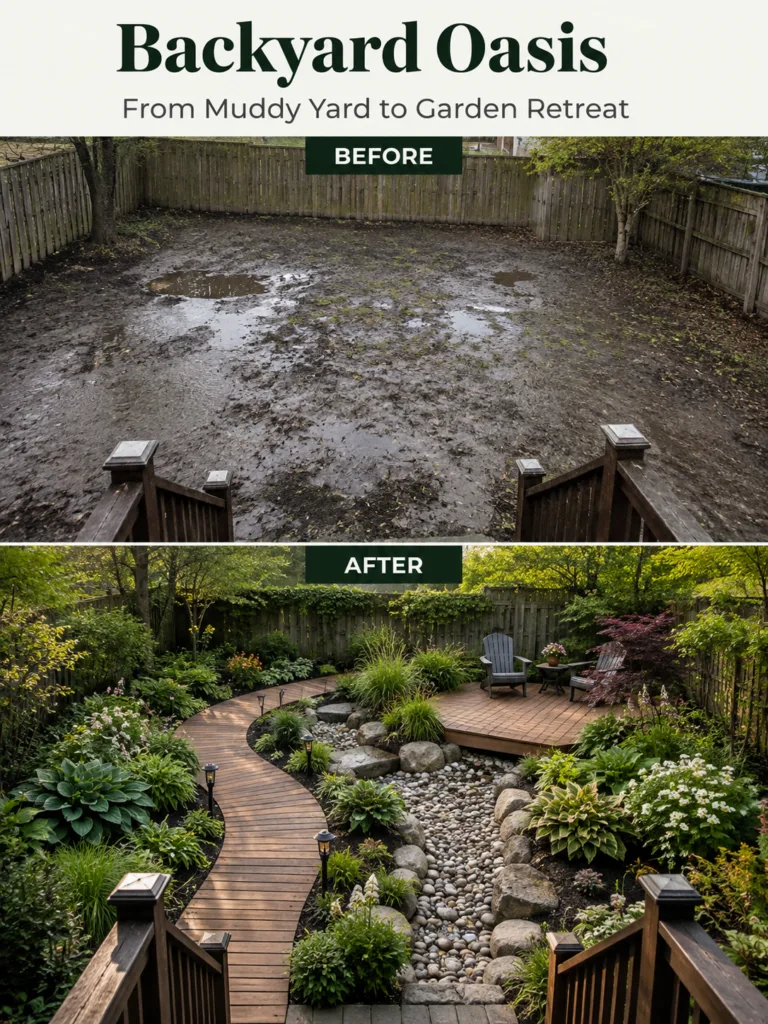
A dry creek bed is much more than just a landscape feature; it’s an ingenious solution for managing stormwater, preventing erosion, and adding significant aesthetic appeal to your garden. Mimicking a natural streambed, it consists of strategically placed stones, gravel, and sometimes larger boulders, designed to guide excess water away from problem areas. When dry, it serves as a beautiful visual element, bringing texture and interest. When it rains, it springs to life, efficiently moving water while protecting your plants and structures.
The beauty of a dry creek bed lies in its versatility. It can meander through planting beds, define garden zones, and even serve as a natural pathway. This sustainable gardening tip can significantly reduce runoff, improve soil stability, and create a habitat for beneficial insects and wildlife.
Crafting Your Garden Retreat: Key Design Elements
Transforming a challenging space starts with a clear vision and thoughtful planning. Consider how you want to use the space and what atmosphere you wish to create. The example of transforming a muddy patch into a vibrant garden retreat shows several essential components working together seamlessly.
Winding Pathways and Seating Areas
A well-designed pathway, like a gently curving wooden boardwalk, invites exploration and provides safe, dry passage through your garden. Materials like treated lumber or composite decking offer durability and resistance to moisture. Alongside pathways, integrating a comfortable seating area, such as a small deck with Adirondack chairs, creates a destination point – a place to relax, read, or simply enjoy your garden’s beauty.
Thoughtful Plant Selection for Resilience and Beauty
Choosing the right plants is crucial for a garden that not only looks good but thrives, especially in areas prone to moisture or challenging conditions. Focus on species that appreciate moist, well-draining soil but can also tolerate drier spells once established. Look for plants that offer year-round interest through foliage, bloom, or structural form.
Hostas (Hosta spp.)
These shade-loving perennials are stars of the garden, cherished for their diverse foliage in shades of green, blue, and gold. They are excellent for moist areas around a dry creek bed.
- Hardiness: USDA Zones 3-9
- Plant type: Perennial
- Exposure: Part shade to full shade (protect from intense afternoon sun)
- Soil: Rich, consistently moist, well-draining
- Watering: Regular, especially during dry periods
- Height: 6 inches to 3 feet; Spread: 1 to 5 feet, depending on cultivar
- Practical Tip: Watch for slugs and snails; use organic baits or create barriers to protect their leaves.
Ornamental Grasses
Adding movement, texture, and often captivating fall and winter interest, ornamental grasses are invaluable. Many varieties are tolerant of varying soil moisture, making them suitable for mixed beds.
- Hardiness: Varies widely by species (e.g., Miscanthus 4-9, Hakonechloa 5-9)
- Plant type: Perennial
- Exposure: Full sun to part sun (species dependent)
- Soil: Adaptable, but prefers well-draining soil
- Watering: Moderate once established; more frequent for new plants
- Height: 1 to 8 feet; Spread: 1 to 6 feet, depending on species
- Practical Tip: Cut back most perennial ornamental grasses in late winter or early spring before new growth appears for a tidy look.
Flowering Shrubs (e.g., Hydrangea)
Shrubs with profuse white blooms add brightness and structure. Many hydrangeas thrive in conditions that a dry creek bed might create nearby – consistent moisture and some protection from intense sun.
- Hardiness: Varies by species (e.g., Hydrangea paniculata 3-8, H. macrophylla 5-9)
- Plant type: Deciduous shrub
- Exposure: Full sun to part shade (afternoon shade often preferred in warmer zones)
- Soil: Moist, well-drained, rich, slightly acidic to neutral
- Watering: Regular, especially during establishment and dry spells
- Height: 3 to 8 feet; Spread: 3 to 8 feet, depending on cultivar
- Practical Tip: Prune according to the type of hydrangea; some bloom on old wood, others on new wood. Research your specific variety for best results.
Japanese Maple (Acer palmatum)
Known for their exquisite foliage and graceful form, Japanese maples add a touch of elegance and vibrant color, especially the red-leaf varieties. They make a fantastic focal point.
- Hardiness: USDA Zones 5-8 (some cultivars extend to 9)
- Plant type: Deciduous tree or large shrub
- Exposure: Part shade is ideal, especially for red varieties to prevent leaf scorch in hot afternoon sun.
- Soil: Moist, well-drained, slightly acidic, rich in organic matter.
- Watering: Consistent moisture, do not let soil dry out completely, especially when young.
- Height: 6 to 25 feet; Spread: 6 to 20 feet, depending on cultivar and pruning
- Practical Tip: Protect from strong winds and harsh afternoon sun, which can scorch delicate leaves. Prune minimally to maintain natural shape.
Climbing Greenery for Fences
Softening a fence with climbing plants adds privacy, texture, and visual interest, turning a plain boundary into a living wall. Options like climbing hydrangea or less aggressive native vines can transform the backdrop of your garden.
- Hardiness: Varies by species (e.g., Climbing Hydrangea 4-8, Virginia Creeper 3-9)
- Plant type: Woody vine
- Exposure: Part shade to full sun (species dependent)
- Soil: Adaptable, prefers well-drained
- Value: Adds privacy, softens hard lines, provides habitat
- Warning: Be cautious with aggressive climbers like English Ivy or even vigorous Virginia Creeper, which can damage structures or outcompete other plants if not managed. Choose non-invasive options for your region.
Step-by-Step Guidance for Your Transformation
1. Address the Drainage First
Before any aesthetic improvements, understand the water flow in your yard. Observe where water collects and how it moves. This will inform the path of your dry creek bed. You may need to amend heavy clay soils with organic matter like compost to improve overall drainage in planting areas, even outside the creek bed.
2. Plan and Mark Your Layout
Sketch your vision. Mark the path of your dry creek bed and boardwalk with spray paint or a garden hose. Consider how these elements will integrate with your existing landscape and future planting beds. Aim for natural, winding curves rather than straight lines.
3. Construct the Dry Creek Bed
Dig a shallow trench along your marked path, wider at the top and tapering towards the bottom. The depth and width will depend on the amount of water it needs to handle. Line the trench with permeable landscape fabric to prevent weeds and keep stones from sinking into the soil. Fill with a layer of larger river stones and boulders, then smaller gravel to create a natural, varied look. Ensure a slight slope for water flow.
4. Install Pathways and Seating
Prepare the ground for your boardwalk by leveling the area and installing a stable base, such as gravel or concrete footings, to keep the wood off the damp ground. Construct your deck or seating area on a solid foundation. Consider solar-powered pathway lights for ambiance and safety after dusk.
5. Prepare Planting Beds and Plant
Once the structural elements are in place, prepare your planting beds. This involves removing weeds, loosening the soil, and incorporating generous amounts of organic compost to improve fertility and drainage. Space plants according to their mature size, ensuring good airflow to prevent fungal diseases. Mulch heavily with wood chips or shredded bark to suppress weeds, retain soil moisture, and moderate soil temperature.
Common Mistakes to Avoid
- Ignoring the Root Cause: Simply moving mud around without addressing underlying drainage issues will lead to recurring problems.
- Poor Plant Choices: Selecting plants not suited for your specific light, soil, or moisture conditions will result in struggling specimens. Research local varieties and their needs carefully.
- Insufficient Soil Preparation: Healthy plants start with healthy soil. Don’t skimp on amending compacted or nutrient-poor soil.
- Skipping the Mulch: Mulch is not just for aesthetics; it’s vital for soil health, moisture retention, and weed suppression.
- Overly Formal Design: For a natural retreat feel, aim for organic shapes and varied textures rather than rigid lines.
Regional & Seasonal Considerations in the U.S.
Gardening across the United States means adapting to diverse climates and USDA hardiness zones. While the principles of good drainage and thoughtful design apply everywhere, plant choices and planting times will vary.
- Zones 3-5: Focus on extremely cold-hardy varieties of hostas, many ornamental grasses, and panicle hydrangeas. Ensure plants are well-established before winter.
- Zones 6-8: A wide range of plants thrive here, including Japanese maples, various hydrangeas, and diverse ornamental grasses. Protect delicate plants from late spring frosts.
- Zones 9-11: Choose plants that can tolerate summer heat and humidity, or opt for more drought-tolerant species in arid regions. Japanese maples may need more afternoon shade. Consider plants that provide year-round interest due to longer growing seasons.
Always consult your local extension service for specific recommendations regarding planting dates, suitable cultivars, and common pest or disease issues in your microclimate.
Your Garden Awaits
Transforming a muddy, neglected area into a beautiful garden retreat is one of the most rewarding gardening projects you can undertake. By thoughtfully incorporating practical solutions like a dry creek bed, a welcoming boardwalk, and a palette of resilient plants, you’re not just fixing a problem; you’re creating a sanctuary. This journey from a challenging space to a vibrant, functional outdoor living area empowers you to become a more capable and observant gardener, deeply connected to the natural cycles of your landscape. Get inspired, plan with purpose, and start building the serene garden retreat you deserve.