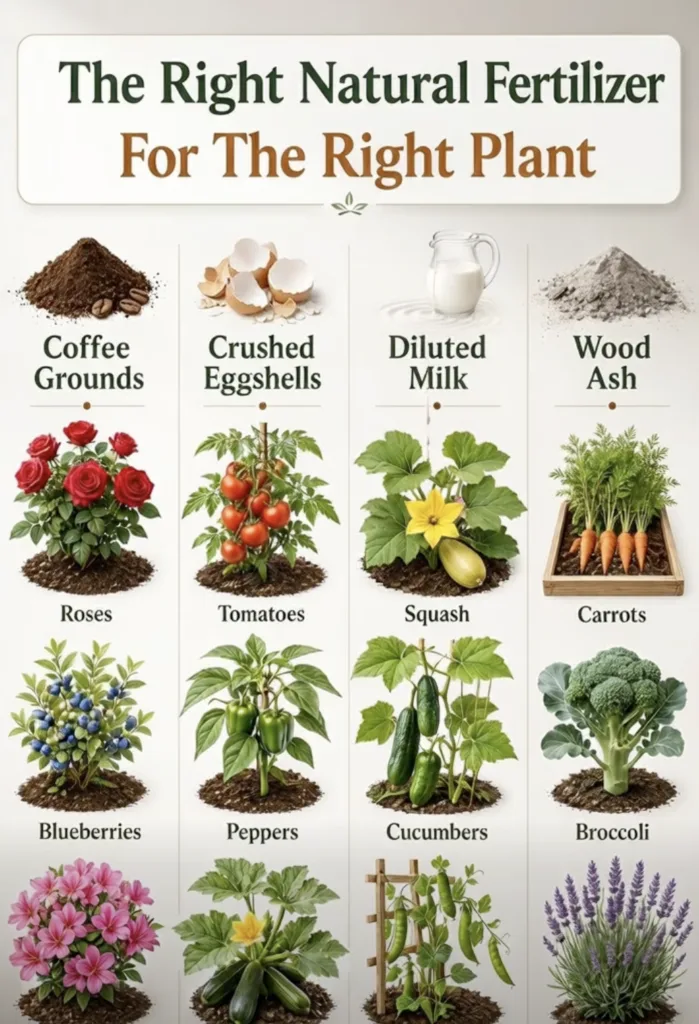
You don’t always need expensive fertilizer to give your garden a little extra support. Some common household materials can be useful soil amendments when they’re used correctly and in moderation.
The key is knowing that every plant has different needs. Coffee grounds, eggshells, diluted milk, and wood ash don’t work the same way—and more is definitely not always better.
Here’s a simple guide to using them wisely.
☕ Coffee Grounds: Roses, Blueberries & Azaleas
Used coffee grounds contain organic matter and small amounts of nutrients. When mixed into compost or soil, they can help improve soil structure over time.
Plants commonly associated with coffee grounds:
- Roses
- Blueberries
- Azaleas
Blueberries and azaleas prefer acidic soil, but there’s an important detail: used coffee grounds are not a reliable way to dramatically lower soil pH.
How to Use
Allow used coffee grounds to cool, then add a thin layer to your compost or mix a small amount into the top layer of soil.
Avoid piling thick layers directly around plant stems because compacted grounds can interfere with airflow and water movement.
Best tip: Add coffee grounds to compost first, then use the finished compost around your plants.
🥚 Crushed Eggshells: Tomatoes, Peppers & Zucchini
Eggshells are primarily made of calcium carbonate. Over time, finely crushed eggshells can contribute calcium to the soil.
Plants that may benefit:
- Tomatoes
- Peppers
- Zucchini
Calcium is especially important for healthy plant development. However, eggshells break down slowly, so they should not be considered a quick treatment for an existing nutrient deficiency.
How to Use
Wash the shells and let them dry completely.
Crush or grind them as finely as possible, then sprinkle a small amount into the soil or add them to your compost pile.
The finer the shells, the faster they can break down.
🌱 Garden tip: If tomatoes or peppers develop blossom-end rot, watering consistency is often just as important as calcium availability.
🥛 Diluted Milk: Squash, Cucumbers & Peas
Milk contains small amounts of calcium, protein, and other nutrients. Some gardeners occasionally use heavily diluted leftover milk in the garden.
Plants shown in this guide:
- Squash
- Cucumbers
- Peas
How to Use
Mix approximately:
1 part milk + 4–10 parts water
Apply a small amount around the soil rather than repeatedly soaking the plant.
Always use it sparingly. Too much milk can create unpleasant odors, attract pests, and encourage unwanted microbial growth.
It should be viewed as an occasional garden experiment—not a replacement for compost or balanced plant nutrition.
🔥 Wood Ash: Carrots, Broccoli & Lavender
Clean wood ash contains potassium, calcium, and other minerals. It can also raise soil pH, making acidic soil more alkaline.
Plants that may tolerate or benefit from small amounts:
- Carrots
- Broccoli
- Lavender
Because lavender generally prefers neutral to alkaline conditions, a small amount of wood ash may be useful when the soil is too acidic.
How to Use
Use only ash from clean, untreated wood.
Never use ash from:
- Painted wood
- Pressure-treated lumber
- Charcoal briquettes
- Household trash
Sprinkle a very thin layer over the soil and mix it in.
⚠️ Wood ash is powerful, so avoid applying large quantities.
Know Your Soil Before Adding Anything
The most important gardening rule is simple:
Feed the soil based on what it actually needs.
A plant may not benefit from an amendment simply because it appears on a gardening chart. Soil pH, drainage, existing nutrient levels, climate, and watering habits all affect how well plants grow.
If possible, test your soil before making major changes.
For example, wood ash can be useful in acidic soil—but adding it to soil that is already alkaline could make nutrient problems worse.
Natural Doesn’t Mean Unlimited
Natural garden ingredients can still cause problems when overused.
For safer results:
- Start with small amounts.
- Compost household materials whenever possible.
- Keep amendments away from the main stem.
- Watch how your plants respond.
- Avoid applying the same ingredient repeatedly without knowing your soil conditions.
Remember that coffee grounds, eggshells, milk, and wood ash are better considered supplements or soil amendments, rather than complete fertilizers.
Final Garden Tip 🌿
A thriving garden usually comes from combining several basics: healthy soil, compost, correct watering, enough sunlight, and appropriate nutrients.
Household garden amendments can be useful—but the secret is matching them to the right soil and using them in moderation.
Save this guide for your next gardening day! 🌱💚
#GardeningTips #NaturalFertilizer #GardenHacks #PlantCare #OrganicGardening