Did you know you can get so much more from your veggies than just one harvest? It’s true! Many common kitchen scraps, the parts we usually toss away, can be easily regrown into fresh, delicious produce right in your home. This amazing trick helps you extend your bounty, save money, and significantly reduce food waste!
Imagine a continuous supply of your favorite greens, herbs, and even some root vegetables, all from pieces you would have otherwise discarded. It’s a simple, incredibly rewarding way to keep your garden (and your plate!) full, even if you don’t have a traditional outdoor garden. All you need is a little water, some sunshine, and a touch of patience.
From the crisp crunch of celery to the zesty flavor of green onions, discover how surprisingly easy it is to bring your veggies back to life. No fancy tools or complex techniques are needed – just a few basic steps will lead you to an endless supply of homegrown goodness. Let’s dive into 9 fantastic vegetables you can start regrowing today!
Why Regrow Your Veggies? The Benefits Are Abundant!
Regrowing vegetables isn’t just a fun garden hack; it comes with a whole host of benefits that make it an incredibly worthwhile activity for any home:
- Reduce Food Waste: This is perhaps the most immediate and impactful benefit. By giving new life to scraps, you’re diverting organic material from landfills and making the most of every purchase.
- Save Money: Who doesn’t love free food? Constantly buying fresh produce can add up. Regrowing helps you stretch your grocery budget further.
- Enjoy Fresh, Healthy Produce: There’s nothing quite like the taste of homegrown food. You get to enjoy ultra-fresh vegetables, often picked minutes before they hit your plate.
- A Fun and Educational Activity: It’s a fantastic project for all ages, perfect for teaching kids about where food comes from and the magic of nature.
- Sustainability at Your Fingertips: It’s a small step towards a more sustainable lifestyle, connecting you more deeply with your food source.
- No Garden? No Problem!: Many regrowable veggies thrive indoors on a windowsill, making them perfect for apartment dwellers or those with limited space.
Getting Started: General Tips for Regrowing
While each vegetable has its nuances, a few universal tips will help ensure your regrowing success:
- Choose Healthy Scraps: Always start with fresh, healthy, organic produce if possible. Avoid any pieces that show signs of rot or disease.
- Use Clean Water: Change the water daily, or at least every other day, to prevent mold and bacterial growth. Tap water is usually fine.
- Provide Plenty of Sunlight: Most vegetables need at least 4-6 hours of indirect to direct sunlight. A sunny windowsill is often perfect.
- Consider Transplanting: While some veggies can live in water indefinitely (like green onions), many others will benefit from being transplanted into soil once they develop a good root system.
- Be Patient: Growth takes time! Don’t get discouraged if you don’t see results immediately.
9 Amazing Vegetables You Can Regrow Easily
1. Green Onions (Scallions)
Green onions are perhaps the easiest and most popular vegetable to regrow!
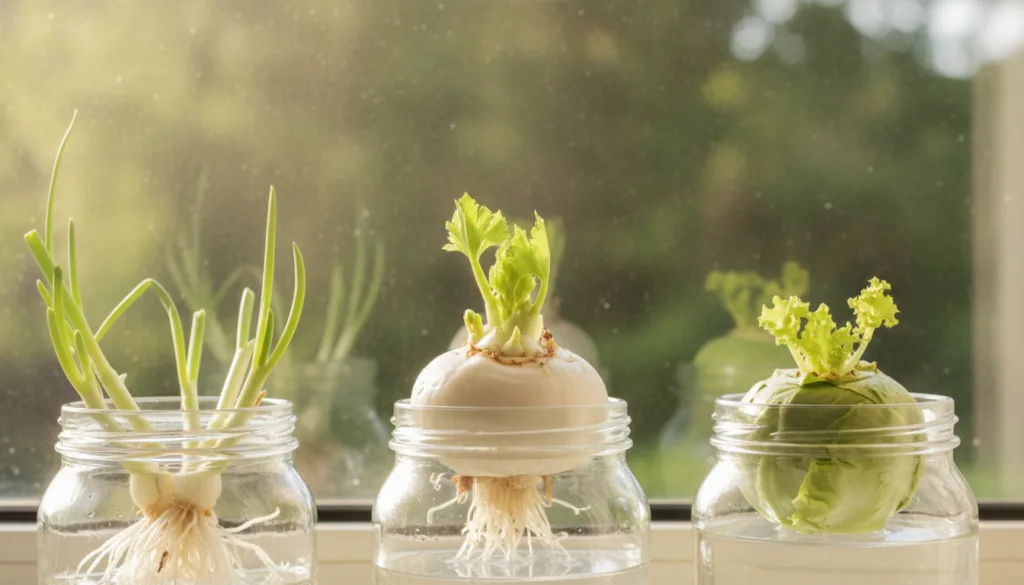
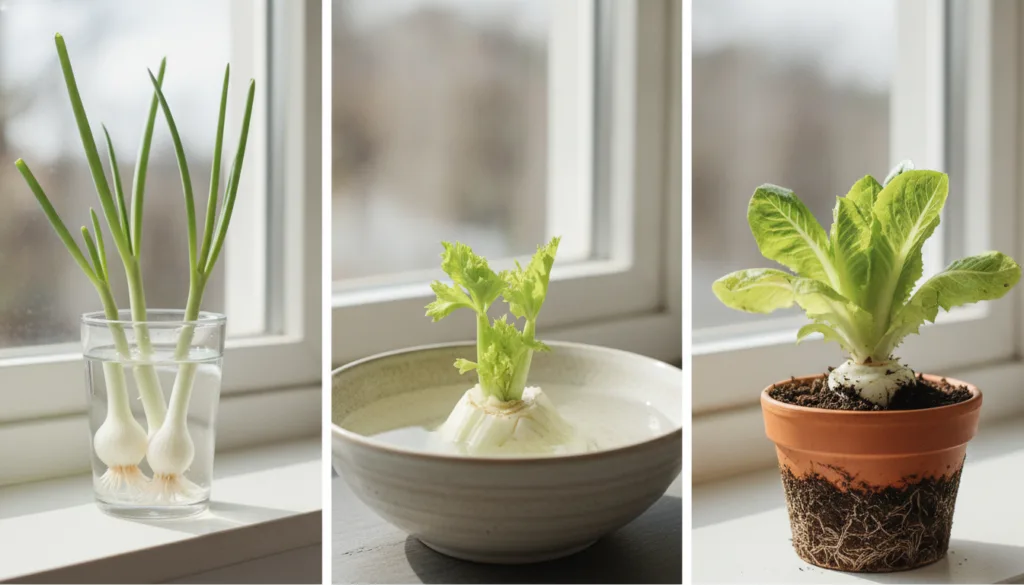
- How to: Cut off the white ends with roots, leaving about an inch. Place the root ends in a shallow glass of water, ensuring the roots are submerged but the cut top isn’t.
- Placement: A sunny windowsill.
- Harvest: In just a few days, you’ll see new green shoots. Snip off what you need and let them keep growing!
- Bonus: They can keep regrowing in water for a long time, or you can transplant them into soil for even bigger growth.
2. Celery
Get a whole new stalk from the base!
- How to: Cut about two inches from the base of a celery bunch. Place it in a shallow bowl or cup with about an inch of water.
- Placement: A sunny spot.
- Process: New leaves will sprout from the center within a week. Once roots appear and new leaves are established, transplant it into a pot with soil, burying the base and leaving the new growth exposed.
- Harvest: Once established in soil, you can harvest outer stalks as needed.
3. Romaine Lettuce (and other Leafy Greens)
Similar to celery, you can regrow many types of leafy greens.
- How to: Cut about two inches from the bottom of the lettuce head. Place the base in a shallow bowl with half an inch of water.
- Placement: A bright windowsill.
- Process: You’ll see new leaves emerging from the center within a few days. Once roots develop, transplant to soil for a fuller head, or continue growing in water for smaller leaves.
- Harvest: Harvest outer leaves as they grow.
4. Bok Choy
Another excellent leafy green for regrowing!
- How to: Cut off the base, leaving about 1-2 inches. Place it in a shallow bowl of water.
- Placement: Sunny spot.
- Process: New shoots will emerge from the center. After a week or two, once roots have formed, transplant into soil for larger, more vigorous growth.
- Harvest: Snip off the outer leaves as they mature.
5. Cabbage
Similar to lettuce and bok choy, cabbage can be regrown from its core.
- How to: Take the core of a cabbage head, leaving a few outer leaves attached (about 2-3 inches of the base). Place it in a shallow bowl of water.
- Placement: Bright, indirect light.
- Process: New leaves will sprout from the top. Once roots form, transfer to a larger pot with soil.
- Harvest: Harvest the new leaves as they grow, or wait for a small new head to form.
6. Garlic
While you won’t get full garlic bulbs this way, you can get delicious garlic greens!
- How to: Place a whole garlic clove (or one that has started to sprout) root-end down in a shallow dish with a little water.
- Placement: Sunny windowsill.
- Process: Green shoots will emerge from the top. You can keep them in water, or transplant them to soil for stronger growth.
- Harvest: Snip the green shoots as you need them for a mild garlic flavor in salads or stir-fries.
7. Ginger
Yes, you can regrow ginger root!
- How to: Look for a piece of ginger root with visible ‘eyes’ or buds. Plant it in moist potting soil with the eyes facing upwards. Bury it just slightly below the surface.
- Placement: Warm, bright spot (indirect sunlight).
- Process: Ginger is slower, taking weeks to sprout. Keep the soil consistently moist.
- Harvest: After several months, you can dig up the plant, harvest some of the new rhizomes (ginger root), and replant the rest.
8. Potatoes (Sweet Potatoes)
You can sprout potatoes to grow more, but it’s a bit different.
- How to: For regular potatoes, cut a potato into pieces, ensuring each piece has at least one ‘eye’. Let them cure for a day or two to prevent rot. Plant in soil about 4-6 inches deep. For sweet potatoes, place a whole sweet potato halfway in a jar of water, narrow end down.
- Placement: Sunny spot for both.
- Process: Potato pieces will sprout in soil. Sweet potatoes will sprout ‘slips’ in water. Once slips are 4-6 inches long, twist them off and root them in water. Then plant the rooted slips in soil.
- Harvest: Regular potatoes are harvested when the plant dies back. Sweet potatoes are harvested when the leaves turn yellow.
9. Carrots (for Greens)
While you can’t regrow a full carrot root, you can grow delicious carrot greens!
- How to: Cut about an inch off the top of a carrot, leaving some of the green attached. Place the top in a shallow dish with a small amount of water.
- Placement: Bright windowsill.
- Process: Green shoots will emerge quickly.
- Harvest: Snip the feathery greens for salads or as a garnish. They have a mild, earthy flavor.
Tips for Continued Success
- Monitor Water Levels: Especially in warmer weather, water can evaporate quickly. Keep an eye on your water-based regrows.
- Fertilize (for soil-based): Once transplanted into soil, a dilute organic liquid fertilizer can help boost growth.
- Pest Watch: Indoor plants can still attract pests. Keep an eye out and use natural pest control methods if needed.
- Experiment: Don’t be afraid to try other veggie scraps! Learning what works best for you is part of the fun.
Ready to Start Your Regrowing Adventure?
Regrowing vegetables is a wonderfully simple and satisfying way to bring more fresh food into your life while reducing waste. It’s an accessible form of gardening for everyone, regardless of experience or space.
So, which vegetable are YOU most excited to regrow next? Share your thoughts and any regrowing tips you have in the comments below! Happy gardening!