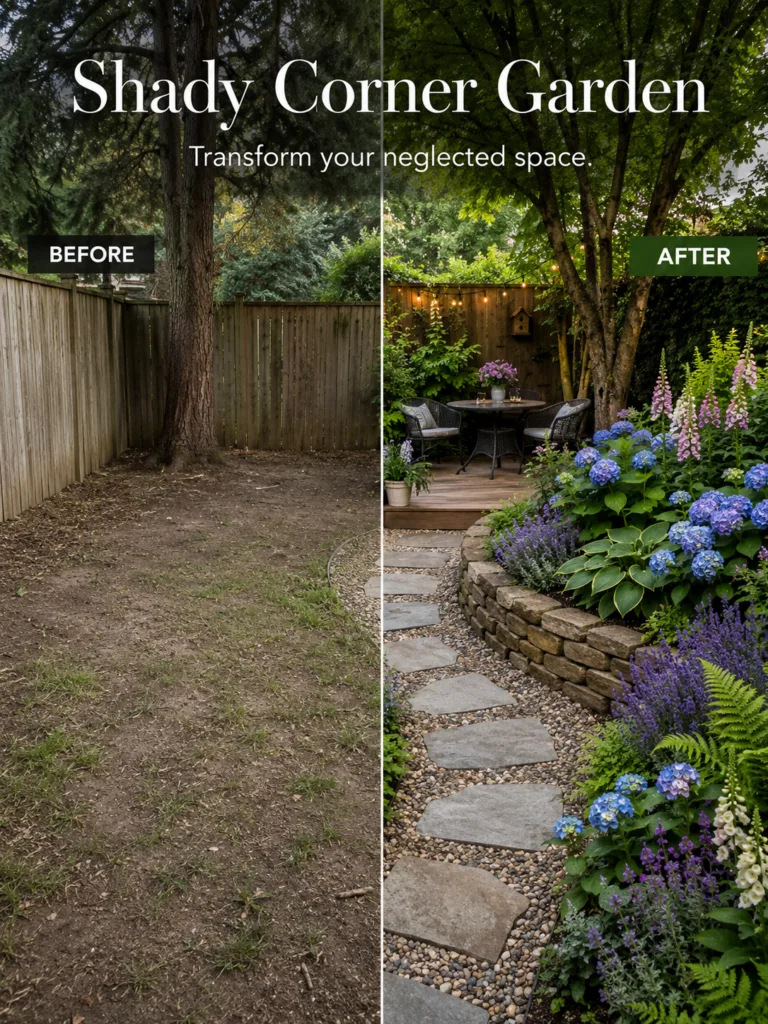
Do you have a challenging shady corner in your yard where grass refuses to grow, leaving you with a perpetually bare and uninspiring patch of earth? Many gardeners feel frustrated by these low-light areas, seeing them as obstacles rather than opportunities. But what if that ‘tricky’ spot could become your favorite retreat, a tranquil haven bursting with lush foliage and vibrant blooms? It’s entirely possible to turn a neglected, shaded area into a serene and productive part of your outdoor living space. With a little vision, thoughtful design, and the right plant choices, you can unlock the hidden potential of even the deepest shade. Let’s explore how to transform that overlooked corner into an inviting garden oasis, step by practical step.
Embracing the Magic of Shade Gardening
Shade gardening isn’t about compromising; it’s about celebrating a different kind of beauty. Unlike sun-drenched beds that often rely on bold, fleeting blooms, shade gardens thrive on texture, varied greens, and softer, longer-lasting floral displays. The key principle is to work with your conditions, not against them. Understanding the type of shade you have – whether it’s full shade (less than 3 hours of direct sun), partial shade (3-6 hours of sun, often morning sun), or dappled shade (filtered light through tree canopy) – is crucial for selecting plants that will truly flourish.
Start with Structure: Defining Your Space
Before planting, consider the bones of your garden. Hardscaping elements can define the space, create focal points, and provide functional areas. A curved stone retaining wall, for instance, not only adds visual interest but also creates a raised bed for better soil management and drainage, especially important under large trees. A winding path of stepping stones through small pebbles invites exploration and keeps foot traffic off planting areas, protecting delicate shade plants. For an intimate seating area, a small deck or patio provides a perfect spot for relaxation and enjoying your newly created haven.
Choosing the Right Plants for Shady Retreats
The secret to a thriving shade garden lies in selecting plants that naturally prefer or tolerate lower light conditions. Forget trying to force sun-loving annuals; instead, revel in the diversity of shade-tolerant perennials, shrubs, and groundcovers.
Hydrangeas: The Queens of Partial Shade
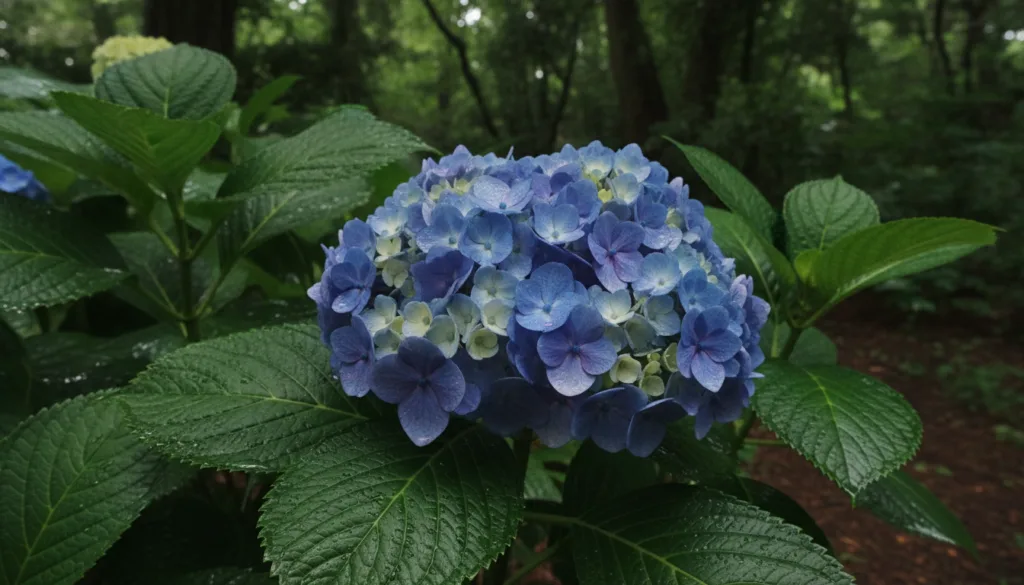
Hydrangeas (Hydrangea spp.) are iconic shade garden plants, particularly Bigleaf Hydrangeas (Hydrangea macrophylla) and Mountain Hydrangeas (Hydrangea serrata). Their large, often showy flower clusters range from blue, pink, purple, and white, with the blue hues often appearing in acidic soils. They offer a long season of interest.
- Hardiness: USDA Zones 3-9, depending on species and cultivar.
- Plant type: Deciduous shrub.
- Exposure: Partial shade to full morning sun with afternoon shade. Too much sun can scorch leaves, while too much shade reduces flowering.
- Height: 3-6 feet (0.9-1.8 m) and similar spread.
- Watering: Prefer consistently moist, well-draining soil. Avoid letting them dry out completely, especially during hot spells.
- Care tip: Amend soil with compost to improve moisture retention and drainage. For blue flowers, ensure acidic soil (pH 5.2-5.5) by adding sulfur or aluminum sulfate.
- Common mistake: Pruning at the wrong time (prune after flowering for ‘old wood’ bloomers, or in early spring for ‘new wood’ bloomers).
Foxgloves: Striking Vertical Accents
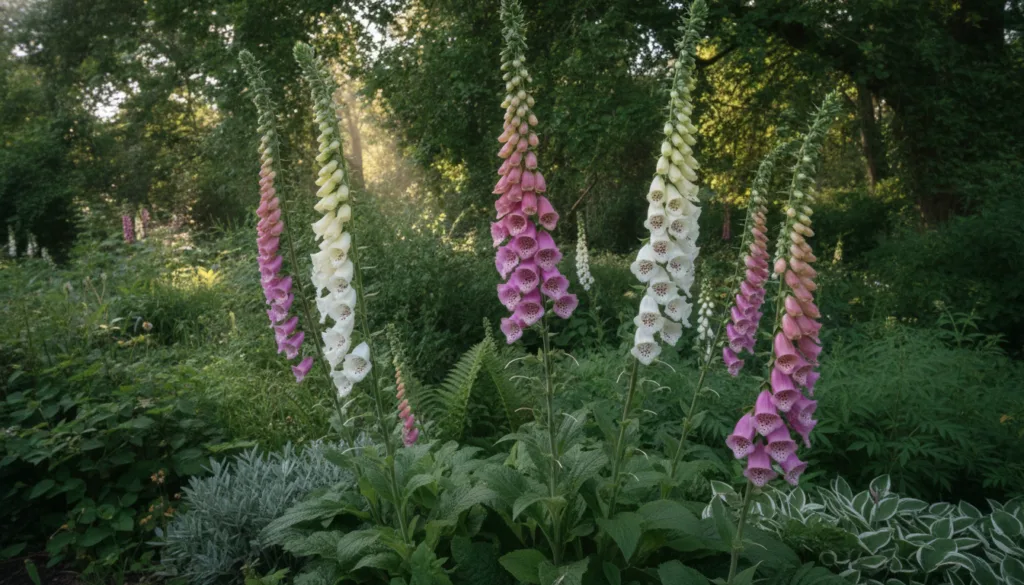
Foxgloves (Digitalis purpurea) are classic cottage garden favorites that bring magnificent vertical drama to a shade border. Their bell-shaped flowers, often speckled inside, attract pollinators like bees. They are typically biennials, meaning they grow foliage in their first year and flower in their second, often self-seeding to ensure a continuous display.
- Hardiness: USDA Zones 4-9.
- Plant type: Biennial.
- Exposure: Partial shade to full shade. Morning sun is ideal for best blooming.
- Height: 2-5 feet (0.6-1.5 m).
- Spacing: 12-18 inches (30-45 cm) apart.
- Care tip: Allow some spent flowers to go to seed to encourage future generations. Be aware that all parts of the plant are poisonous if ingested.
Ferns: The Essence of Lushness
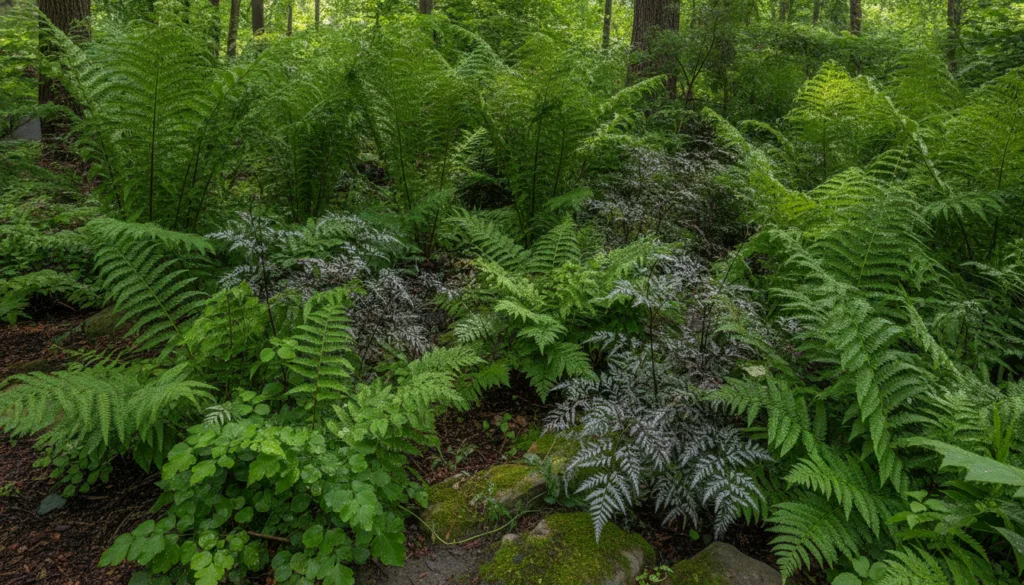
Ferns are indispensable for creating a lush, verdant feel in a shade garden. They offer an incredible variety of textures, from delicate, lacy fronds to broad, bold leaves. Many are evergreen, providing year-round interest. Popular choices include Japanese Painted Fern (Athyrium niponicum ‘Pictum’), Lady Fern (Athyrium filix-femina), and Ostrich Fern (Matteuccia struthiopteris).
- Hardiness: USDA Zones 3-9, highly dependent on species.
- Plant type: Perennial.
- Exposure: Partial to full shade. Most ferns prefer consistently moist soil and high humidity.
- Height: 1-4 feet (0.3-1.2 m), varying greatly by species.
- Soil: Rich, well-draining soil with plenty of organic matter.
- Care tip: Avoid deep planting; the crown should be at soil level. Keep soil consistently moist, especially during dry periods.
Adding Spiky Purple Blooms and More
To complement these plants, consider other shade-tolerant perennials that offer spiky purple blooms or interesting foliage. Good choices include:
- Astilbe (Astilbe spp.): Known for its feathery plumes of pink, red, white, or purple flowers and attractive, fern-like foliage. It thrives in moist, shady conditions.
- Hosta (Hosta spp.): While famous for its diverse foliage, many Hosta varieties also produce attractive purple or white flower spikes in summer.
- Liriope (Liriope muscari): Also known as Lilyturf, this grass-like perennial produces spikes of purple flowers in late summer, offering fine texture and evergreen qualities.
- Heuchera (Heuchera spp., Coral Bells): Valued more for its incredible foliage in shades of purple, amber, green, and silver, but also produces delicate flower spikes.
Creating Ambiance and Comfort
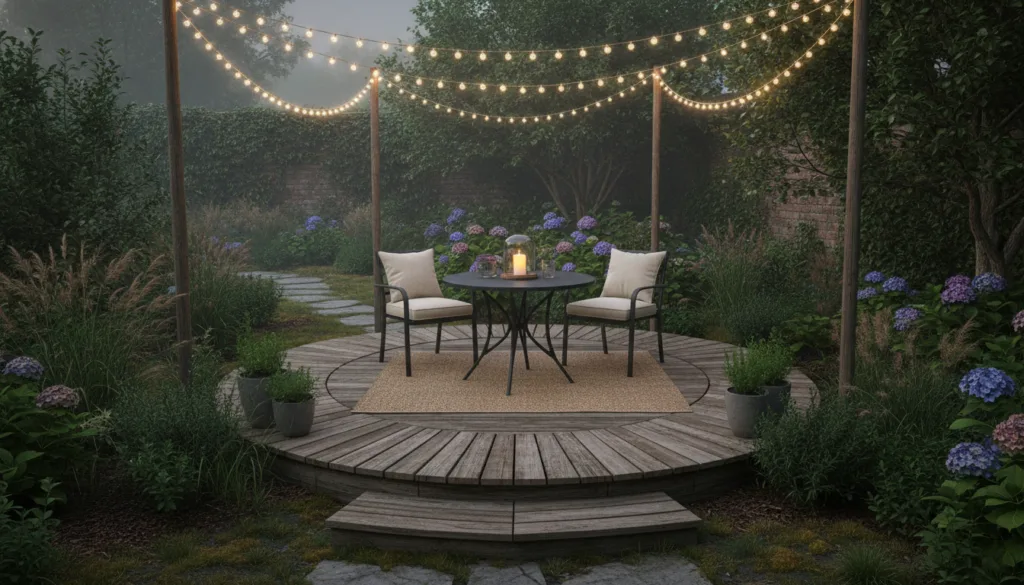
Beyond plants, carefully chosen elements can elevate your shade garden into a true retreat. A comfortable seating area, like a small wooden deck with outdoor furniture, invites you to linger and enjoy the peace. Overhead string lights add an enchanting, magical glow in the evenings, extending the usability of your garden well past sunset. A small birdhouse or other decorative accents can add charm and draw wildlife, further enhancing the natural feel of your sanctuary.
Practical Steps for Your Shade Garden Project
- Assess Your Shade: Observe your area throughout the day. How many hours of direct sun does it receive? Is it dappled, full, or partial shade? This dictates your plant choices.
- Soil Preparation: Shady spots, especially under trees, often have poor soil with compacted roots. Amend generously with 3-4 inches of organic matter like compost, leaf mold, or aged manure. This improves drainage, moisture retention, and provides nutrients.
- Design Your Layout: Sketch out your ideas. Where will the path go? The seating area? The raised bed? Consider varying heights and textures with your plant selections.
- Install Hardscaping: Build any retaining walls, lay paths, or construct your deck first. This provides structure and prevents disturbing newly planted areas.
- Planting: Dig holes twice as wide as the root ball. Gently loosen circling roots. Plant at the same depth they were in their nursery container. Water thoroughly after planting.
- Mulching: Apply a 2-3 inch layer of organic mulch (shredded bark, wood chips) to retain moisture, suppress weeds, and regulate soil temperature. Keep mulch a few inches away from plant stems.
- Watering: Shade gardens often need less frequent watering than sunny spots because moisture evaporates more slowly. Check soil moisture by sticking your finger 2-3 inches deep. Water when the soil feels dry. Overwatering is a common mistake in shade, leading to root rot.
- Ongoing Care: Fertilize sparingly with a balanced organic fertilizer. Prune as needed to maintain shape and remove dead or diseased foliage. Deadhead foxgloves after flowering (unless you want them to self-seed).
Common Mistakes to Avoid in Shade Gardening
- Ignoring Soil Quality: Trees often deplete soil nutrients and moisture. Neglecting soil amendment is a recipe for struggling plants.
- Overwatering: Less sun means less evaporation. Constantly wet soil leads to root rot. Let the top few inches dry out.
- Planting Sun-Lovers: Don’t try to force plants that need full sun into a shady spot. They will be leggy, weak, and rarely bloom well.
- Lack of Variety: A shade garden doesn’t have to be boring. Mix textures (ferns, hostas), leaf colors (heuchera), and bloom times to create year-round interest.
- Forgetting About Winter Interest: Choose some evergreen ferns or shrubs to provide structure and color even in the coldest months.
Regional Considerations for USDA Zones
The performance of shade plants can vary across the United States. USDA Hardiness Zones primarily indicate a plant’s winter cold tolerance. However, summer heat, humidity, and rainfall also play a significant role:
- Zones 3-5 (Northern US): Focus on cold-hardy varieties of hydrangeas (e.g., ‘Endless Summer’ series), ferns like Ostrich Fern, and hostas. Ensure good winter protection for more marginal plants.
- Zones 6-8 (Mid-Atlantic, Midwest, Pacific Northwest): Many shade-loving perennials thrive here. Hydrangeas, foxgloves, and a wide array of ferns and hostas are excellent choices. Consistent moisture is key in warmer summers.
- Zones 9-11 (Southern US, Pacific Southwest): Heat and humidity can be challenges. Select shade plants that tolerate warmer temperatures, such as some types of ferns, Cast Iron Plant (Aspidistra elatior), and Gingers. Hydrangeas in these zones will need deep afternoon shade and consistent watering.
Always consult your local extension office or a reputable local nursery for cultivar recommendations best suited to your specific microclimate and growing conditions.
Your Shady Oasis Awaits
Don’t let a shady spot remain a neglected challenge. View it as a blank canvas, ready to be transformed into a tranquil, beautiful, and inviting part of your home. By understanding the unique needs of shade-loving plants and incorporating thoughtful design elements, you can create a garden retreat that provides year-round beauty and a peaceful escape. With these practical tips, you’re well-equipped to start your own shade garden transformation today!