Clove water for skin is one of those viral “pantry skincare” trends that keeps popping up alongside claims like “glass skin” and “erase dark spots.” Cloves do have natural compounds that some people find helpful for a fresher-looking complexion, but they can also be irritating if you make it too strong or use it too often.
Below is a simple clove water toner recipe, the safest way to use it, what it can realistically do for dark spots, and a quick buying guide so you don’t waste money on low-quality cloves or the wrong type of bottle.
Clove Water for Skin: What It Is and Why People Use It
Clove water is basically a clove “tea” made by steeping whole cloves in hot water, then straining and using the cooled liquid as a facial mist or toner.
People use it because cloves contain aromatic compounds (like eugenol) and antioxidants that may help support the look of:
-
A cleaner-feeling, less “congested” surface
-
A more refreshed, brighter-looking appearance
-
Oilier areas that need a light, non-creamy step before moisturizer
Important: “Natural” doesn’t automatically mean “gentle.” Clove is potent, and overdoing it is the fastest way to end up with redness or stinging.
What Clove Water Can (and Can’t) Do for Dark Spots
Let’s keep expectations realistic.
Clove water may help your skin look more even over time if your spots are mostly from surface dullness or mild post-blemish marks and you’re consistent with a basic routine.
But true dark spots (sun spots, melasma, stubborn hyperpigmentation) usually don’t fade from clove water alone. Those are much more influenced by daily sunscreen and proven brightening ingredients (like vitamin C or niacinamide).
If your goal is “dark spot care,” treat clove water like an optional supportive step, not the main solution.
DIY Clove Water Toner Spray (Simple, Beginner-Friendly)
This is the version most people tolerate best.
You’ll need
-
1 cup water
-
10–15 whole cloves (start lower if you’re sensitive)
-
A small pot or kettle
-
Fine mesh strainer or cheesecloth
-
Clean spray bottle (amber glass is ideal)
Steps
-
Bring 1 cup water to a gentle simmer.
-
Add 10–15 whole cloves.
-
Simmer 3–5 minutes, then turn off heat.
-
Cover and steep 20–30 minutes.
-
Strain well and let it cool completely.
-
Pour into a clean spray bottle.
Storage
-
Store in the refrigerator.
-
Use within 5–7 days for best freshness.
-
If it smells “off,” looks cloudy, or you see particles building up, toss it and make a fresh batch.
How to Use Clove Water on Your Face (Without Overdoing It)
Start slow. More is not better here.
Option A: Toner mist
-
Cleanse your face.
-
Mist lightly (avoid eyes and lips).
-
Wait 30–60 seconds.
-
Follow with moisturizer.
Option B: Cotton pad swipe (more intense)
-
Use a damp cotton round.
-
Swipe once, no scrubbing.
-
Moisturize right away.
How often?
-
2–3 times per week to start
-
If your skin stays calm, you can move up to every other day
-
If you feel stinging or see redness, reduce frequency or dilute with water
Viral Mixes You’ve Seen (Aloe, “Dark Spot Sprays,” Hair Growth) — Safer Ways to Try Them
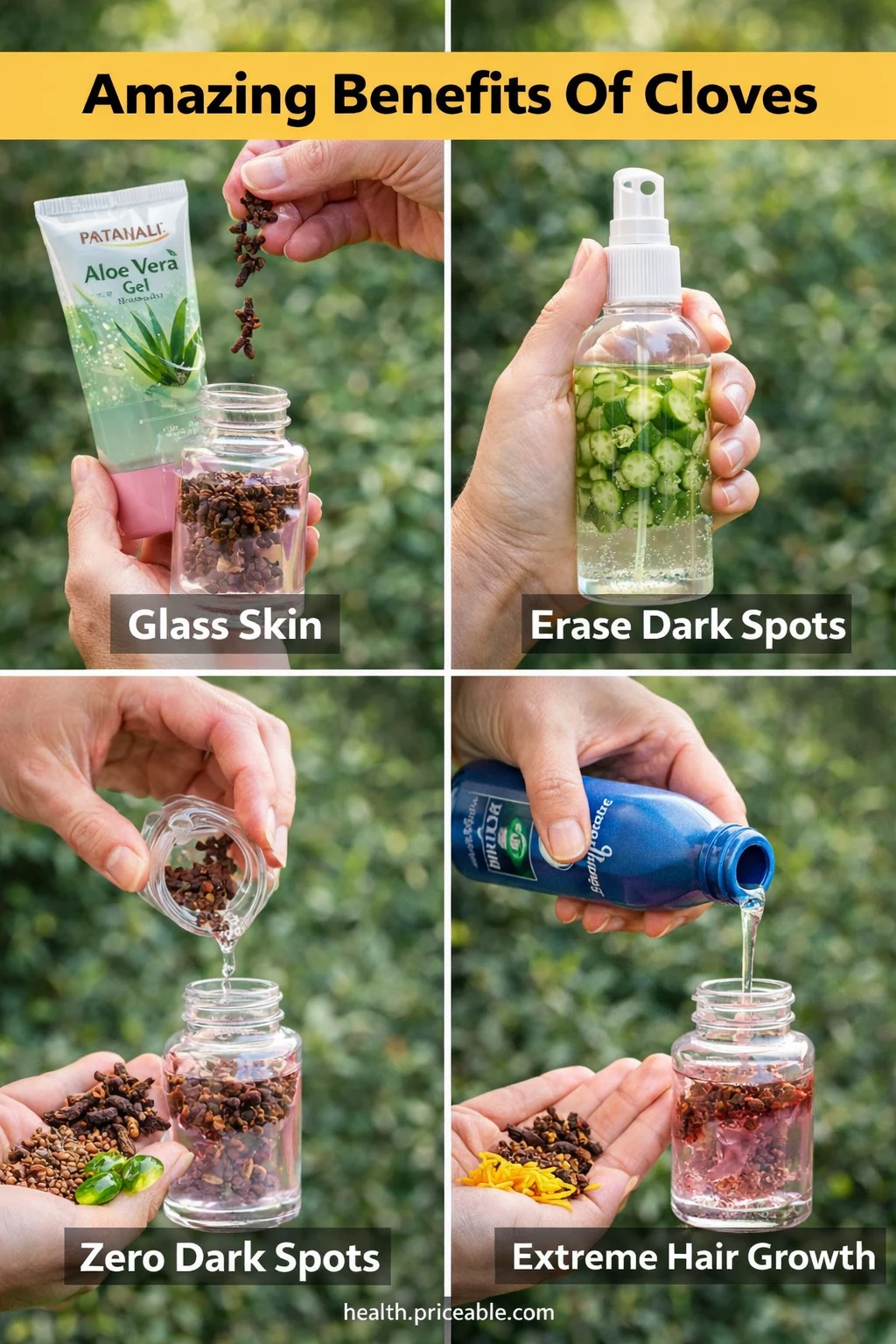
Some posts show cloves mixed with aloe vera gel or used in sprays for dark spots. If you want to try variations, keep them conservative.
Clove + aloe (soothing gel step)
This is gentler than straight clove water for many people.
-
Mix 1 teaspoon aloe vera gel (look for a simple, fragrance-free gel) with 1–2 teaspoons clove water in your palm.
-
Apply a thin layer after cleansing.
-
Rinse off after 10 minutes the first few times, then you can leave it on if your skin tolerates it.
“Dark spot spray” tip that actually matters
If you only do one thing for dark spots, do this:
-
Apply a broad-spectrum SPF 30+ sunscreen every morning.
Without that, most spot-fading routines stall.
Clove Water for Scalp and Hair: What’s Reasonable
The internet loves “extreme hair growth” claims. Realistically, clove-based rinses may help your scalp feel cleaner and support a healthier environment for hair, especially if product buildup is a problem.
Simple clove scalp rinse
-
After shampoo, pour a small amount of clove water over the scalp.
-
Massage gently for 30 seconds.
-
Rinse out.
-
Use 1–2 times per week.
If you’re considering clove essential oil
Be careful: clove essential oil is strong and can burn skin when used undiluted.
If you use it at all:
-
Add 1 drop clove essential oil to 1 tablespoon carrier oil (like jojoba or fractionated coconut oil).
-
Patch test first.
-
Use only on the scalp (not the face), and wash out after 15–30 minutes.
Common Mistakes (and Quick Fixes)
-
Making it too strong (too many cloves): Dilute 1:1 with water, or remake with fewer cloves.
-
Using it daily right away: Drop back to 2–3 times per week.
-
Spraying too close to eyes: Mist onto hands or a cotton pad instead.
-
Using on irritated or broken skin: Pause until skin is calm.
-
Storing too long: Make smaller batches and keep refrigerated.
-
Mixing with too many actives: If you use retinol, exfoliating acids, or strong brightening serums, don’t stack everything at once. Keep your routine simple.
Safety Notes (Please Don’t Skip)
-
Patch test on the inner arm or jawline first.
-
Stop using if you get burning, hives, swelling, or worsening redness.
-
Avoid eyes, lips, and any raw or peeling areas.
-
If you have very sensitive skin (like rosacea or eczema tendencies), consider skipping clove entirely or talk with a skincare professional first.
Buying Guide: What to Look For (Cloves, Bottles, and Add-Ons)
If you’re going to try this trend, buying the right basics matters more than fancy extras.
Whole cloves vs. ground cloves
-
Choose whole cloves for clove water. They strain cleanly and are easier to control.
-
Ground cloves can make a gritty mix that’s harder to filter and more irritating.
How to pick good cloves
-
Look for whole, intact buds with a strong clove smell.
-
Old cloves smell dusty or weak and won’t infuse well.
Best container for a clove toner
-
Amber glass spray bottle is ideal (helps protect from light and odors).
-
If you use plastic, choose a sturdy cosmetic-grade bottle and replace it if it holds odor.
Optional add-ons (only if you already use them)
-
A gentle fragrance-free moisturizer
-
Broad-spectrum SPF 30+
-
A niacinamide serum or vitamin C serum if dark spots are your main concern
-
A fine mesh strainer or reusable cheesecloth (worth it for cleaner toner)
FAQ
Does clove water for skin help with dark spots?
It may support a more even-looking tone for mild post-blemish marks, but stubborn dark spots usually respond more to daily sunscreen and proven brightening ingredients.
Can I leave clove water on my face overnight?
If you’re sensitive, it’s safer to use it as a light toner and moisturize after. Overnight use can be too intense for some people.
How long does DIY clove water last?
Typically 5–7 days in the refrigerator. If the smell changes or it looks cloudy, toss it.
Can clove water cause irritation?
Yes. Clove is potent. Start with fewer cloves, use it only a few times per week, and always patch test.
Can I mix clove water with aloe vera gel?
Yes, that’s often a gentler way to try it. Keep the clove water amount small at first.
Is clove essential oil the same thing as clove water?
No. Essential oil is far more concentrated and must be diluted. Never apply clove essential oil directly to skin.
Can clove water help hair growth?
It’s not a guaranteed “growth hack.” It may help scalp freshness and reduce buildup for some people, which can support a healthier routine overall.
What’s the simplest routine if I want to try this?
Cleanser, clove water toner (2–3x/week), moisturizer, and sunscreen every morning. Keep it boring and consistent.
The Bottom Line
Clove water for skin can be a simple, low-cost toner spray that some people enjoy for a fresher-looking complexion, especially when used gently and consistently. Just don’t fall for “zero dark spots” promises. If dark spots are your main concern, sunscreen and a solid routine will do more heavy lifting than any single DIY spray.