Do you ever find yourself reaching for another snack an hour after you just finished one? That all-too-familiar feeling of hunger striking again shortly after eating can be frustrating and derail your healthy eating goals. The truth is, your snack may simply need more ‘staying power’—and the secret often lies in choosing high-protein options.
Many popular snacks, while tasty, lack the essential nutrients to keep you truly satisfied. They might offer a quick burst of energy, but often lead to a rapid dip, leaving you craving more. This article will help you understand why some snacks leave you wanting more, how high-protein snacks can revolutionize your eating habits, and introduce you to five incredibly satisfying options to keep you full and focused.
The Snacking Dilemma: Why Some Snacks Leave You Wanting More
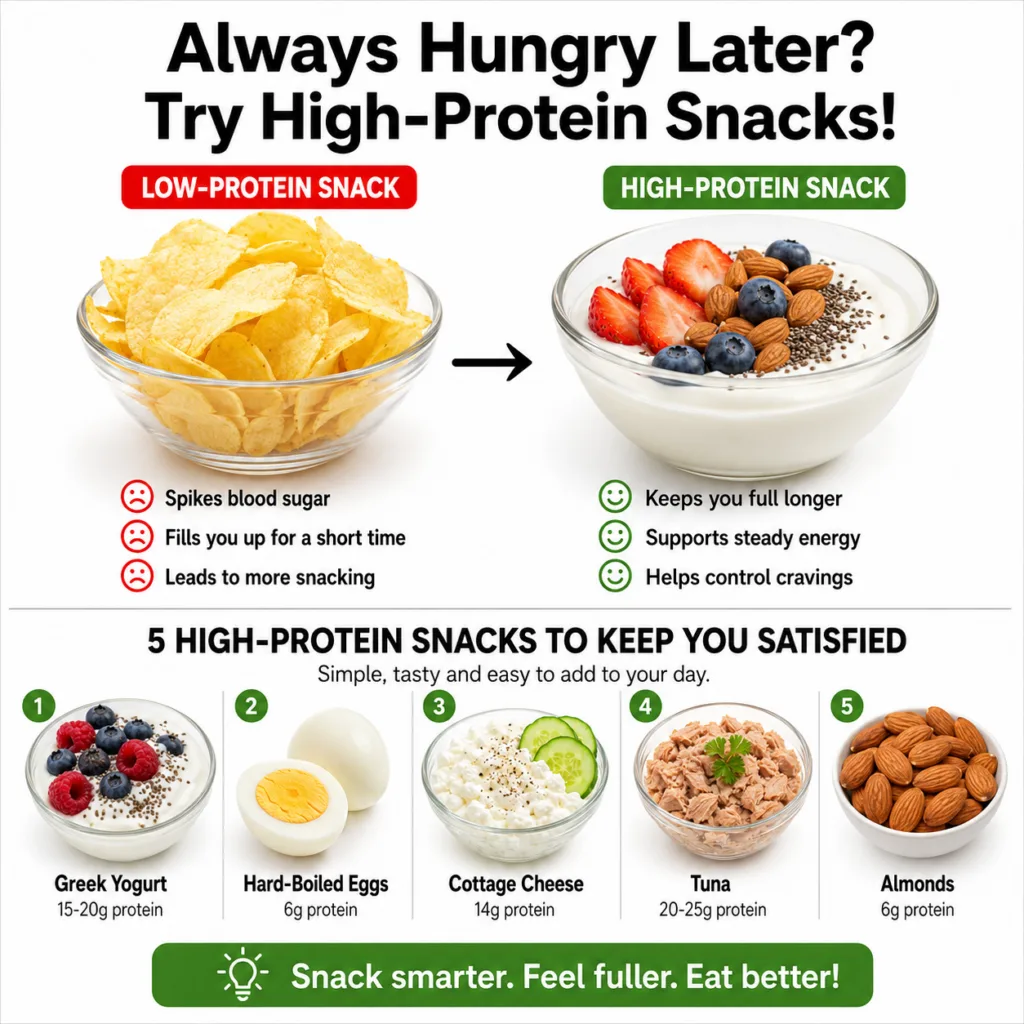
Imagine this: you grab a bag of potato chips, enjoy every crunchy bite, and feel full for a moment. But soon after, your stomach is rumbling again. This common scenario highlights the pitfall of many low-protein snacks.
- Blood Sugar Spikes and Crashes: Snacks high in refined carbohydrates and low in protein can cause your blood sugar to spike rapidly. While this provides a temporary energy rush, it’s quickly followed by a crash, leaving you feeling sluggish and hungry again.
- Short-Term Fullness: Without protein, these snacks don’t engage your digestive system in a way that promotes lasting fullness. You might feel temporarily satisfied by the volume or flavor, but your body isn’t getting the signals it needs for sustained satiety.
- Leads to More Snacking: The cycle of quick hunger and subsequent craving often leads to overeating and continuous snacking, making it harder to manage your overall calorie intake and maintain steady energy levels throughout the day.
The Power of Protein: How High-Protein Snacks Keep You Full and Focused
In contrast to their low-protein counterparts, high-protein snacks are a game-changer for sustained energy and appetite control. Protein is a macronutrient that plays a crucial role in almost every bodily function, and when it comes to snacking, its benefits are remarkable:
- Keeps You Full Longer: Protein takes longer to digest than carbohydrates, promoting a feeling of fullness and satiety that lasts for hours. This means fewer hunger pangs between meals.
- Supports Steady Energy: By slowing down digestion and helping to stabilize blood sugar levels, protein helps prevent those energy crashes associated with sugary snacks. You’ll experience more consistent energy throughout your day.
- Helps Control Cravings: Protein can impact hormones that regulate appetite, such as ghrelin (the hunger hormone) and leptin (the satiety hormone). A protein-rich snack can help curb cravings for unhealthy foods and reduce overall calorie intake.
Choosing the Best Protein Snacks
When selecting high-protein snacks, aim for options that are minimally processed and provide other beneficial nutrients like fiber, vitamins, and minerals. Variety is also key to ensuring you get a broad spectrum of nutrients.
5 High-Protein Snacks to Keep You Satisfied
Ready to upgrade your snacking game? Here are five excellent high-protein snack ideas, each offering substantial protein to keep you fueled and focused:
1. Greek Yogurt with Berries
Protein Content: Approximately 17g per 1 cup (plain, non-fat)
Greek yogurt is a superstar in the high-protein world, offering a thick, creamy texture and a significant protein boost. Its fermentation process also provides probiotics, which are beneficial for gut health. Pairing it with berries adds natural sweetness, antioxidants, and fiber.
- How to Enjoy: Opt for plain Greek yogurt to avoid added sugars. Stir in a handful of fresh or frozen mixed berries like strawberries, blueberries, or raspberries. For an extra crunch and healthy fats, you might sprinkle in a few chia seeds or a small amount of chopped almonds.
2. Hard-Boiled Eggs
Protein Content: Approximately 6g per 1 large egg
Simple, convenient, and incredibly nutritious, hard-boiled eggs are a complete protein source, meaning they contain all nine essential amino acids your body needs. They are also rich in vitamins D and B12, and choline, which supports brain health.
- How to Enjoy: Prepare a batch of hard-boiled eggs at the start of the week for quick grabs. Enjoy them plain, seasoned with a pinch of salt and pepper, or sliced over a small bed of greens for a mini-salad.
3. Cottage Cheese with Cucumber
Protein Content: Approximately 25g per 1 cup (low-fat)
Cottage cheese is another dairy powerhouse, often overlooked but packed with protein, particularly casein protein, which digests slowly and provides a steady release of amino acids. Pairing it with refreshing cucumber makes for a light yet satisfying snack.
- How to Enjoy: Choose low-fat or full-fat cottage cheese according to your dietary preferences. Dice half a cucumber and mix it into a cup of cottage cheese. A dash of black pepper or a sprinkle of dill can enhance the flavor. It’s also great with other fresh vegetables like bell peppers or cherry tomatoes.
4. Tuna
Protein Content: Approximately 20g per 3oz serving (canned in water, drained)
Canned tuna is an affordable, convenient, and excellent source of lean protein. It’s also rich in omega-3 fatty acids, which are beneficial for heart and brain health. Choose tuna packed in water for a lower-calorie option.
- How to Enjoy: Mix a drained 3oz can of tuna with a dollop of Greek yogurt (as a healthier alternative to mayo) and some finely chopped celery or pickles. Eat it with whole-grain crackers, cucumber slices, or wrapped in a lettuce leaf for a low-carb option.
5. Almonds
Protein Content: Approximately 6g per 1/4 cup (about 23 almonds)
Almonds are a fantastic plant-based protein source that also delivers healthy fats, fiber, vitamin E, and magnesium. Their satisfying crunch makes them a great on-the-go snack, but portion control is key due to their calorie density.
- How to Enjoy: Measure out a 1/4 cup serving (about 23 almonds) to keep calorie intake in check. Enjoy them raw, dry-roasted, or as part of a homemade trail mix with a few dried cranberries and pumpkin seeds.
Making Smart Snacking a Habit
Incorporating high-protein snacks into your daily routine is a simple yet effective way to manage hunger, sustain energy, and support your overall health goals. Remember to listen to your body’s hunger cues and choose snacks that genuinely nourish you.