This aloe vera face gel recipe is the kind of DIY night treatment people save because it feels simple, cooling, and easy to make at home. The viral version mixes aloe vera gel with green tea, rose water, vitamin E, and cloves to create a lightweight gel for skin that feels dry, tired, or dull by the end of the day.
Used the right way, it can be a nice bedtime skincare step. Just keep expectations realistic. Online posts often call it “botox gel,” but Botox Cosmetic is an FDA-approved injectable medicine, while this is simply a homemade topical gel. The American Academy of Dermatology also notes that anti-aging skincare products deliver modest results, and exaggerated promises are too good to be true.
Aloe Vera Face Gel Recipe: Why This DIY Night Gel Gets So Much Attention
People like this kind of gel because it feels lighter than a rich night cream but still gives the skin a fresher, softer finish by morning. It also fits easily into a low-effort evening routine.
This recipe makes the most sense for skin that feels a little dry or rough and wants a simple final step after cleansing. Dermatologists recommend applying moisturizer while skin is still slightly damp, because that helps trap water in the skin and improve hydration.
Ingredients You’ll Need
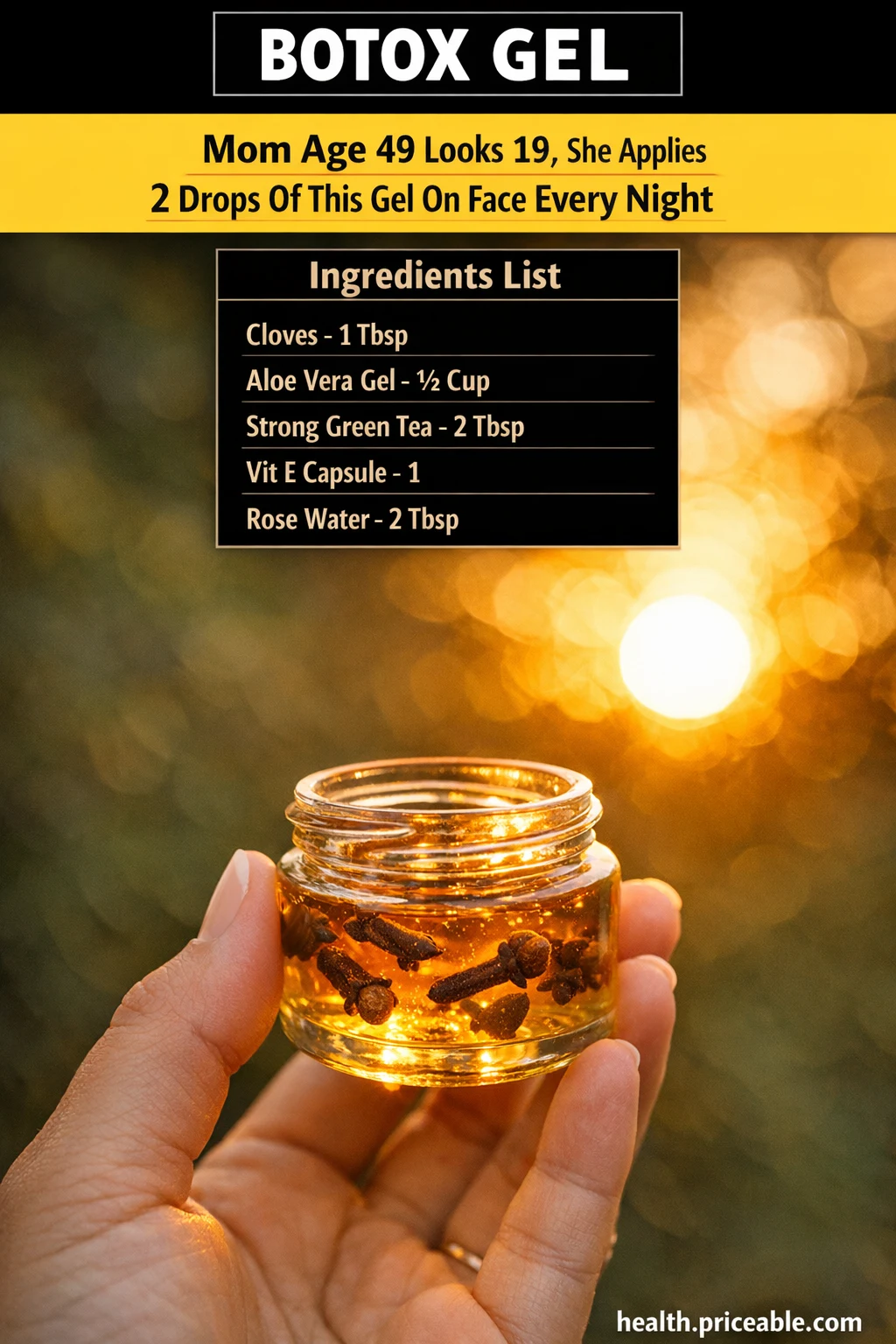
Here’s a practical version based on the image:
- 1 tablespoon whole cloves
- 1/2 cup aloe vera gel
- 2 tablespoons strong green tea, cooled
- 2 tablespoons rose water
- 1 vitamin E capsule
You’ll also need:
- 1/4 cup hot water for the clove infusion
- 1 small clean bowl
- 1 fine strainer
- 1 small clean jar or pump bottle
How to Make It
Step 1: Make the clove infusion
Add the cloves to 1/4 cup hot water and let them steep for 10 to 15 minutes.
Step 2: Strain and cool
Strain out the cloves and let the liquid cool completely.
Step 3: Brew the green tea
Make a small amount of strong green tea and let it cool. Measure out 2 tablespoons.
Step 4: Mix the gel
In a clean bowl, combine:
- 1/2 cup aloe vera gel
- 2 tablespoons cooled green tea
- 2 tablespoons rose water
- 1 teaspoon of the cooled clove infusion
- Oil from 1 vitamin E capsule
Step 5: Stir until smooth
Mix until the texture looks even and spreadable.
Step 6: Transfer to a clean container
Spoon the gel into a small clean jar or pump bottle.
A small batch works best here. Because this is a water-based homemade product, cleanliness matters and it should not be treated like a store-bought preserved formula. The FDA notes that cosmetics can become harmful if contaminated with bacteria or fungi.
How to Use This Night Gel
Apply a small amount to clean skin at night.
A simple routine looks like this:
- Wash your face with a gentle cleanser
- Pat your skin so it stays slightly damp
- Apply a thin layer of the gel
- Let it sit as your final step before bed
You do not need a thick layer. A little goes a long way.
Best Time to Use It
Night is the best time for this recipe.
That’s partly because the texture suits an evening routine better, and partly because a homemade gel is easier to enjoy when you are not layering sunscreen and makeup on top. Applying moisturizing products when skin is still damp can also help lock in hydration more effectively.
How Often to Use It
Start with 2 to 4 nights a week.
If your skin feels comfortable and likes the texture, you can use it more often. If it starts to feel sticky, heavy, or irritating, cut back.
The best routine is the one that feels easy to repeat.
Common Mistakes and Easy Fixes
Using too much clove
Clove is one of those ingredients where a little is enough.
Fix: Use only a small amount of strained clove infusion instead of dropping whole cloves into the finished face gel.
Applying a thick layer
More product does not automatically mean better-looking skin.
Fix: Use a thin layer so the gel sits comfortably on the skin.
Skipping the patch test
Dermatologists recommend testing a new skincare product before adding it to your routine because even common ingredients can irritate skin or trigger allergic contact dermatitis.
Fix: Test a small amount on the inner arm or jawline first.
Expecting “Botox” results
This is the mistake that creates the most disappointment.
Fix: Think of it as a homemade night gel for softer, smoother-looking skin, not as a substitute for an injectable procedure. Botox Cosmetic is an injected prescription medicine, and topical anti-aging products do not create facelift-level results.
Storing it too long
Homemade gel does not have the same preservation system as a standard retail skincare product.
Fix: Make a small batch, keep the container clean, and throw it out if the smell, color, or texture changes. FDA guidance notes that microbial contamination can make cosmetics unsafe.
Safety Note
Patch test this gel before putting it all over your face. The AAD recommends testing new skincare products first because ingredients can cause redness, itching, swelling, or allergic contact dermatitis in some people.
A few simple precautions:
- Do not use it on broken or irritated skin
- Keep it away from the eye area
- Stop using it if your skin stings, burns, or develops bumps
- Use a clean spoon or spatula if you store it in a jar
If your skin is very sensitive, fragrance-free products are usually the safer starting point when buying your aloe vera gel or rose water. Dermatology guidance for dry skin also leans toward fragrance-free moisturizers and gentle products.
Buying Guide: What to Look for Before You Buy the Ingredients
Even with a DIY recipe, ingredient choice makes a big difference.
Aloe vera gel
What to look for:
- A simple ingredient list
- Fragrance-free if your skin gets irritated easily
- A clear gel texture without a lot of added color
- A small bottle if you are testing the recipe first
Rose water
What to look for:
- Short ingredient list
- Light scent, not heavy perfume
- A bottle size you can finish without letting it sit too long
Green tea
What to look for:
- Plain green tea bags or loose tea
- No sweeteners
- No flavored blends
Vitamin E capsules
What to look for:
- Plain softgels
- Easy-to-pierce capsules
- Small pack size for DIY use
Container
What to look for:
- Small clean jar or airless pump bottle
- Tight-fitting lid
- Size suited to a small batch
If you’re shopping for the best option for sensitive skin, the safest brand-free checklist is simple: fragrance-free aloe vera gel, plain green tea, clean rose water, and a fresh container you can sanitize before use. Dermatologists also recommend choosing products that match your skin type instead of falling for big anti-aging promises.
A Simple Night Routine That Works With This Gel
You do not need a complicated routine to make this useful.
Option 1: Very simple
- Cleanse
- Pat skin lightly dry
- Apply a thin layer of the gel
- Leave it on overnight
Option 2: For drier skin
- Cleanse
- Apply the gel to slightly damp skin
- Follow with a plain moisturizer if needed
Applying moisturizer while skin is still damp can help trap moisture more effectively, which is why this kind of recipe often works best as part of a simple nighttime routine.
FAQ
Is this really a Botox gel?
No. That is just a viral nickname. Botox Cosmetic is an FDA-approved injectable medicine, while this is a homemade topical gel.
Can I use this aloe vera face gel recipe every night?
Start with 2 to 4 nights a week first. If your skin tolerates it well, you can adjust from there.
How much should I apply?
Use a thin layer, not a thick mask. A small amount is usually enough for the whole face.
Is this better for dry skin or oily skin?
It usually makes more sense for skin that feels dry, dull, or tight and wants a light hydrating finish at night.
Do I have to use cloves?
Not necessarily. Cloves are part of the viral version, but if your skin is sensitive, a simpler aloe vera, green tea, and rose water gel may be the better choice.
What should I look for when buying aloe vera gel?
Look for a simple, fragrance-free formula, especially if your skin reacts easily. Dermatology guidance for dry and sensitive skin generally favors fragrance-free products.
How should I store homemade face gel?
Keep the batch small, use a clean container, and discard it if the smell, color, or texture changes. FDA guidance warns that contaminated cosmetics can become unsafe.
Final Thoughts
This aloe vera face gel recipe works best as a simple DIY night gel for skin that needs a little softness and hydration at the end of the day. It is easy to make, budget-friendly, and simple enough to become a realistic bedtime habit.
Keep the formula clean, use a light hand, patch test first, and focus on realistic results: skin that feels fresher, more comfortable, and a little smoother by morning.