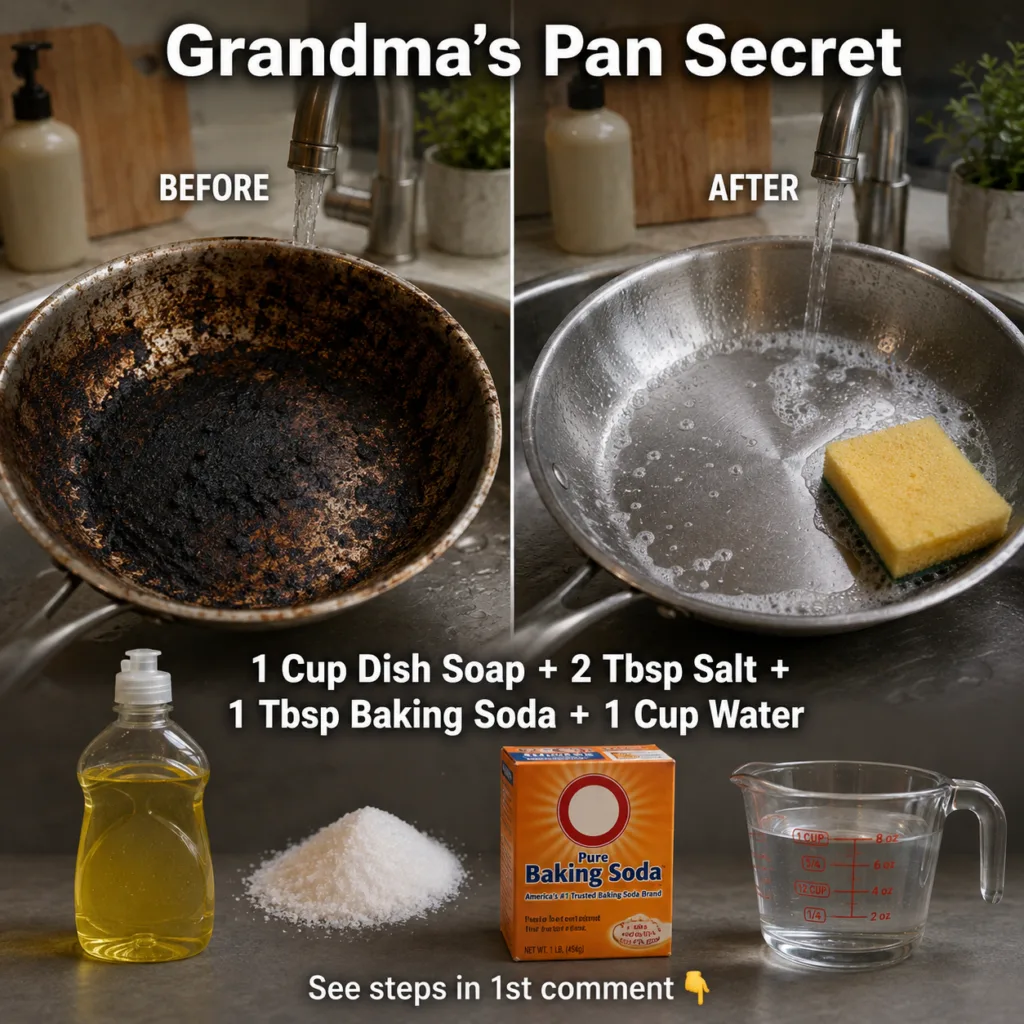
Are your favorite pots and frying pans looking dull, stained with stubborn grease, or showing that yellowish tint that just won’t budge? It’s a common kitchen problem, but you don’t always need harsh chemicals to tackle it. This simple homemade cleaning solution is designed to cut through tough grime, leaving your cookware looking much cleaner and brighter. It’s an easy and practical way to revive your kitchen essentials without a lot of fuss.
What You’ll Need
Ingredients:
- 1 cup dish soap (any standard liquid dish soap)
- 2 tablespoons salt (table salt works fine)
- 1 tablespoon baking soda
- 1 cup water
Tools:
- A mixing bowl or pitcher
- A spoon or whisk for mixing
- An empty, clean squeeze bottle or spray bottle for storage
- A scrub brush or sponge for application
Why This DIY Can Be Useful
This cleaning solution combines a few common household items, each playing a key role in tackling tough kitchen grime:
- Dish Soap: Acts as a powerful degreaser, breaking down oily residues on contact.
- Salt: Provides a gentle abrasive quality that helps to scrub away caked-on food and stains without scratching most cookware surfaces.
- Baking Soda: A mild abrasive and a natural deodorizer, baking soda helps lift stains, cut through grease, and neutralize odors, contributing to that fresh smell.
Together, these ingredients create a robust cleaner that can effectively remove stubborn marks from your pots and pans.
How to Make It
- In a mixing bowl or pitcher, combine the 1 cup of dish soap, 2 tablespoons of salt, and 1 tablespoon of baking soda.
- Gradually add 1 cup of water to the mixture, stirring continuously with a spoon or whisk until all ingredients are well combined and the salt and baking soda have largely dissolved. The solution should have a consistent, slightly thick texture.
- Carefully pour the mixture into your empty squeeze bottle or spray bottle. This makes it easy to store and apply.
How to Use It
- For heavily soiled pots and pans, ensure they are empty and cool.
- Apply a small amount of the homemade cleaner directly onto the dirty surface of your cookware. For baked-on grime, you might want to apply a bit more generously.
- Allow the solution to sit on the surface for a few minutes (5-10 minutes can be helpful for tougher stains) to let it penetrate the grime.
- Using a scrub brush or a sturdy sponge, scrub the stained areas vigorously. You should notice the grease and residue starting to lift away.
- Once you’re satisfied with the scrubbing, rinse the pot or pan thoroughly with warm water until all cleaner residue is gone.
- Dry your cookware immediately to prevent water spots.
What to Expect
After using this DIY cleaner, you can expect your pots and pans to appear significantly cleaner and brighter. Stubborn grease and many yellowish stains should be considerably reduced, if not entirely removed. The salt and baking soda provide a gentle scrubbing action that, combined with the degreasing power of dish soap, can revitalize your cookware. While it may not make old, heavily damaged pans look brand new, it will certainly improve their appearance and cleanliness.
Helpful Tips
- For extremely tough, baked-on food, you might try soaking the pan in hot water for a while before applying the cleaner.
- Always wear gloves when cleaning, especially if you have sensitive skin, as prolonged contact with cleaning agents can be drying.
- Store the cleaner in a clearly labeled bottle to avoid confusion with other products.
- This solution can also be useful for cleaning other greasy kitchen surfaces, like stovetops or oven doors (always patch test first).
Important Notes / Safety
- While these ingredients are common household items, always exercise caution. Avoid getting the solution in your eyes.
- Ensure good ventilation when cleaning, especially when scrubbing vigorously.
- Before applying to a large area or a delicate surface, always perform a patch test in an inconspicuous spot to ensure there are no adverse reactions or discoloration.
- This cleaner is generally safe for most stainless steel, cast iron (if seasoned correctly), and non-stick cookware, but always check your manufacturer’s recommendations. Avoid using abrasive scrubbers on non-stick surfaces to prevent damage.
- Keep this solution out of reach of children and pets.