Unlock the Power of Vitamin B12: Essential Foods & Benefits
Feeling a little sluggish lately? Struggling with low energy or brain fog? The answer might lie in a crucial nutrient many of us overlook: Vitamin B12. This powerhouse vitamin is a key player in so many of your body’s essential functions, from boosting your energy to supporting your nervous system.
In this article, we’ll dive deep into why Vitamin B12 is so important, explore the delicious foods rich in this nutrient, and provide practical tips to ensure you’re getting enough. Get ready to discover how adding a few tasty options to your diet can make a real difference to your overall health and vitality!
Why Vitamin B12 Matters for Your Health
Vitamin B12, also known as cobalamin, is a water-soluble vitamin that plays a vital role in several critical bodily processes. It’s not just about energy; its functions impact your brain, blood, and DNA.
Energy Production
One of B12’s most well-known roles is in energy metabolism. It helps convert the food you eat into glucose, which your body uses for energy. Without enough B12, your cells struggle to produce energy efficiently, leading to feelings of fatigue and weakness.
Nerve Function
B12 is crucial for maintaining the myelin sheath, a protective layer that surrounds your nerves. This sheath allows nerve impulses to travel quickly and efficiently. A deficiency can lead to nerve damage, manifesting as tingling, numbness, or problems with balance.
Red Blood Cell Formation
This vitamin is essential for the production of healthy red blood cells, which carry oxygen throughout your body. Without sufficient B12, your body can produce abnormally large, immature red blood cells (megaloblastic anemia), which can’t carry oxygen effectively, causing fatigue and shortness of breath.
DNA Synthesis
Vitamin B12 is involved in the synthesis of DNA, the genetic material in all your cells. This role is fundamental for cell growth, repair, and overall cellular health.

Top Food Sources of Vitamin B12
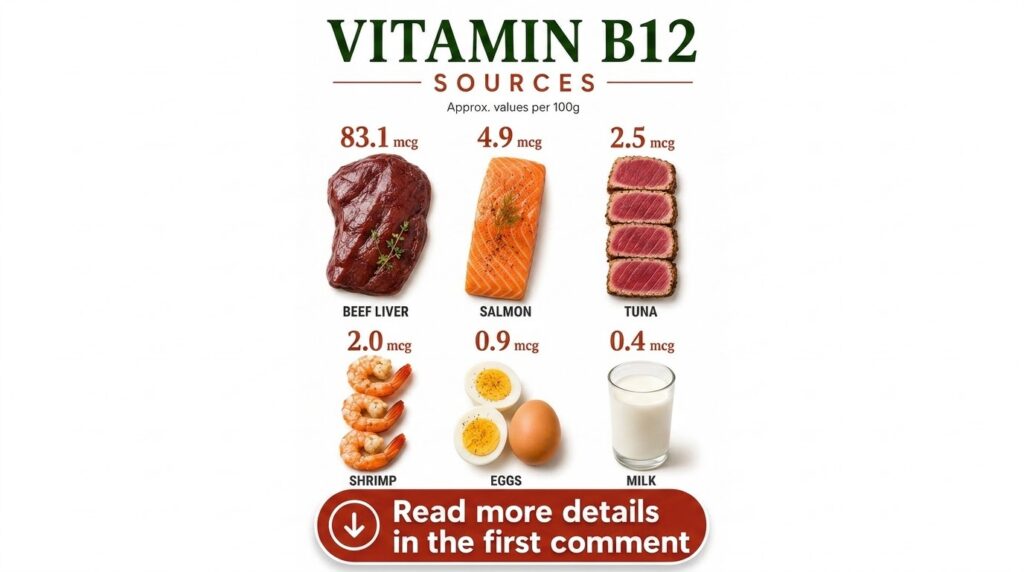
The good news is that many delicious foods are packed with Vitamin B12. Unlike some other vitamins, B12 is primarily found in animal products, making it a key nutrient for those following plant-based diets to be mindful of.
- Beef Liver: Often called a superfood, beef liver is incredibly rich in B12. Just 100 grams can provide well over the daily recommended intake.
- Salmon: This fatty fish is not only an excellent source of omega-3s but also provides a significant amount of B12.
- Tuna: Canned tuna, especially in water, is a convenient and affordable source of B12 and lean protein.
- Shrimp: These small crustaceans offer a good dose of B12 with very few calories, making them a great addition to many dishes.
- Eggs: A versatile breakfast staple, eggs provide a moderate amount of B12, along with protein and other essential nutrients.
- Milk and Dairy Products: Milk, yogurt, and cheese are good sources of B12, especially for those who consume dairy regularly.
Vitamin B12 Nutrition Comparison Table
Here’s a quick look at the approximate nutritional content of some top B12 sources per 100g serving:
| Food | Calories (approx. per 100g) | Protein (g) | Carbs (g) | Fat (g) | Fiber (g) | Main Nutrients | Best Benefit |
|---|---|---|---|---|---|---|---|
| Beef Liver | 135 | 20 | 4 | 5 | 0 | Vitamin B12, Iron, Vitamin A | Iron & B12 powerhouse |
| Salmon | 208 | 20 | 0 | 13 | 0 | Vitamin B12, Omega-3s, Vitamin D | Heart-healthy fats & B12 |
| Tuna (canned in water) | 116 | 25 | 0 | 1 | 0 | Vitamin B12, Protein | Lean protein & B12 |
| Shrimp | 85 | 20 | 0 | 0.3 | 0 | Vitamin B12, Selenium | Low-calorie protein & B12 |
| Eggs (2 large) | 155 | 13 | 1 | 11 | 0 | Vitamin B12, Vitamin D, Choline | Versatile B12 & protein source |
| Milk (whole, 1 cup/240ml) | 150 | 8 | 12 | 8 | 0 | Vitamin B12, Calcium, Vitamin D | Bone health & B12 |
Scientific Explanation: How B12 Works
Once you consume B12, it undergoes a fascinating journey. In your stomach, hydrochloric acid separates B12 from the protein it’s attached to. Then, it binds with a protein called