When we talk about essential vitamins, Vitamin K often brings to mind blood clotting. However, there’s a lesser-known but equally vital form of this vitamin called Vitamin K2, and it plays a critical role in some surprising areas of your health!
Vitamin K2 is a powerful nutrient that significantly contributes to strong bones and a healthy heart. It works by directing calcium to where it’s needed most – your bones and teeth – and preventing it from building up in places it shouldn’t, like your arteries.
In this article, we’ll explore the incredible benefits of Vitamin K2, delve into the science behind its actions, and most importantly, show you which delicious foods are packed with this amazing vitamin. Get ready to discover how simple dietary changes can give your bones and heart the support they deserve!
The Amazing Benefits of Vitamin K2
Vitamin K2 is often called the “missing nutrient” because its importance is only now gaining widespread recognition. Here’s why it’s so crucial for your well-being:
Bone Health and Strength
- Calcium Guidance: Vitamin K2 activates proteins like osteocalcin, which helps bind calcium into the bone matrix. This process is essential for building and maintaining strong, dense bones.
- Fracture Prevention: Research suggests that adequate K2 intake may help reduce the risk of fractures, especially in older adults and those with osteoporosis.
Heart Health and Arterial Flexibility
- Preventing Arterial Calcification: K2 activates matrix Gla protein (MGP), which inhibits calcium from depositing in your arteries. This helps keep your blood vessels flexible and reduces the risk of atherosclerosis.
- Cardiovascular Risk Reduction: Studies have linked higher dietary intake of Vitamin K2 with a lower risk of heart disease and improved arterial health.
Dental Health
- Stronger Teeth: Similar to its role in bones, K2 helps incorporate calcium and phosphorus into tooth enamel, making teeth more resistant to decay.
Understanding Vitamin K2: Forms and Functions
Vitamin K is a fat-soluble vitamin with two main forms: K1 (phylloquinone) and K2 (menaquinone).
- Vitamin K1: Primarily found in leafy green vegetables, K1 is vital for blood clotting.
- Vitamin K2: Found mainly in animal products and fermented foods, K2 focuses on calcium metabolism — directing calcium to bones and teeth, and away from soft tissues like arteries and kidneys.
There are several types of K2, the most important being MK-4 and MK-7.
- MK-4: Found in animal-sourced foods like meat, eggs, and dairy. It has a shorter half-life in the body.
- MK-7: Predominantly found in fermented foods, especially natto. MK-7 has a longer half-life, meaning it stays in your body longer and can be more effective at lower doses.
Top Foods High in Vitamin K2
Incorporating these foods into your diet is a fantastic way to boost your Vitamin K2 intake:
Fermented Foods (Rich in MK-7)
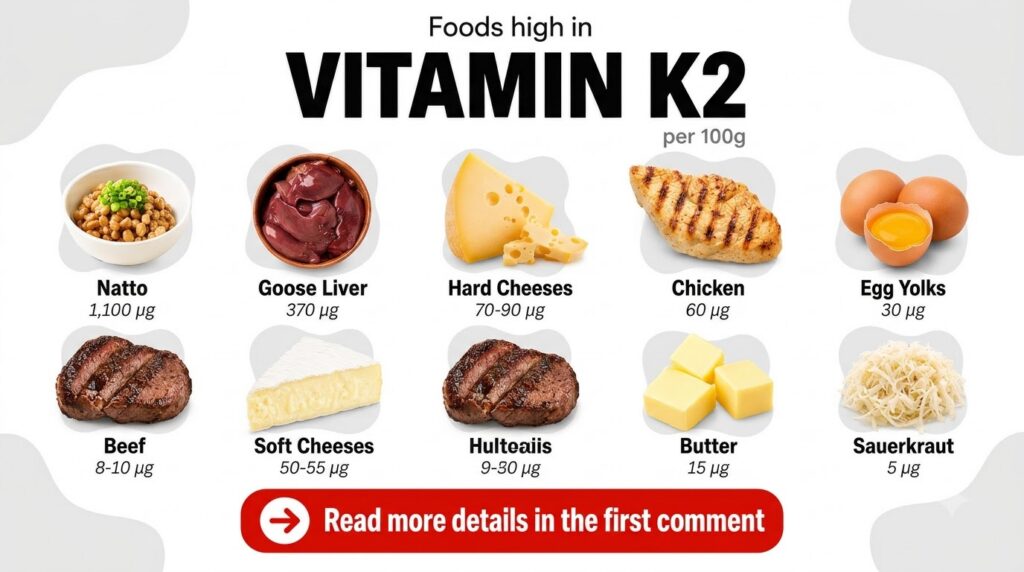
- Natto: This traditional Japanese fermented soybean dish is by far the richest source of MK-7. While its unique taste can be an acquired preference, even a small serving provides a significant amount of K2.
- Sauerkraut: Fermented cabbage, especially homemade or traditionally prepared versions, can contain good amounts of K2.
- Kimchi: Another fermented cabbage dish from Korea, kimchi also offers beneficial bacteria and some K2.
Animal Products (Rich in MK-4)
- Grass-Fed Butter and Ghee: Dairy from grass-fed cows tends to be higher in K2 than that from grain-fed cows.
- Hard and Soft Cheeses: Certain cheeses, particularly Gouda, Brie, and Edam, are excellent sources of K2. The fermentation process in cheese production contributes to its K2 content.
- Egg Yolks: Especially from pasture-raised chickens, egg yolks provide a good amount of MK-4.
- Organ Meats: Liver, particularly goose and beef liver, is a concentrated source of MK-4.
- Chicken Thigh and Breast: While not as high as organ meats, chicken meat, especially the dark meat, contains some K2.
Best Ways to Eat K2-Rich Foods
Integrating Vitamin K2 into your daily meals can be delicious and simple:
- Start with Natto: If you’re adventurous, try adding a small amount of natto to rice, toast, or salads. Mix it with soy sauce and mustard for a traditional Japanese flavor.
- Cheese Please: Enjoy a slice of Gouda or Swiss cheese with your snacks, on sandwiches, or as part of a healthy charcuterie board.
- Butter Up: Use grass-fed butter or ghee in your cooking or spread it on whole-grain toast.
- Egg-cellent Choices: Incorporate more egg yolks into your breakfast, omelets, or frittatas.
- Fermented Veggies: Add a spoonful of sauerkraut or kimchi to your salads, sandwiches, or as a side dish to fermented foods.
- Meat Dishes: Enjoy chicken thighs in stir-fries, stews, or roasted dishes. Consider incorporating liver pâté for a potent K2 boost.
Potential Risks and Considerations
Vitamin K2 is generally safe for most people. However, there are a few considerations:
- Blood Thinners: If you are taking anticoagulant medications like Warfarin, consuming large amounts of Vitamin K (both K1 and K2) can interfere with their effectiveness. Always consult your doctor before making significant dietary changes or taking supplements.
- Supplements: While this article focuses on food sources, K2 supplements are available. Discuss with a healthcare professional if supplementation is right for you.
Practical Tips for Boosting K2
- Read Labels: When buying dairy or eggs, look for “grass-fed” or “pasture-raised” labels to maximize K2 content.
- Embrace Fermentation: Explore traditional fermented foods. Many are delicious and offer numerous gut health benefits alongside K2.
- Variety is Key: Don’t rely on just one food. A diverse diet including various K2-rich foods ensures a broader spectrum of nutrients.
- Cook Smart: Since K2 is fat-soluble, consuming K2-rich foods with a source of healthy fat (like olive oil or avocado) can enhance absorption.
FAQs About Vitamin K2
Q1: Is Vitamin K1 the same as K2?
No, they are different forms of Vitamin K with distinct functions. K1 is mainly for blood clotting, while K2 is crucial for bone and heart health by regulating calcium.
Q2: Can vegetarians get enough Vitamin K2?
It can be more challenging, as many K2 sources are animal products. However, fermented foods like natto, sauerkraut, and certain cheeses can provide K2. Vegans might need to rely on natto or consider supplementation.
Q3: How much Vitamin K2 do I need daily?
There isn’t a universally agreed-upon recommended daily allowance for K2 specifically. Many experts suggest between 100-300 micrograms daily for optimal bone and heart health, but individual needs can vary. Always consult a healthcare professional for personalized advice.
Q4: Does cooking destroy Vitamin K2?
Vitamin K2 is relatively stable and generally not significantly destroyed by typical cooking methods. However, extreme heat or prolonged cooking might lead to some loss.
Q5: Are all fermented foods rich in K2?
Not necessarily. While many fermented foods contain beneficial bacteria, the production of K2 (especially MK-7) is specific to certain bacterial strains. Natto is a standout example due to the Bacillus subtilis bacteria used in its fermentation.
Q6: Can K2 improve my bone density if I already have osteoporosis?
While Vitamin K2 plays a vital role in bone health and may help slow bone loss, it’s not a standalone cure for osteoporosis. It can be a valuable part of a comprehensive treatment plan that includes calcium, Vitamin D, exercise, and medical supervision.
Conclusion
Vitamin K2 is an unsung hero in the world of nutrition, essential for building strong bones and maintaining a healthy heart. By understanding its benefits and knowing which foods are rich in this remarkable nutrient, you can easily make dietary choices that support your long-term health.
From fermented delights like natto and sauerkraut to delicious cheeses and eggs, there are plenty of ways to boost your K2 intake. Start experimenting with these foods today and take a proactive step towards a healthier you! Keep exploring our blog for more insights into nourishing your body with wholesome foods.
This content is for educational purposes only and should not be considered medical advice. Consult a qualified healthcare professional for personalized dietary recommendations.