Are you feeling a little sluggish or looking for ways to boost your overall well-being? Vitamin B12 might be the key! This essential nutrient plays a crucial role in many bodily functions, from energy production to nerve health. Understanding which foods are rich in B12 can help you maintain optimal levels and feel your best.
In this article, we’ll explore why Vitamin B12 is so important, break down the best food sources, and provide practical tips for incorporating them into your daily diet. Get ready to learn how to energize your body naturally and support your health with delicious, nutrient-packed foods!
Why Vitamin B12 Matters for Your Health
Vitamin B12, also known as cobalamin, is a water-soluble vitamin vital for several key bodily processes. It’s not produced by the body, so we must get it from our diet.
- Energy Production: B12 is crucial for converting food into energy, helping to reduce fatigue and keep you feeling vibrant.
- Red Blood Cell Formation: It’s essential for producing healthy red blood cells, which carry oxygen throughout your body. A deficiency can lead to megaloblastic anemia.
- Nerve Function: B12 plays a significant role in maintaining the health of your nervous system, including the formation of myelin, the protective sheath around nerves.
- DNA Synthesis: It’s involved in the synthesis of DNA, the genetic material in all cells.
- Brain Health: Research suggests B12 supports cognitive function and may help reduce the risk of neurodegenerative diseases.
Without enough B12, you might experience symptoms like fatigue, weakness, constipation, loss of appetite, weight loss, nerve problems, or memory difficulties.
Top Food Sources Rich in Vitamin B12
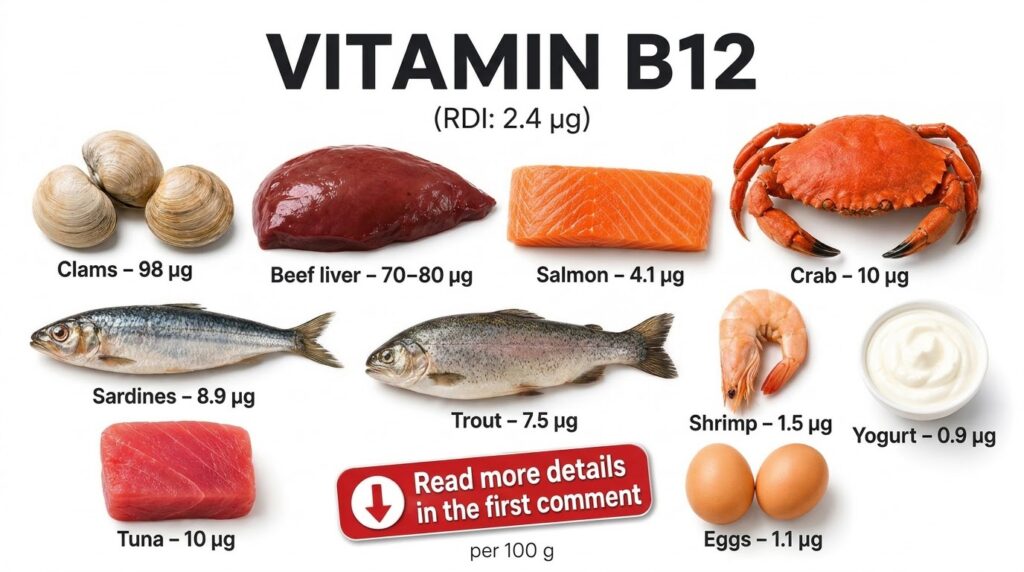
Animal products are the primary dietary sources of Vitamin B12. Here’s a look at some of the best foods to include in your diet, along with their approximate nutritional values per 100g serving, including their B12 content:
Vitamin B12 Rich Foods Chart (Per 100g)
| Food | B12 (mcg) | Calories (approx.) | Protein (approx.) | Carbs (approx.) | Fat (approx.) | Main Nutrients | Best Benefit |
|---|---|---|---|---|---|---|---|
| Clams | 98.9 | 70-80 | 12-14g | 3-4g | ~1g | B12, Iron, Selenium | Excellent B12 & Iron |
| Beef Liver | 59 | 130-140 | 20-22g | 4-5g | 3-4g | B12, Iron, Vitamin A | Nutrient-dense superfood |
| Crab | 11.5 | 80-90 | 18-19g | 0g | 1-2g | B12, Zinc, Copper | Lean protein, rich in B12 |
| Tuna (light, canned in water) | 10.8 | 130-140 | 25-28g | 0g | 1-2g | B12, Protein, Selenium | High protein, convenient |
| Sardines | 8.9 | 200-250 | 20-25g | 0g | 10-15g | B12, Omega-3s, Calcium | Heart-healthy fatty fish |
| Trout | 4.3 | 150-160 | 20-22g | 0g | 6-7g | B12, Omega-3s, Niacin | Lean, rich in healthy fats |
| Salmon | 3.2 | 200-210 | 20-22g | 0g | 13-14g | B12, Omega-3s, Vitamin D | Supports heart & bone health |
| Eggs (~2 large) | 1.1 | 150-160 | 12-13g | ~1g | 10-11g | B12, Protein, Choline | Versatile breakfast staple |
| Shrimp | 1.8 | 80-90 | 18-20g | 0g | 0.5-1g | B12, Selenium, Iodine | Low-calorie protein source |
| Yogurt (plain, low-fat) | 0.6 | 60-70 | ~10g | 5-7g | 0-1g | B12, Calcium, Probiotics | Supports gut health |
Note: B12 values are based on common estimations for 100g servings and can vary. Other nutritional values are approximate.

Best Ways to Incorporate B12-Rich Foods
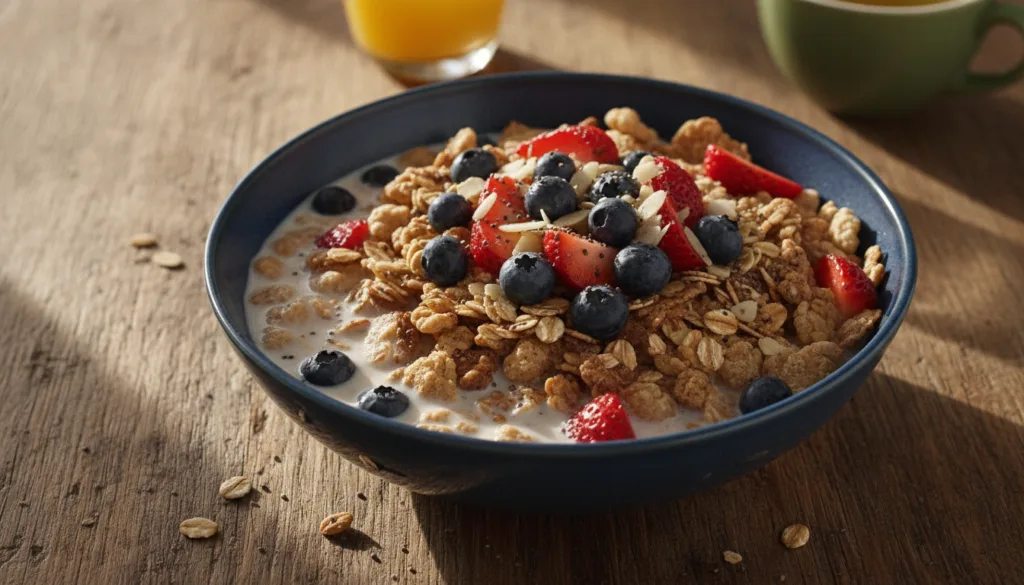
- Start with Breakfast: Add hard-boiled eggs to your morning toast or stir them into a veggie scramble. Plain yogurt with berries is another great option.
- Lunchtime Boost: Pack a tuna salad sandwich (on whole wheat bread) or add cooked salmon or shrimp to your salads.
- Dinner Delight: Enjoy grilled salmon, baked trout, or a hearty clam pasta dish. Beef liver can be pan-fried with onions for a traditional meal.
- Snack Smarts: Hard-boiled eggs or a small serving of plain yogurt can make excellent B12-rich snacks.
For Vegetarians and Vegans:
While B12 is abundant in animal products, plant-based eaters need to be more mindful. Fortified foods like plant-based milks, cereals, nutritional yeast, and some meat substitutes are key sources. Many vegetarians consume dairy and eggs, which provide B12. Vegans often need to rely on fortified foods or supplements to meet their B12 needs.
Potential Risks and Considerations
While Vitamin B12 is essential, it’s always good to be aware of certain aspects:
- Deficiency Symptoms: Long-term B12 deficiency can lead to serious health issues, including nerve damage, anemia, memory loss, and mood changes. If you suspect a deficiency, consult a healthcare professional.
- Supplementation: If your dietary intake is insufficient (common for vegans or individuals with absorption issues), your doctor may recommend B12 supplements.
- Toxicity: Vitamin B12 toxicity from food sources is extremely rare because it’s a water-soluble vitamin, meaning your body excretes excess amounts. However, excessive supplementation should always be guided by a healthcare provider.
Practical Tips for Optimal B12 Intake
- Diversify Your Diet: Include a variety of the B12-rich foods mentioned above throughout your week.
- Read Labels: For fortified foods, check the nutrition labels to ensure they provide a significant amount of B12.
- Cook Smart: While B12 is relatively stable, extreme cooking temperatures can reduce its content. Opt for gentle cooking methods like steaming, baking, or light sautéing.
- Consider Supplements (if needed): If you follow a strict vegan diet, are older, or have certain medical conditions affecting absorption, discuss B12 supplementation with your doctor.
- Regular Check-ups: If you’re concerned about your B12 levels, especially if you experience symptoms of deficiency, consult your doctor for blood tests.
FAQs About Vitamin B12
Q1: What is the recommended daily intake of Vitamin B12 for adults?
A: The recommended daily allowance (RDA) for adults is typically 2.4 micrograms (mcg), though this can vary for pregnant or breastfeeding women and older adults.
Q2: Can vegetarians get enough B12 from their diet?
A: Lacto-ovo vegetarians who consume dairy and eggs can often get enough B12. However, strict vegans need to rely on fortified foods or B12 supplements to meet their requirements.
Q3: What are the common signs of Vitamin B12 deficiency?
A: Common signs include fatigue, weakness, numbness or tingling, difficulty walking, memory loss, depression, and megaloblastic anemia.
Q4: Are B12 supplements safe?
A: B12 supplements are generally considered safe, even at higher doses, because excess is excreted. However, it’s best to consult a healthcare professional before starting any supplement regime.
Q5: How long does it take to correct a B12 deficiency?
A: The time it takes to correct a B12 deficiency varies depending on the severity and method of treatment (e.g., oral supplements, injections). It can range from weeks to several months.
Q6: Does cooking destroy Vitamin B12?
A: Vitamin B12 can be sensitive to heat. While some B12 can be lost during cooking, most foods retain a significant amount, especially with less aggressive cooking methods.
Q7: Can you get too much B12 from food?
A: It’s extremely difficult to consume too much B12 from food sources alone, as your body regulates its absorption and excretes any excess.
Conclusion
Vitamin B12 is an incredibly important nutrient for maintaining your energy, nerve health, and overall well-being. By incorporating a variety of B12-rich foods like seafood, lean meats, dairy, and eggs into your diet, you can easily meet your daily needs.
Remember, a balanced diet is key to a healthy lifestyle. If you’re concerned about your B12 intake or have specific dietary needs, always consult with a healthcare professional for personalized advice. Start exploring these delicious food sources today and feel the difference!
This content is for educational purposes only and should not be considered medical advice. Consult a qualified healthcare professional for personalized dietary recommendations.
Explore More Healthy Food Content:
- High Protein Breakfast Ideas
- Healthy Smoothie Recipes
- Best Foods for Gut Health
- Understanding Omega-3 Benefits
- Iron-Rich Foods Chart