Ever wonder why some plants thrive while others struggle, even in the same garden? The secret often lies beneath your feet, in the very soil you’re planting in! Healthy soil is the foundation of a flourishing garden, but you don’t need expensive lab tests to understand what’s happening down there. With just your hands and a few simple household items, you can unlock your soil’s secrets and turn your garden into a productive home harvest.
At Garden – L. Quyên, we believe gardening should be accessible and enjoyable for everyone. That’s why we’re sharing these easy, hands-on soil tests that empower you to understand and improve your garden’s health. Say goodbye to guesswork and hello to thriving plants!
Why Understanding Your Soil is Key to a Beautiful Garden
Your soil is a living ecosystem, providing essential nutrients, water, and support for your plants. Knowing its composition, pH, and drainage capabilities helps you choose the right plants, amend your soil effectively, and prevent common gardening problems like nutrient deficiencies, root rot, or pest issues. Think of it as giving your plants the perfect home!
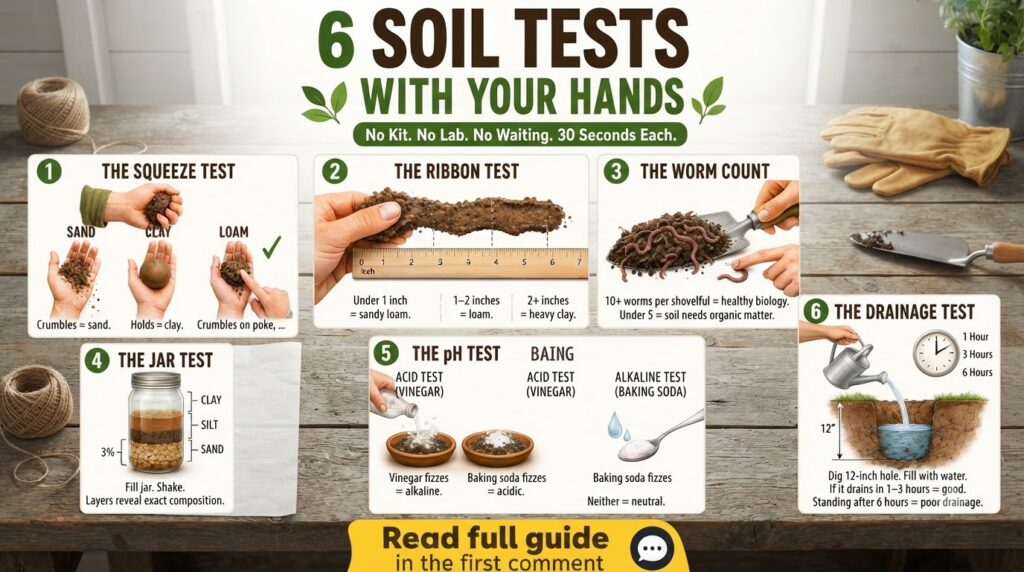
The Power of Your Hands: 6 Simple Soil Tests You Can Do Today
Get ready to get a little dirty! These methods are practical, insightful, and incredibly satisfying. Let’s dig in!
1. The Squeeze Test: Assessing Moisture and Initial Texture
What it tells you:
- How much moisture your soil retains.
- A preliminary idea of its texture (sandy, silty, clayey).
How to do it:
- Grab a handful of soil from about 4-6 inches deep.
- Squeeze it firmly in your palm.
- Open your hand and observe.
What to look for:
- Crumbles easily: Likely sandy or loamy, indicating good drainage but potentially low water retention.
- Holds shape but breaks with a poke: Ideal loam, good balance of moisture retention and drainage.
- Stays in a tight ball: High clay content, good moisture retention but can become compacted and drain poorly.
2. The Ribbon Test: Unveiling Clay Content
What it tells you:
- A more precise estimate of your soil’s clay content.
- Helps classify soil texture.
How to do it:
- Take a small, moist ball of soil (about a tablespoon) and gently knead it in your hand until it’s pliable.
- Press the soil between your thumb and forefinger, pushing it up to form a ribbon.
- Observe how long the ribbon gets before breaking.
What to look for:
- No ribbon, just crumbles: Very sandy soil.
- Ribbon less than 1 inch: Loamy sand or sandy loam.
- Ribbon 1-2 inches: Loam or silt loam.
- Ribbon longer than 2 inches: High clay content (clay loam or clay).
3. The Worm Count: A Sign of Soil Health
What it tells you:
- The biological activity and organic matter content in your soil.
- A healthy worm population indicates fertile soil.
How to do it:
- Dig a small pit (about 1 foot by 1 foot, and 6-8 inches deep) in your garden.
- Gently sift through the soil, counting the number of earthworms you find.
What to look for:
- 10 or more worms: Excellent soil health, rich in organic matter.
- 5-9 worms: Good soil health, room for improvement.
- Fewer than 5 worms: Your soil may be lacking organic matter or have poor conditions.
4. The Jar Test: Understanding Soil Composition
What it tells you:
- The proportions of sand, silt, and clay in your soil.
- Provides a visual breakdown of your soil’s texture.
How to do it:
- Fill a clear, straight-sided jar about one-third full with garden soil. Break up any large clumps.
- Fill the rest of the jar with water, leaving an inch or two at the top.
- Add a teaspoon of dish soap (it helps separate particles).
- Screw on the lid tightly and shake vigorously for several minutes until all clumps are dissolved.
- Let it sit undisturbed. After 1 minute, observe the sand layer. After 2 hours, the silt will settle. After 24 hours (or more), the clay will settle, and organic matter will float.
What to look for:
Measure the thickness of each layer to determine the percentage of sand (bottom), silt (middle), and clay (top mineral layer). A good loam soil has roughly 40% sand, 40% silt, and 20% clay.
5. The DIY pH Test: Checking Acidity or Alkalinity
What it tells you:
- Whether your soil is acidic, neutral, or alkaline.
- Crucial for nutrient availability to plants.
How to do it (Vinegar & Baking Soda Method):
- Collect two separate samples of soil.
- In the first sample, add about a half cup of distilled water, then pour in half a cup of vinegar.
- In the second sample, add about a half cup of distilled water, then sprinkle with baking soda.
What to look for:
- Vinegar fizzes: Your soil is alkaline (pH > 7.0).
- Baking soda fizzes: Your soil is acidic (pH < 7.0).
- No reaction: Your soil is likely neutral (pH around 7.0), which is ideal for most plants.
For more precise pH readings, consider a basic home pH testing kit available at garden stores.
6. The Drainage Test: Understanding Water Flow
What it tells you:
- How quickly water drains through your soil.
- Important for preventing root rot and ensuring proper aeration.
How to do it:
- Dig a hole 1 foot deep and 1 foot wide.
- Fill the hole with water and let it drain completely. This saturates the surrounding soil.
- Once drained, fill it with water again.
- Measure how much the water level drops in one hour.
What to look for:
- Drains 2-4 inches per hour: Excellent drainage, ideal for most plants.
- Drains less than 1 inch per hour: Poor drainage, high clay content, or compaction. Consider adding organic matter to improve.
- Drains more than 4 inches per hour: Very sandy soil, water and nutrients may leach too quickly. Add organic matter to improve retention.
Interpreting Your Results and Next Steps
Once you’ve completed these tests, you’ll have a much clearer picture of your garden’s foundation. Don’t be discouraged if your soil isn’t perfect; most garden soils can be improved!
- For heavy clay soil: Incorporate plenty of organic matter like compost, aged manure, or leaf mold to improve drainage and aeration.
- For sandy soil: Add organic matter to increase water retention and nutrient-holding capacity.
- For acidic soil: Add agricultural lime to raise the pH.
- For alkaline soil: Add elemental sulfur or acidic organic matter (like peat moss) to lower the pH.
- For low worm count/poor organic matter: Continuously add compost and practice no-dig gardening to nurture soil life.
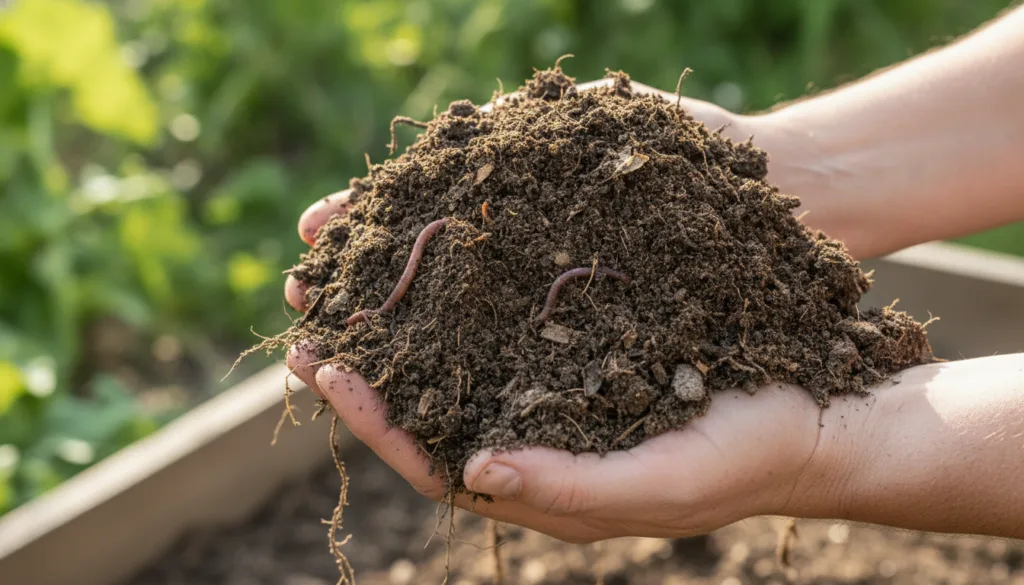
Ready to Get Your Hands Dirty?
Empowering yourself with knowledge about your soil is one of the most rewarding steps you can take as a gardener. These simple hand tests will not only save you time and money but also connect you more deeply with your garden. You’ll soon be enjoying a bountiful home harvest from truly happy plants!
Which test will you try first? Share your soil discoveries and any tips you have in the comments below!