Effortless Homemade Mixture for Sparkling Clean Pots and Pans
Are you tired of battling stubborn grease and baked-on grime that clings to your pots and pans, making them look dull and neglected? You’re not alone! Many everyday cooking sessions leave behind tough residues that seem to defy even the most vigorous scrubbing.
But what if there was a simple, homemade mixture that could transform your kitchenware with minimal effort? This DIY solution is designed to tackle that persistent grease and grime, making your pots and pans sparkle again. It’s incredibly easy to whip up, uses common household ingredients, and offers a practical, effective alternative to harsh chemical cleaners. Give it a try and watch your kitchenware go from dull to dazzling!
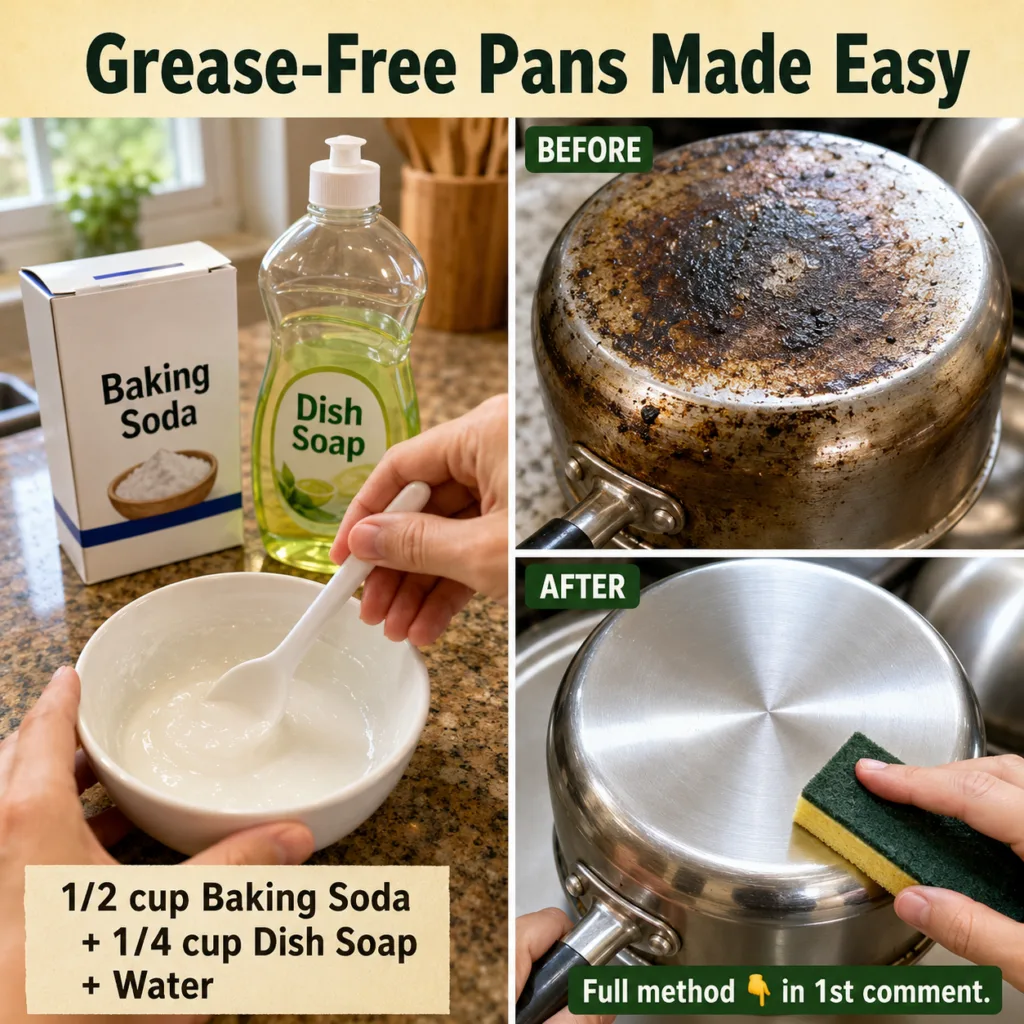
What You’ll Need
- 1 cup baking soda
- ¼ to ½ cup liquid dish soap (or enough to form a thick paste)
- Mixing bowl
- Spoon or spatula for mixing
- Non-abrasive sponge or soft scrubbing brush
- Warm water for rinsing
Why This DIY Can Be Useful
This simple mixture leverages the natural cleaning power of its ingredients:
- Baking Soda: A mild abrasive that helps scrub away cooked-on food and grime without scratching most surfaces. It also works as a deodorizer, neutralizing unpleasant smells.
- Liquid Dish Soap: Known for its powerful degreasing properties, dish soap cuts through oily residues and helps lift stubborn stains, allowing them to be rinsed away easily.
Together, these two ingredients create a synergistic cleaning agent that can significantly reduce the effort needed to clean even the most challenging pot or pan. It’s a gentle yet effective way to maintain your cookware’s appearance and extend its lifespan.
How to Make It
- Pour the 1 cup of baking soda into your mixing bowl.
- Gradually add the liquid dish soap, starting with about ¼ cup.
- Use a spoon or spatula to mix the ingredients thoroughly. Continue adding small amounts of dish soap until you achieve a thick, spreadable paste. The consistency should be similar to toothpaste.
How to Use It
- Prepare the Cookware: Scrape off any loose food particles or burnt bits from your pot or pan.
- Apply the Paste: Take a generous amount of the homemade cleaning paste and spread it evenly over the areas affected by grease and grime.
- Let It Sit: For everyday grime, let the paste sit for 5-10 minutes. For particularly stubborn or baked-on grease, allow it to sit for 15-30 minutes, or even longer for extreme cases.
- Scrub: Using a non-abrasive sponge or soft scrubbing brush, gently but firmly scrub the treated areas. You should notice the grime starting to loosen and lift away.
- Rinse: Rinse the pot or pan thoroughly under warm running water to remove all paste residue and loosened grime.
- Dry: Dry your clean cookware with a clean towel.
What to Expect
You can expect your pots and pans to be significantly cleaner, with much less visible grease and grime. The mixture is effective at removing surface-level stains and baked-on food. For very old, deeply embedded, or extremely stubborn stains, you might need to repeat the application process or allow the paste to sit for an extended period.
While this mixture is powerful, it’s not a magic solution for permanent discoloration or damage, but it will certainly improve the appearance and cleanliness of your cookware.
Helpful Tips
- For Extra Shine: After rinsing off the cleaning paste, you can spray a small amount of white vinegar onto the surface and wipe it clean for an extra streak-free shine, especially good for stainless steel.
- Pre-Soak for Tough Jobs: If you have heavily burnt-on food, consider pre-soaking the pot or pan in warm, soapy water for an hour before applying the paste.
- Gentle Approach: Always use a non-abrasive scrubber, particularly on non-stick or delicate finishes, to avoid scratching.
Important Notes / Safety
- Patch Test: Always test the mixture on an inconspicuous area of your cookware first, especially if you are unsure about its finish or material, to ensure it doesn’t cause any discoloration or damage.
- Non-Stick Surfaces: While generally safe, be very gentle when scrubbing non-stick coatings to avoid damaging them. Avoid harsh abrasive scrubbers.
- Rinse Thoroughly: Ensure all cleaning paste is rinsed away before using the cookware for food preparation.
- Storage: If you have leftover paste, store it in an airtight container at room temperature. It should remain effective for a few weeks.