Most people think salt is just… salt.
Same taste. Same purpose. No difference.
But if you’ve ever stood in a grocery store and seen:
-
pink salt
-
sea salt
-
black salt
-
blue salt
👉 You’ve probably wondered:
Do these actually matter — or is it just marketing?
Not All Salt Is The Same — But Not For The Reason You Think
Here’s the truth most people don’t hear:
👉 The difference between salts is more about origin, texture, and trace minerals
👉 NOT some massive health transformation
Yes, some contain:
-
small amounts of minerals
-
different crystal structures
-
slightly different flavors
But:
👉 They all still contain sodium
👉 And too much of any salt = not good
What Each Type of Salt Is Actually Used For
Instead of thinking “healthy vs unhealthy”
👉 Think “what is this salt best for?”
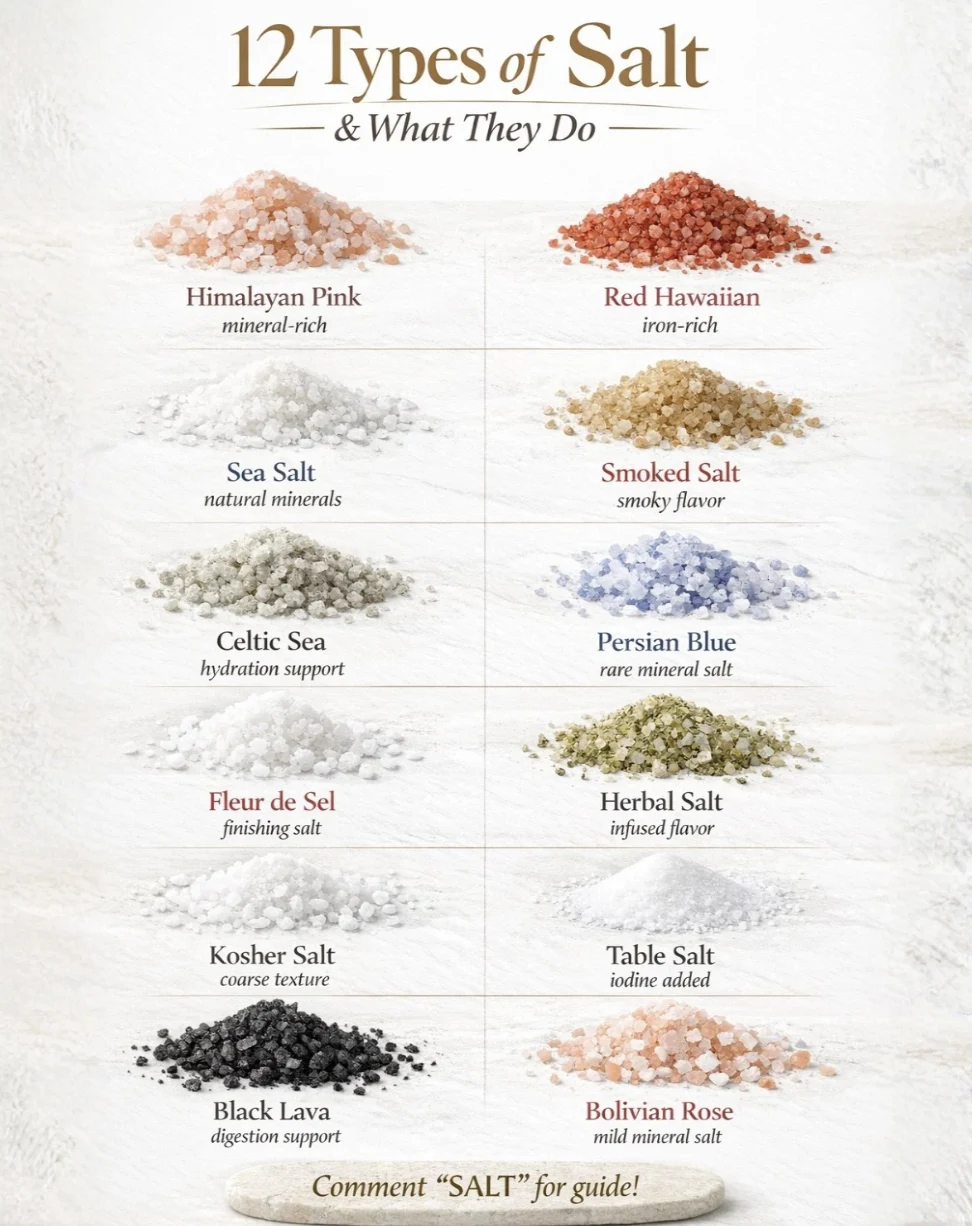
Himalayan Pink Salt
-
Contains trace minerals
-
Slightly milder taste
👉 Best for: everyday cooking if you prefer a natural option
Sea Salt
-
Less processed than table salt
-
Retains natural minerals
👉 Best for: general cooking + seasoning
Celtic Sea Salt
-
Slightly moist
-
Known for trace minerals
👉 Best for: hydration-focused diets (in small amounts)
Fleur de Sel
-
Light, flaky texture
👉 Best for: finishing dishes (sprinkle on top before serving)
Kosher Salt
-
Coarse texture
-
Easy to control when cooking
👉 Best for: chefs, cooking meats
Black Lava Salt
-
Contains activated charcoal
👉 Best for: visual presentation + unique flavor
Red Hawaiian Salt
-
Contains iron oxide
👉 Best for: traditional dishes + earthy flavor
Smoked Salt
-
Infused with smoke
👉 Best for: adding smoky flavor without grilling
Persian Blue Salt
-
Rare, slightly sweet taste
👉 Best for: gourmet finishing
Herbal Salt
-
Mixed with herbs
👉 Best for: boosting flavor without extra sauces
Table Salt
-
Highly processed
-
Iodine added
👉 Best for: basic use + iodine intake
Bolivian Rose Salt
-
Mild flavor
👉 Best for: general seasoning
So… Which Salt Is Actually “Best”?
This is where most people get it wrong.
👉 There is no “super salt”
The real answer:
-
If you want iodine → table salt helps
-
If you want flavor & texture → sea salt / kosher / fleur de sel
-
If you want variety → specialty salts
But overall:
👉 The biggest factor isn’t the type
👉 It’s how much you use
The Real Problem Isn’t Salt — It’s Hidden Sodium
Most people don’t overuse salt directly.
They get it from:
-
processed foods
-
sauces
-
packaged snacks
👉 That’s where sodium intake really adds up
Simple Rule Most People Should Follow
Instead of obsessing over “which salt is healthiest”:
-
Use salt to enhance food — not dominate it
-
Choose less processed foods
-
Pay attention to total intake
👉 That matters far more than switching salt types
Final Thought
Salt can look different.
Taste different.
Come from different places.
But at the end of the day:
👉 It’s still salt.
And using it wisely will always matter more than which one you pick.