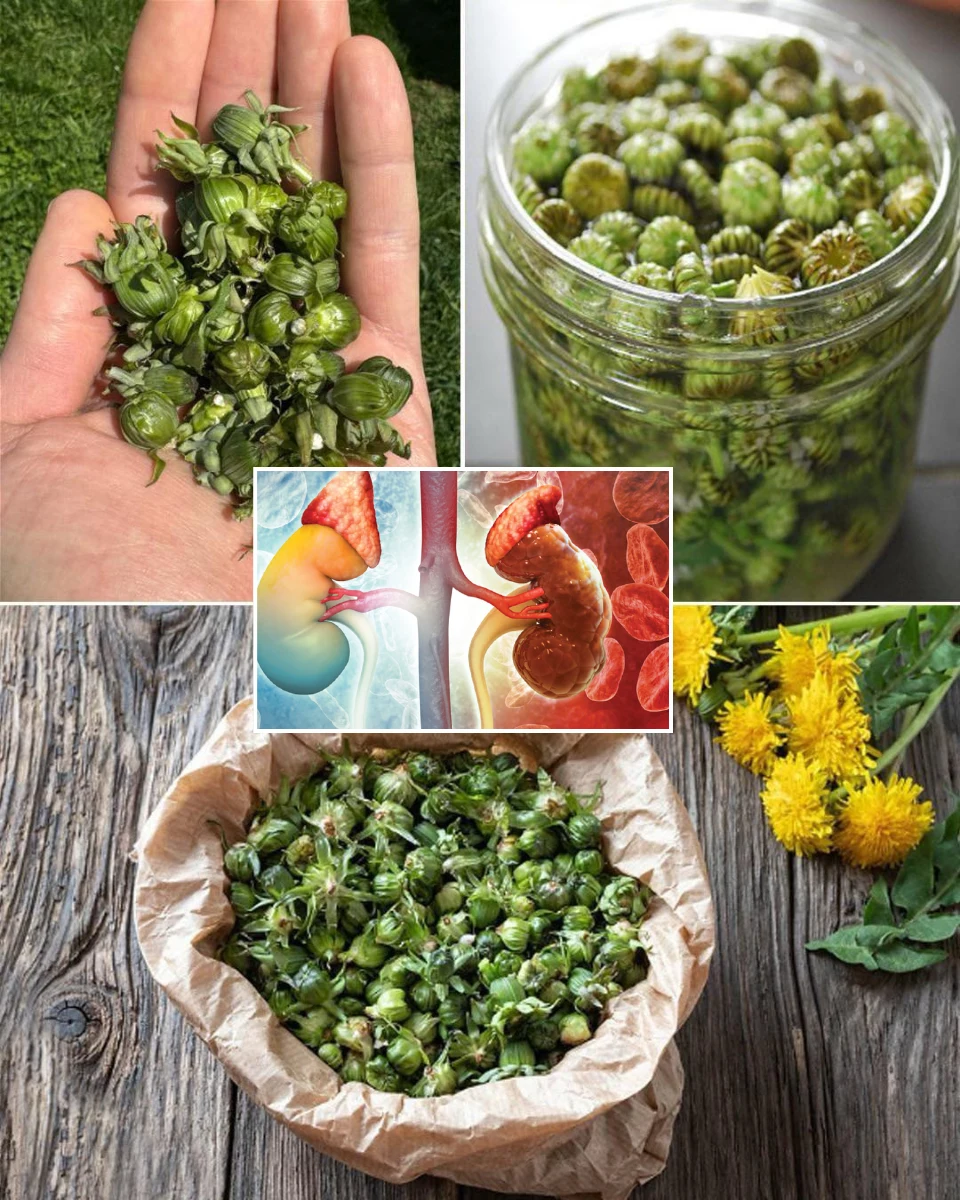
If you have been seeing posts about dandelion buds for kidney support, it is easy to understand the appeal. The image suggests a simple natural remedy: young green dandelion buds, a jar infusion, and a promise of gentle cleansing.
There is a traditional basis for that idea. Dandelion has long been used as an herb associated with fluid balance and urination, and modern sources do note that it may have a mild diuretic effect. At the same time, that is very different from saying it can “repair” kidneys or treat kidney disease. Reliable health sources emphasize that evidence for major medical benefits is still limited, and people with kidney problems should be especially careful with herbal remedies.
So if you want to turn this image into a useful wellness blog section, the best angle is this: dandelion buds may be used as a gentle traditional herbal infusion that supports hydration habits and normal fluid balance, not as a cure.
Ingredients
For a simple dandelion bud infusion, you can write the recipe clearly like this:
- 1/2 cup fresh dandelion buds, rinsed well
- 2 cups water
- Optional: 1 thin slice lemon for flavor
If using dried material instead of fresh buds, use about 1 to 2 teaspoons dried dandelion herb per cup of hot water as a lighter tea-style preparation.
How to Prepare
- Rinse the dandelion buds thoroughly to remove dirt and debris.
- Add the buds to a small pot with 2 cups of water.
- Bring to a gentle simmer.
- Let it cook on low heat for 10 to 15 minutes.
- Turn off the heat and let it steep for another 5 minutes.
- Strain into a cup or jar.
- Drink warm, or cool and refrigerate for later the same day.
This gives you a mild, earthy herbal drink that fits the tone of the image without making unrealistic promises.
How to Use It
A practical way to present it:
- Drink 1 small cup once daily
- Best taken in the morning or early afternoon
- Avoid taking it too late in the evening, since herbs with diuretic effects may increase urination
A simple timeline helps set expectations. Some people may notice more frequent urination the same day, but that does not mean the kidneys are being “cleansed.” It usually just reflects the herb’s traditional diuretic use. Stronger results should not be expected. (NCCIH)
Why It Works
This is the part readers care about most, so it helps to keep it grounded and easy to follow.
Dandelion is traditionally linked to urinary support
Dandelion has been used in herbal traditions for fluid balance and increased urination. NCCIH and Memorial Sloan Kettering both note this traditional use, though they also make clear that evidence for many health claims remains limited.
It may have a mild diuretic effect
One small human study found that a dandelion extract showed promise as a diuretic, meaning it may help the body release more urine. But the study was preliminary, and more research is needed before drawing strong conclusions.
Dandelion contains plant compounds with antioxidant activity
Reviews describe dandelion as a source of phenolic compounds and other phytochemicals. These compounds are often studied for antioxidant and anti-inflammatory effects. That helps explain why dandelion is commonly discussed in wellness and herbal circles. Still, most of this research does not prove that a home tea or bud infusion will prevent or treat kidney disease in humans.
Traditional support is not the same as disease treatment
This distinction matters. A gentle herbal infusion may fit into a general wellness routine, but chronic kidney disease, kidney stones, swelling, or changes in urination need medical evaluation. Herbal products can also interact with medicines, and people with kidney disease are a group in whom herb-drug interactions can be especially important. (NCCIH)
Who Might Find This Most Appealing
This kind of remedy usually appeals to people who want:
- A simple traditional herbal tea
- A gentle daily wellness ritual
- Support for feeling puffy or sluggish
- A natural alternative to sugary drinks
That said, it is not appropriate to market it as a fix for kidney damage, infection, or kidney failure.
Safety Notes
This section should stay in every version of the blog post.
Do not use dandelion buds if you are unsure the plant was identified correctly. Wild harvesting mistakes can be risky.
People with kidney disease, gallbladder problems, ragweed allergy, or those taking diuretics, lithium, blood thinners, or diabetes medicines should talk with a clinician before using dandelion regularly. Herbal references also note that supplements can be more concentrated than food or tea forms.
Pregnant or breastfeeding readers should also check with a healthcare professional first.
Final Takeaway
Dandelion buds make an interesting traditional herbal remedy for urinary balance and gentle wellness support. The most evidence-based way to present them is not as a miracle kidney cleanser, but as a mild herbal infusion with possible diuretic activity and antioxidant plant compounds.
That framing keeps the post helpful, realistic, and more trustworthy for readers.