When people think about bone health, they usually think about one thing: calcium. But bone strength and calcium balance are about much more than drinking milk or taking a supplement. Your bones depend on a full pattern of nutrition, including calcium-rich foods, vitamin D support, enough protein, and everyday habits that do not work against mineral balance.
That is why this guide matters. It is not just about what to eat more of. It is also about which foods may crowd out better choices when they show up too often.
Most people never realize this works because stronger bones are built quietly, over time. You do not “feel” your bones getting stronger after one meal. But small, repeated choices can make a real difference in the long run.
Foods That May Work Against Bone Strength and Calcium Balance
These foods do not harm your bones from one serving alone. The concern is the overall pattern. When they become daily staples, they can make it harder to build a nutrient-dense diet.
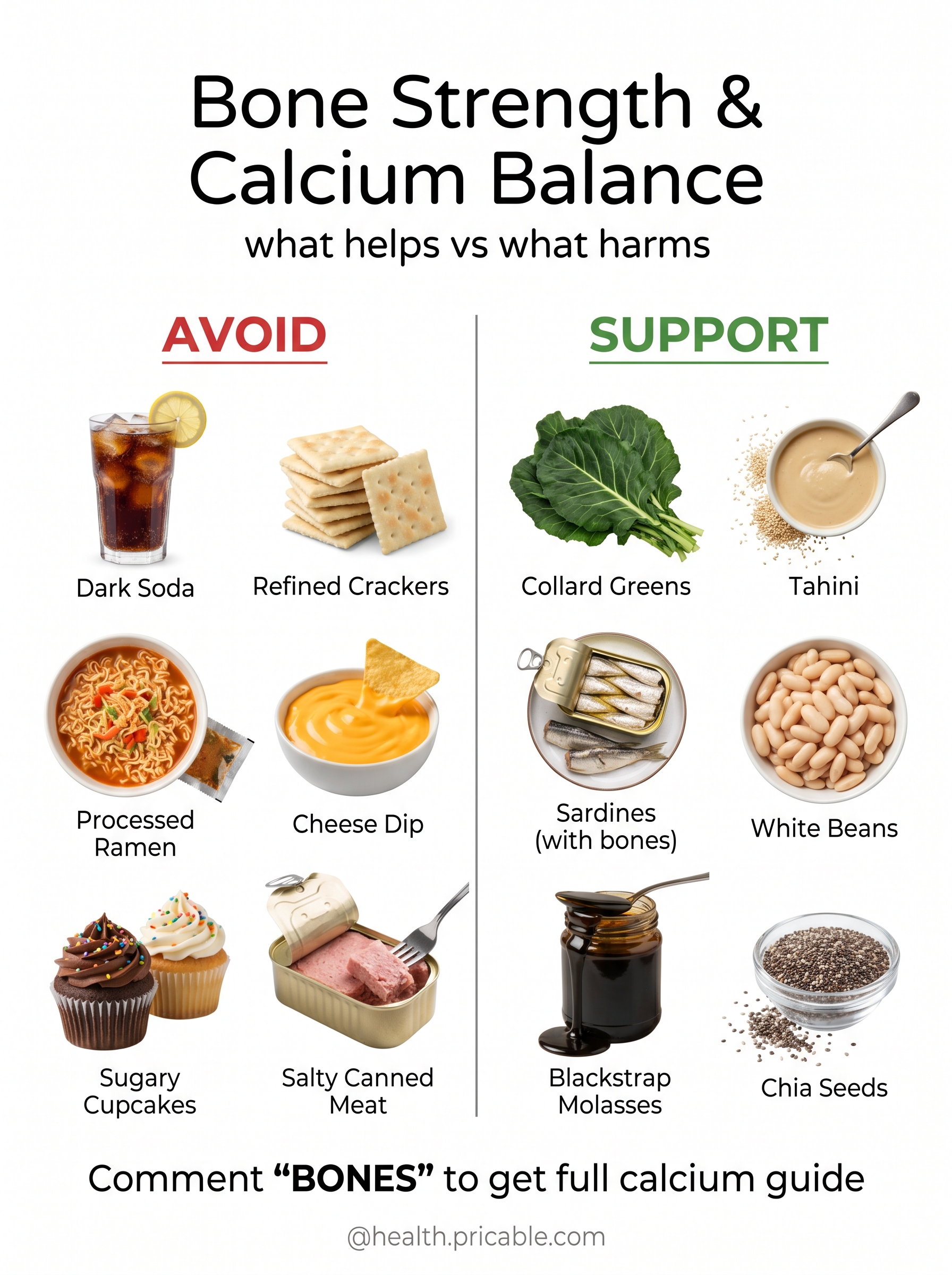
Dark Soda
Dark soda is often discussed in bone health conversations because it can replace more nourishing drinks in the diet. If soda becomes your default beverage, there is simply less room for foods and drinks that bring calcium, protein, and other supportive nutrients.
Refined Crackers
Refined crackers are easy to snack on, but they usually provide little fiber, little protein, and not much nutritional value for bone support. They are convenient, but they do not do much to help your body maintain stronger bones.
Processed Ramen
Processed ramen is often high in sodium and low in meaningful bone-support nutrients. When salty processed foods become a habit, they may work against a more balanced eating pattern.
Cheese Dip
Cheese dip sounds calcium-rich, but ultra-processed dips are often more about sodium, additives, and overconsumption than true nourishment. It is not the same as eating more whole, calcium-supportive foods.
Sugary Cupcakes
Sugary cupcakes are fine as an occasional treat, but they do not bring the minerals, protein, or nutritional structure that bone health needs. Frequent added-sugar foods can also crowd out more useful choices.
Salty Canned Meat
Salty canned meat is another example of a processed food that may be easy to overeat while offering little support for calcium balance. It is better treated as occasional convenience food, not the center of a bone-conscious diet.
Foods That Support Bone Strength and Calcium Balance
This is where the real opportunity begins. The foods on this side are not trendy or complicated. They are simple ingredients that can help build a better routine.
Collard Greens
Collard greens are one of the most helpful leafy greens for a bone-supportive diet. They add plant calcium, fiber, and volume to meals in a very practical way.

Tahini
Tahini, made from sesame seeds, adds calcium along with healthy fats and rich flavor. It is a very easy ingredient to use when you want meals to feel nourishing instead of restrictive.
Sardines (with bones)
Sardines with bones are one of the strongest foods on this list for bone support. They provide calcium, protein, and other key nutrients in one compact serving.
White Beans
White beans are budget-friendly, filling, and useful in many meals. They help support a more mineral-rich plate while also making meals feel substantial and satisfying.
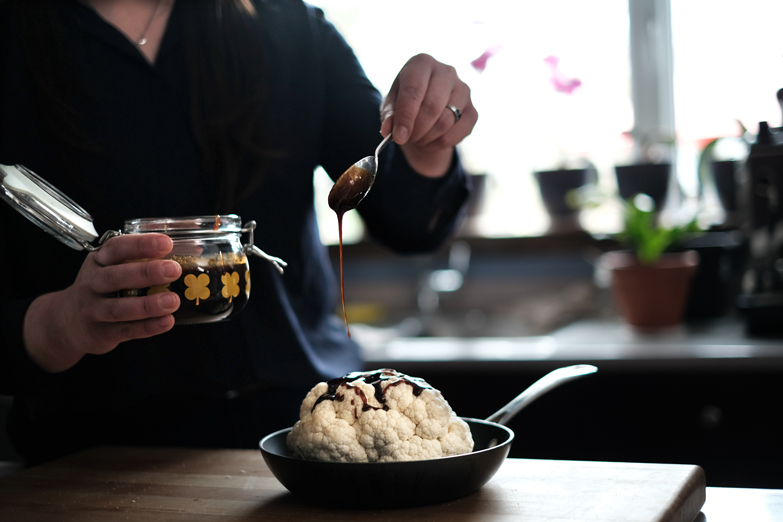
Blackstrap Molasses
Blackstrap molasses is often included in traditional nutrition conversations because it contains small amounts of minerals. It is still a sweetener, so it is best used in modest amounts, but it can be a useful add-in.
Chia Seeds
Chia seeds are small but helpful. They add minerals, fiber, and texture, and they are one of the easiest foods to use regularly without needing special preparation.
Why These Foods Help
Bone health depends on more than just one nutrient. Calcium is central, but it works best in the context of an overall supportive diet.
Here is why these foods matter:
They help increase calcium intake naturally
Foods like collard greens, tahini, and sardines with bones contribute calcium in whole-food form.
They support a more nutrient-dense eating pattern
White beans and chia seeds add fiber and minerals, while sardines also bring protein, which bones need too.
They replace lower-value foods
Sometimes the biggest win is not only adding something healthy. It is replacing a food that offers very little support in the first place.
How to Eat These Foods for Better Bone Strength and Calcium Balance
Knowing which foods support bone health is useful, but the real difference comes from using them in easy meals you can actually repeat.
Add collard greens to everyday meals
Collard greens can be sautéed with garlic and olive oil, stirred into soups, or served as a side with eggs or fish. Cooking them until tender makes them easier to enjoy and easier to use often.
Use tahini as a calcium-rich sauce
Tahini works beautifully as a dressing, dip, or drizzle. You can spoon it over roasted vegetables, spread it on toast, or mix it with lemon and garlic for a quick sauce.
Eat sardines in simple, realistic ways
Sardines with bones can be mashed onto toast, added to salads, or served with crackers and sliced vegetables. If the flavor feels strong at first, mixing them with mustard, herbs, or olive oil can make them more approachable.
Add white beans to soups, bowls, and side dishes
White beans are easy to stir into soups, toss into salads, or blend into creamy dips. They pair especially well with greens, olive oil, garlic, and herbs.
Use blackstrap molasses in small amounts
Blackstrap molasses is best used as a small add-in. Stir a little into oatmeal, blend it into a smoothie, or mix it into homemade sauces or dressings.
Sprinkle chia seeds into meals and snacks
Chia seeds are one of the simplest upgrades you can make. Add them to yogurt, oatmeal, smoothies, or overnight oats. They fit almost anywhere without much effort.
Easy Meal Ideas for Bone Strength
A few simple combinations can make these foods much easier to use consistently.
Breakfast
Try oatmeal with chia seeds and a small drizzle of blackstrap molasses.
Lunch
Make a bowl with white beans, collard greens, garlic, olive oil, and tahini dressing.
Snack
Use tahini as a dip for vegetables or spread it lightly on toast.
Dinner
Serve sardines with cooked greens and white beans, finished with herbs and olive oil.
How to Build a Daily Plate for Stronger Bones
A simple bone-supportive plate does not need to be perfect.
Start with one supportive base like collard greens or white beans. Add a protein-rich food such as sardines with bones. Then finish with flavor and texture from tahini or chia seeds.
This kind of plate is much more supportive than a pattern centered around dark soda, refined crackers, processed ramen, cheese dip, sugary cupcakes, and salty canned meat.
When You’ll Notice Changes
Bone health is a long game. You will not notice stronger bones in a few days.
What you may notice sooner is that your meals feel more balanced, your snacks become more nourishing, and you rely less on processed convenience foods. The actual benefits to bone strength build over months and years of consistency.
Simple Safety Note
Bone health is not just about calcium. Vitamin D helps your body absorb calcium, and some people may need personalized advice about supplements, especially if they have low vitamin D, osteoporosis, digestive disorders, or higher calcium needs.
Also, more calcium is not always better. It is best to build your routine around food first and discuss supplements with a qualified clinician when needed.
Final Takeaway
The real secret to bone strength and calcium balance is not one superfood. It is the overall pattern of your diet.
Foods like collard greens, tahini, sardines with bones, white beans, blackstrap molasses, and chia seeds can help support stronger bones over time. Foods like dark soda, refined crackers, processed ramen, cheese dip, sugary cupcakes, and salty canned meat are better kept in the occasional category.
When you know not just what helps, but also how to eat these foods in real life, bone-supportive eating becomes much easier to maintain.