Vaseline face cream hacks are viral because they look so simple: one jar, a few beauty add-ins, and a smoother-looking glow by morning.
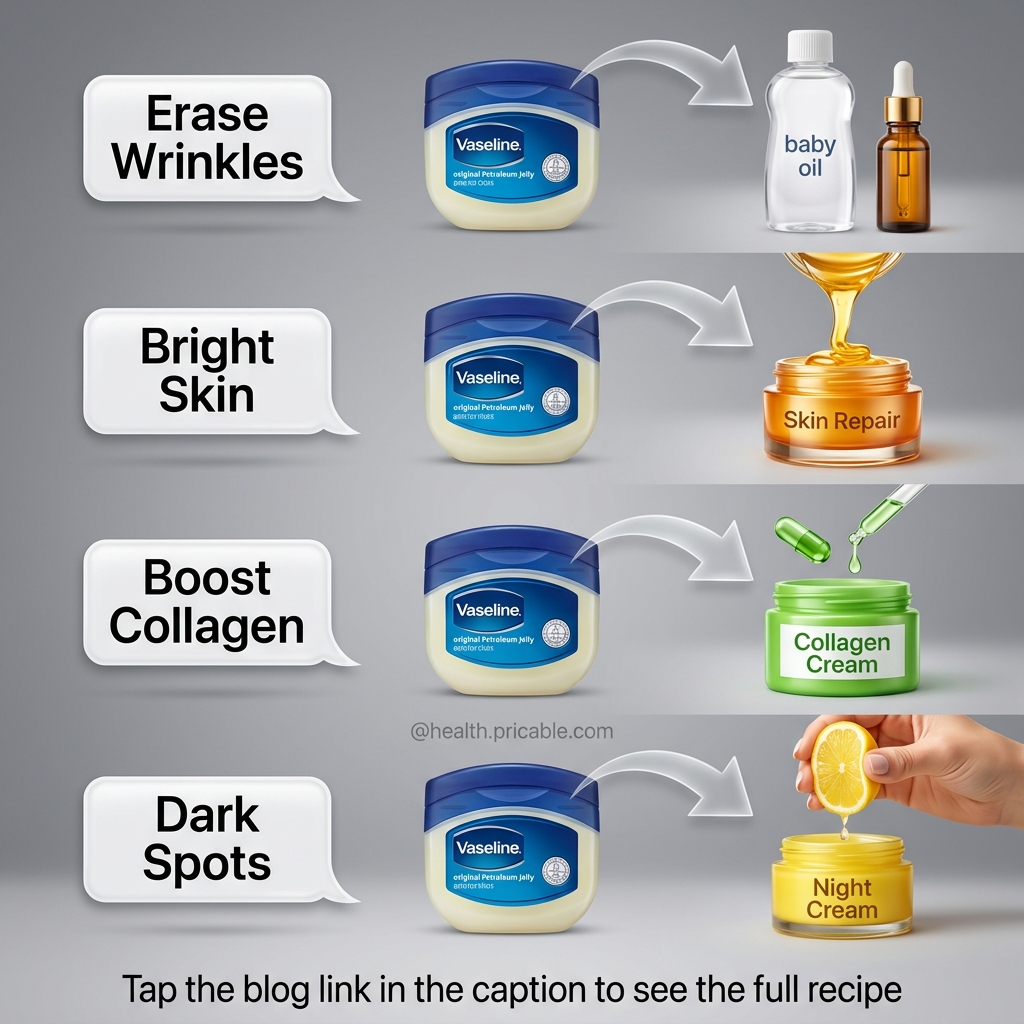
The image makes it feel like petroleum jelly can be mixed for wrinkles, brightness, collagen, and dark spots.
The real payoff is knowing which combinations are worth trying, which ones are better avoided, and how to use Vaseline without cloggy, greasy results.
Vaseline can help seal moisture into the skin, which may soften the look of dryness and fine lines. It does not erase wrinkles, boost collagen by itself, or remove dark spots overnight.
Used correctly, it works best as a protective final layer over a good moisturizer or serum.
- It locks in moisture: petroleum jelly helps reduce water loss from the skin surface.
- It softens dry texture: rough patches can look smoother when sealed overnight.
- It protects the skin barrier: useful when skin feels tight, flaky, or wind-dry.
- It pairs well with simple moisturizers: use it over hydration, not instead of hydration.
- It works best in tiny amounts: a pea-size layer is usually enough for the face.
The key decision is whether you need a full-face overnight seal, a spot treatment for dry areas, or a safer brightening routine that does not rely on harsh lemon tricks.
How to make Vaseline face cream at home
Start with a small batch. Homemade mixes should be used fresh because they do not contain the same preservatives as store-bought skincare.
Basic soft-glow Vaseline cream
- 1 teaspoon petroleum jelly
- 1 teaspoon fragrance-free moisturizer
- 2 drops jojoba oil, squalane, or baby oil
- Add the moisturizer to a clean small bowl.
- Mix in petroleum jelly until the texture looks smooth.
- Add 2 drops of oil and stir again.
- Apply a very thin layer over damp, clean skin at night.
- Use 2 to 3 nights per week at first.
Dry-patch repair balm
- 1 teaspoon petroleum jelly
- 1/2 teaspoon aloe vera gel
- 1 drop vitamin E oil, optional
Use this only on dry corners of the nose, flaky cheeks, elbows, or hands. Avoid placing thick balm on active breakouts.
Best Vaseline face cream vs moisturizer for dry skin
Moisturizer and Vaseline do different jobs. Moisturizer adds water-binding ingredients, while Vaseline seals them in.
- Use moisturizer first if your skin feels tight, dull, or dehydrated.
- Use Vaseline last if your skin loses moisture overnight.
- Use a cream moisturizer if your skin is dry but acne-prone.
- Use Vaseline only on dry zones if your T-zone gets oily.
- Skip full-face slugging if you are breaking out, very oily, or using strong acne actives.
For most people, the best routine is not Vaseline instead of moisturizer. It is moisturizer first, then a thin Vaseline layer where needed.
What to look for before you buy petroleum jelly for face
Petroleum jelly is simple, but the product label still matters if you plan to use it on your face.
- 100% petrolatum: choose a plain formula when possible.
- Fragrance-free: fragrance can bother sensitive or dry skin.
- No added color: keep facial formulas simple.
- Clean packaging: squeeze tubes are more hygienic than dipping fingers into a large jar.
- Small size: easier to keep clean and fresh for face use.
- Trusted skincare labeling: choose products intended for skin, not industrial use.
- No “miracle wrinkle” claims: petroleum jelly is a barrier product, not a collagen treatment.
- Good texture: it should feel smooth, not gritty or separated.
Keep one separate jar or tube for your face. Do not use the same jar for feet, hands, lips, and facial skincare.
How to use Vaseline on face overnight
Overnight Vaseline use is often called slugging. It can be helpful for dry skin, but the amount matters.
Simple overnight routine
- Cleanse your face gently.
- Apply toner or serum if you use one.
- Apply a fragrance-free moisturizer.
- Wait 2 to 5 minutes.
- Tap a rice-grain amount of Vaseline onto dry areas.
- Use a pea-size amount only if doing a very thin full-face layer.
- Wash your face gently in the morning.
Common mistakes and quick fixes
- Mistake: using too much. Why: it feels greasy and can trap sweat. Fix: use less than you think.
- Mistake: mixing lemon into night cream. Why: lemon can irritate skin. Fix: use gentle brightening products instead.
- Mistake: applying over dirty skin. Why: it seals in oil and debris. Fix: cleanse first.
- Mistake: using it over strong retinoids too soon. Why: it may intensify irritation. Fix: keep retinoid nights simple.
- Mistake: putting it on active acne. Why: heavy occlusion may feel worse. Fix: use only on dry areas.
- Mistake: expecting wrinkle removal. Why: it softens dryness, not skin structure. Fix: pair with sunscreen and proven skincare.
Safety note
Patch test any homemade mix before using it on your full face. Avoid Vaseline mixes on open wounds, infected skin, active rashes, or severe acne flare-ups.
Do not mix petroleum jelly with lemon juice for overnight use. If your skin burns, itches, swells, or becomes red, rinse it off and stop using it.
Realistic timeline
- Same day: skin may feel softer and look dewier after one night.
- 1 week: dry patches may look calmer if the routine suits your skin.
- 2 to 4 weeks: barrier support may help your skin look smoother, but dark spots and wrinkles need longer-term targeted care.
Vaseline face cream for dark spots
Vaseline can make skin look glossy, which may temporarily make uneven tone look softer in certain lighting. It does not fade pigmentation on its own.
For dark spots, the smarter routine is gentle moisture, daily sunscreen, and brightening ingredients your skin tolerates.
- Use sunscreen every morning because dark spots often deepen with UV exposure.
- Choose vitamin C, niacinamide, azelaic acid, or licorice-root products if your skin tolerates them.
- Use Vaseline only as a final seal on dry areas at night.
- Avoid lemon juice on spots, especially before sun exposure.
- Track dark spots with photos every 2 to 4 weeks, not every day.
FAQ
What should I look for before I buy petroleum jelly for face?
Choose plain, fragrance-free petroleum jelly labeled for skin use. A small tube is cleaner for facial use than repeatedly dipping into a large shared jar.
Is Vaseline face cream or moisturizer better for dry skin?
Moisturizer is better for adding hydration. Vaseline is better for sealing that hydration in, so the best dry-skin routine often uses both.
How do I make Vaseline face cream at home?
Mix 1 teaspoon petroleum jelly with 1 teaspoon fragrance-free moisturizer and 2 drops of jojoba oil, squalane, or baby oil. Apply a very thin layer at night.
How do I use Vaseline on my face overnight?
Cleanse, moisturize, then tap a tiny amount of Vaseline over dry areas as the final layer. Wash gently in the morning.
Can Vaseline face cream help with dark spots?
It can help skin look moisturized, but it does not fade dark spots by itself. For dark spots, sunscreen and targeted brightening ingredients matter more.
Can Vaseline erase wrinkles?
No. It can soften the look of dry fine lines by sealing in moisture, but it cannot erase wrinkles or rebuild collagen.
Can I mix Vaseline with baby oil?
You can mix a tiny amount for very dry skin, but keep it minimal. Too much oil can feel greasy and may not suit acne-prone skin.
Should I use Vaseline every night?
Dry skin may tolerate it often, while oily or acne-prone skin may not. Start 2 to 3 nights weekly and adjust based on your skin.
Before buying another cream, decide what your skin actually needs: hydration, barrier protection, dark-spot care, or wrinkle support. Vaseline helps most with sealing and softness.
Final takeaway
- Best use-case: dry patches, overnight moisture sealing, and barrier support.
- Simplest routine: cleanser, moisturizer, tiny amount of Vaseline.
- What to buy: plain fragrance-free petroleum jelly in a clean small tube.
- What to avoid: lemon mixes, thick full-face layers, miracle wrinkle claims, and applying over active breakouts.
- Next step: test it on one dry area for a week before using it all over your face.