Homemade collagen powder gets attention because the promise is irresistible: one spoon a day, mixed into a drink, for a more youthful-looking glow.
- Protein intake matters because collagen is a protein structure.
- Vitamin C-rich ingredients support normal collagen formation in the body.
- Seeds add healthy fats and texture to smoothies.
- Green powders can add plant nutrients, but quality matters.
- Daily consistency works better than taking a huge scoop once in a while.
If your goal is visible skin support, decide first whether you want true collagen peptides, a plant-based beauty powder, or a blend of both.
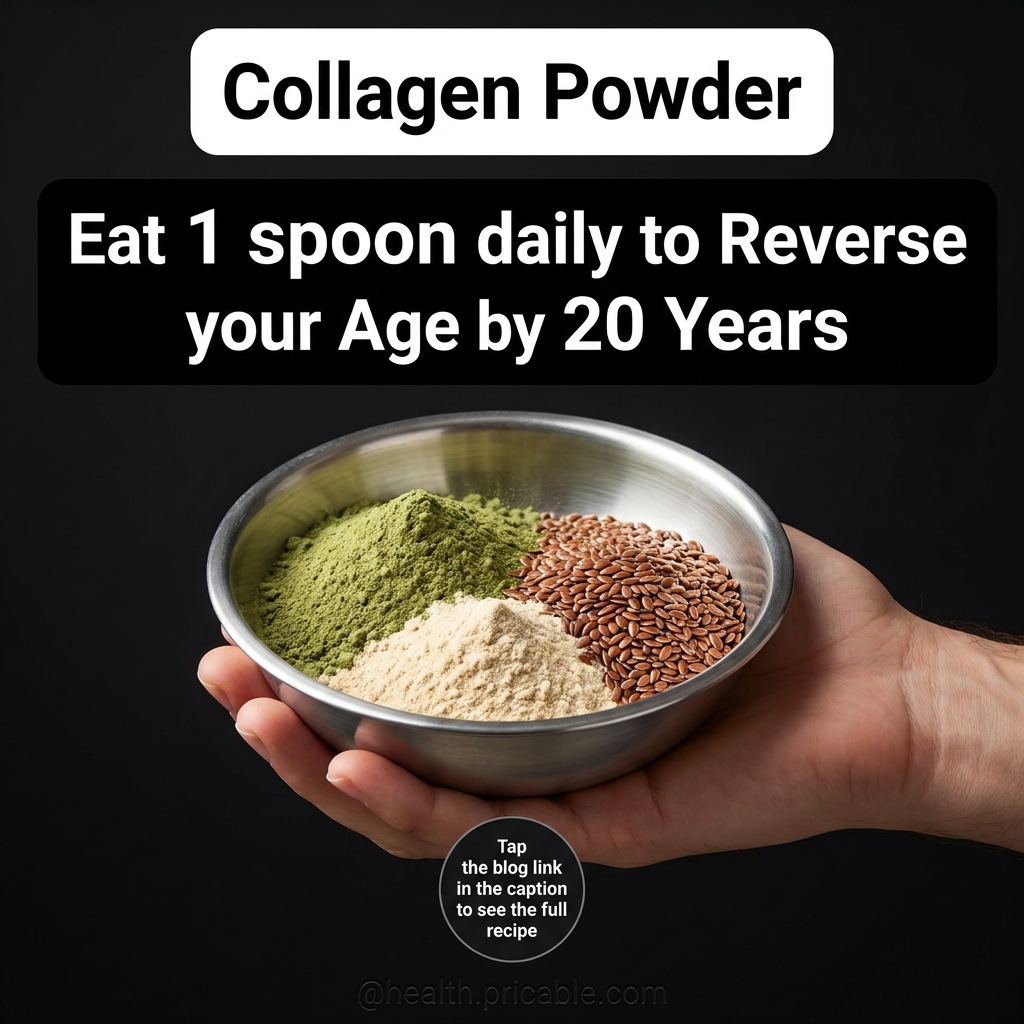
How to make homemade collagen powder
This recipe is best described as a collagen-support beauty blend. It is easy to add to smoothies, yogurt bowls, oatmeal, or warm drinks.
Ingredients
- 4 tablespoons finely ground flaxseed
- 2 tablespoons amla powder
- 2 tablespoons moringa powder
- 2 tablespoons sesame seed powder
- 2 tablespoons almond powder
- Optional: 2 tablespoons unflavored collagen peptides if you want actual collagen in the blend
Steps
- Add all powders to a clean, dry bowl.
- Whisk until the color looks evenly mixed.
- Transfer to an airtight glass jar.
- Store in a cool, dry cabinet for up to 2 weeks.
- If using freshly ground seeds or nuts, refrigerate the blend to protect freshness.
Daily serving
- Start with 1 teaspoon daily for 3 days.
- If your stomach feels fine, increase to 1 tablespoon daily.
- Drink extra water because seed powders absorb liquid.
Do not start with a large spoonful if you are not used to high-fiber seed blends.
Best collagen powder vs homemade collagen powder
Store-bought collagen powder and homemade beauty powder are not the same thing.
- Collagen peptides: contain hydrolyzed collagen, usually from bovine, marine, or chicken sources.
- Homemade plant blend: does not contain collagen unless collagen peptides are added.
- Collagen peptides: mix easily into coffee, smoothies, and water.
- Homemade blend: adds fiber, plant nutrients, and a thicker texture.
- Combination approach: uses collagen peptides plus seed and vitamin C-rich ingredients.
If you want actual collagen, buy collagen peptides. If you want a food-based beauty booster, a homemade blend can be a useful daily ritual.
What to look for before you buy collagen powder
Collagen powder labels can be confusing, so shop by criteria instead of hype.
- Hydrolyzed collagen peptides: this form mixes more easily and is common in powders.
- Source listed: bovine, marine, chicken, or eggshell membrane should be clear.
- Type listed: type I and III are common for skin-focused collagen; type II is often marketed for joints.
- Unflavored option: easier to add to coffee, smoothies, soups, or oatmeal.
- No excessive sugar: avoid dessert-like powders if you want daily use.
- Third-party testing: helpful for quality and purity confidence.
- Allergen awareness: marine collagen is not suitable for fish allergies.
- Serving size clarity: the label should state grams per scoop.
- Realistic claims: avoid products promising to erase wrinkles or reverse decades of aging.
A good collagen powder should be easy to mix, clearly sourced, and realistic about results.
How to use collagen powder in smoothies or coffee
Collagen powder and homemade beauty powder behave differently in drinks.
For smoothies
- 1 tablespoon homemade beauty blend
- 1 cup milk, almond milk, or yogurt
- 1/2 banana or 1/2 cup berries
- Optional: 1 scoop collagen peptides
Blend for 30 to 45 seconds so the seed powders do not taste gritty.
For coffee
- Use collagen peptides, not a chunky seed blend, if you want a smooth cup.
- Add 1 scoop collagen peptides to warm coffee.
- Froth or stir well until dissolved.
For yogurt bowls
- Stir 1 teaspoon to 1 tablespoon homemade blend into Greek yogurt.
- Add berries or sliced fruit.
- Let it sit for 3 minutes so the powder softens.
Common mistakes and quick fixes
- Mistake: calling every seed blend collagen. Why: plants do not contain collagen. Fix: call it collagen-support unless peptides are added.
- Mistake: taking too much at once. Why: fiber can upset the stomach. Fix: start with 1 teaspoon.
- Mistake: storing ground seeds for months. Why: oils can go stale. Fix: make small batches.
- Mistake: mixing seed powder into coffee. Why: texture can be gritty. Fix: use smoothies or yogurt instead.
- Mistake: expecting fast wrinkle reversal. Why: skin changes slowly. Fix: pair nutrition with sunscreen, sleep, and hydration.
- Mistake: buying flavored powders blindly. Why: they may contain sweeteners or allergens. Fix: read the label first.
Safety note
Check ingredients for allergies, especially nuts, sesame, fish, or bovine sources. If you are pregnant, nursing, on medication, managing a medical condition, or have food allergies, ask a qualified professional before using new supplements.
Stop using the blend if it causes stomach upset, rash, itching, or any unusual reaction.
Realistic timeline
- Same day: the blend can make smoothies or yogurt more filling.
- 1 week: you may notice better routine consistency and improved hydration habits if you pair it with water.
- 2 to 4 weeks: skin may look more supported when the blend is part of a balanced diet, but dramatic age reversal is not realistic.
Collagen powder for skin over 40
After 40, a collagen routine works best when it is part of a bigger skin-support plan.
- Prioritize daily sunscreen.
- Eat enough protein throughout the day.
- Use vitamin C-rich foods like citrus, berries, peppers, or amla powder.
- Choose collagen peptides if you want actual collagen.
- Use homemade seed blends for fiber, healthy fats, and smoothie texture.
- Stay consistent for weeks, not days.
FAQ
What should I look for before I buy collagen powder?
Look for hydrolyzed collagen peptides, a clear source, listed serving size, low sugar, third-party testing when possible, and realistic claims.
Is collagen powder or homemade collagen powder better?
Collagen peptides are better if you want actual collagen. Homemade beauty powder is better if you want a food-based blend with seeds, plant powders, and smoothie-friendly nutrients.
How do I make homemade collagen powder?
Mix ground flaxseed, amla powder, moringa powder, sesame seed powder, and almond powder. Add collagen peptides only if you want the blend to contain actual collagen.
How do I use collagen powder in smoothies or coffee?
Use collagen peptides in coffee because they dissolve more smoothly. Use homemade seed blends in smoothies, yogurt bowls, or oatmeal where texture works better.
Is collagen powder good for skin over 40?
It may support a skin-focused routine, especially when paired with enough protein, vitamin C, sunscreen, and consistent skincare. Results vary and take time.
Can homemade collagen powder reverse aging?
No powder can reverse aging by decades. A good blend can support your daily nutrition routine, but it should not be treated like an anti-aging cure.
Can I take homemade collagen powder every day?
Many people can use a small daily serving, but start with 1 teaspoon and increase slowly. Watch for stomach upset or allergy symptoms.
Should I take collagen powder in the morning or at night?
Use it at the time you will remember consistently. Smoothies work well in the morning, while yogurt bowls or warm drinks can work later in the day.
Before choosing a powder, decide whether you want true collagen peptides, a plant-based beauty blend, or both. The best daily routine is the one you understand and can repeat.
Final takeaway
- Best use-case: daily skin-support smoothies, yogurt bowls, or coffee routines.
- Simplest routine: 1 teaspoon to 1 tablespoon homemade blend daily.
- What to buy: hydrolyzed collagen peptides if you want actual collagen.
- What to avoid: miracle age-reversal claims, stale seed powders, excess sugar, and unlabeled sources.
- Next step: make a small 2-week batch and track digestion, consistency, and skin routine habits.