Clove water for hair and brows is getting attention because the before-and-after idea is easy to love: thicker-looking brows, fuller-looking lashes, and shinier hair from one simple spice.
Cloves are bold, fragrant, and easy to turn into a rinse at home.
The real value is learning how to make the clove water mild enough for beauty use, especially around the eyebrow area.
Clove water may support a clean scalp routine and can make brows look more groomed when paired with consistent care. It cannot guarantee lash growth, regrow over-plucked brows overnight, or fix medical hair loss.
Also, anything used near the eyes needs extra caution because clove is strong.
- Clove infusion creates a lightweight rinse without the heaviness of oil.
- Scalp massage helps distribute the rinse and makes the routine feel stimulating.
- Brow brushing can make thin brows look neater immediately.
- Short contact time lowers the chance of irritation.
- Consistency matters more than making the clove mixture stronger.
If your goal is fuller-looking brows or shinier hair, start with a diluted clove water routine before trying stronger oils.
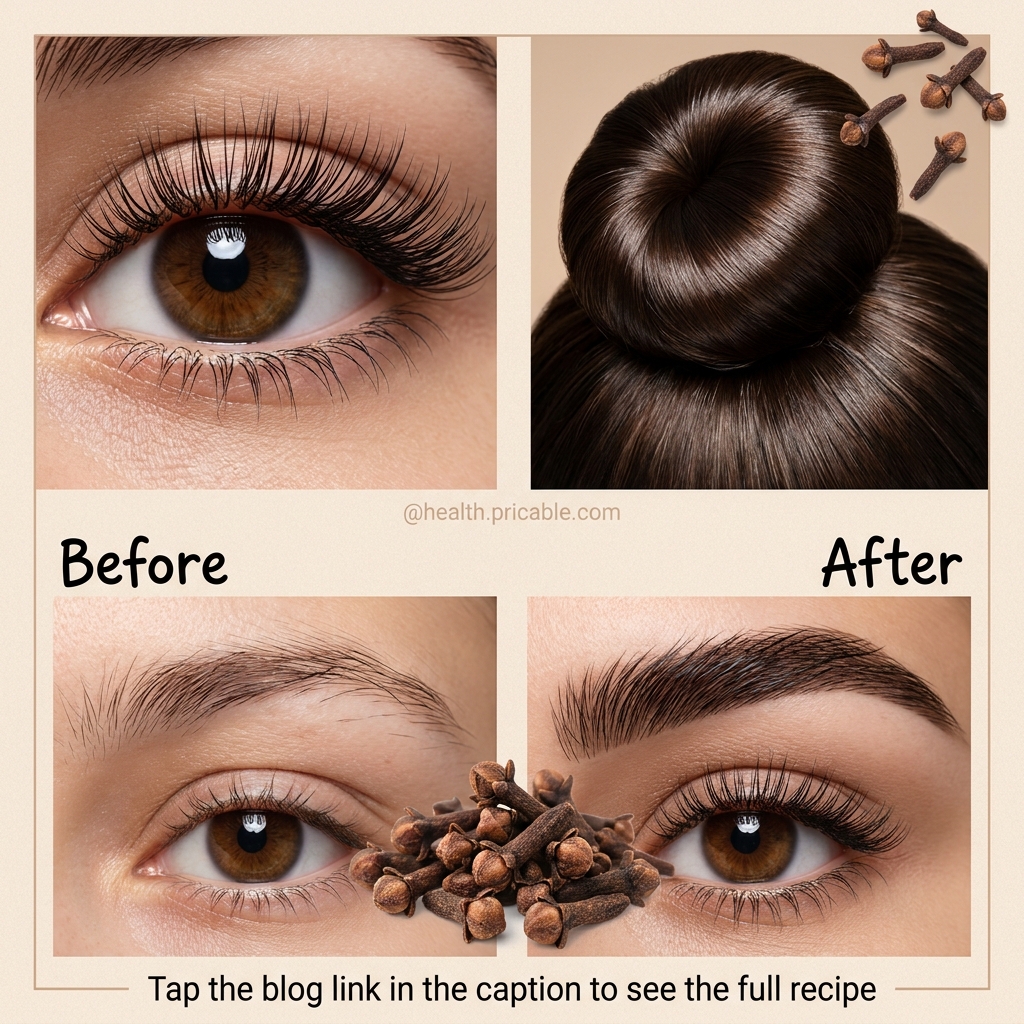
How to make clove water for hair and brows
This recipe makes a mild clove infusion. Use it as a scalp rinse or a careful eyebrow routine, not as an eye drop or lash-line liquid.
Ingredients
- 1 cup water
- 5 whole cloves
- Optional for hair only: 1 teaspoon rosemary leaves
- Clean glass jar or spray bottle
Steps
- Bring 1 cup water to a gentle simmer.
- Add 5 whole cloves.
- Simmer on low for 5 minutes.
- Turn off heat and steep for 20 minutes.
- Strain very well so no clove pieces remain.
- Cool completely before use.
- Store in the refrigerator for up to 3 days.
For brows, dilute the finished clove water with equal parts plain water the first time you test it.
Best clove water vs clove oil for hair growth
Clove water and clove oil are not the same. Clove oil is much stronger and should never be used undiluted.
- Clove water: lighter, easier to rinse, better for beginners.
- Clove oil: highly concentrated, needs carrier oil, higher irritation risk.
- Clove hair rinse: best before shampoo or as a short scalp mist.
- Clove brow routine: should be diluted and kept away from the eyes.
- Store-bought clove oil blends: convenient, but labels must be checked carefully.
For most DIY users, clove water is the safer first experiment. Clove oil belongs in tiny drops diluted into a carrier oil, not directly on skin.
What to look for before you buy cloves for hair and brows
Good cloves should smell warm and spicy, not dusty or stale. Since this recipe sits on skin and scalp, ingredient quality matters.
- Whole cloves: easier to strain than ground clove powder.
- Fresh aroma: cloves should smell strong when the jar opens.
- No added seasoning: buy plain cloves, not spice blends.
- Food-grade quality: avoid craft or decorative cloves for beauty use.
- Small package: cloves lose aroma over time.
- Clean storage: choose packaging that seals tightly.
- No moldy smell: discard if the spice smells damp or off.
- Clear source: reputable spice brands are easier to trust.
For clove oil, look for clear dilution instructions and avoid using essential oil directly on brows, lashes, or eyelids.
How to use clove water on eyebrows safely
The eyebrow area is close to the eyes, so this routine should be careful and minimal.
Eyebrow routine
- Patch test diluted clove water on your inner arm first.
- Clean your face and dry the brow area.
- Dip a clean cotton swab into diluted clove water.
- Remove excess liquid so the swab is damp, not dripping.
- Apply only to brow hairs and the skin beneath the brow.
- Keep it away from the eyelid, lash line, and inner corner of the eye.
- Leave on for 10 minutes, then wipe with a damp cloth.
- Use 2 to 3 times weekly at first.
Common mistakes and quick fixes
- Mistake: applying clove water to the lash line. Why: it can run into the eyes. Fix: keep it on brows only.
- Mistake: using clove oil undiluted. Why: it can burn or irritate skin. Fix: use mild clove water first.
- Mistake: leaving it on overnight. Why: longer contact raises irritation risk. Fix: start with 10 minutes.
- Mistake: using ground clove powder near brows. Why: particles can get into eyes. Fix: use strained whole-clove infusion.
- Mistake: applying after waxing or threading. Why: freshly treated skin is sensitive. Fix: wait 24 to 48 hours.
- Mistake: expecting instant brow growth. Why: brow growth cycles take time. Fix: track changes monthly.
Safety note
Do not put clove water in your eyes. Do not apply it to the lash line, waterline, eyelids, or broken skin.
Stop immediately if you feel burning, stinging, swelling, rash, watery eyes, or blurred vision. Rinse with clean water and seek help if eye irritation continues.
Realistic timeline
- Same day: brows may look neater after brushing and grooming.
- 1 week: the brow routine may feel easier to maintain, but visible growth is unlikely this fast.
- 2 to 4 weeks: brows may look fuller if breakage is reduced and grooming is consistent, but sparse areas may need more time.
Clove water for thin eyebrows
Thin eyebrows can come from over-plucking, age, genetics, stress, skin irritation, or makeup removal habits. Clove water is only one small part of a brow-care routine.
- Stop over-plucking while testing any brow routine.
- Brush brows upward daily with a clean spoolie.
- Remove makeup gently instead of rubbing.
- Use clove water only on the brow area, not near the eyes.
- Consider a brow serum if you want a more targeted product.
FAQ
What should I look for before I buy cloves for hair and brows?
Choose whole, food-grade cloves with a strong fresh aroma. Avoid ground spice blends, old dusty cloves, or anything with added seasoning.
Is clove water or clove oil better for hair growth?
Clove water is better for beginners because it is lighter and easier to dilute. Clove oil is much stronger and must be diluted in a carrier oil.
How do I make clove water for hair and brows?
Simmer 5 whole cloves in 1 cup water for 5 minutes, steep for 20 minutes, strain well, cool completely, and store in the refrigerator for up to 3 days.
How do I use clove water on eyebrows safely?
Apply diluted clove water with a damp cotton swab only on the brow hairs and skin beneath the brow. Keep it away from the eyelids and lash line.
Can clove water help thin eyebrows?
It may support a consistent brow-care routine, but it cannot guarantee new growth. Thin brows often need time, gentle grooming, and reduced over-plucking.
Can I use clove water on eyelashes?
It is safer not to apply clove water to the lash line because it can run into the eyes. Use products specifically designed for lashes instead.
How often should I use clove water on brows?
Start 2 to 3 times per week. If your skin stays calm, continue; if irritation appears, stop using it.
Can clove water make hair shiny?
As a rinse, it may leave hair feeling refreshed and help the scalp feel clean. Shine depends more on hair condition, conditioning, and how well the rinse suits your hair.
Before trying cloves around your brows, decide whether you want a mild DIY grooming routine or a stronger store-bought growth serum. Around the eyes, gentler is better.
Final takeaway
- Best use-case: a mild scalp rinse or careful brow-grooming routine.
- Simplest routine: whole clove water, diluted, short contact time.
- What to buy: fresh whole cloves or a properly diluted brow-safe product.
- What to avoid: clove oil near eyes, lash-line application, overnight use, and ground clove particles.
- Next step: patch test, use on brows only, and track results for 4 weeks.