Discover how to create your own homemade herbal hair oil, a traditional remedy often embraced for its potential to support hair strength and a healthy scalp. This practical guide provides a simple recipe to help nourish your hair from root to tip.
Quick Recipe
Prep time: 10 minutes (plus 1-2 weeks infusion time)
Best for: Hair fall, thinning hair, dry scalp, dull hair
Use type: Hair oil
Main ingredients:
- Carrier oil (e.g., coconut oil, olive oil)
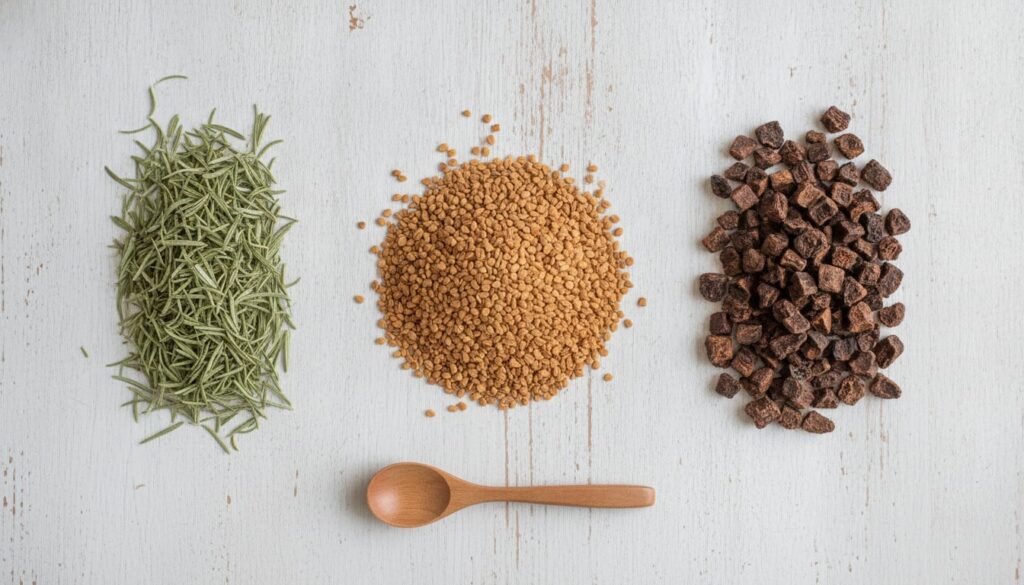
- Dried Rosemary
- Fenugreek Seeds
- Amla Powder or Dried Amla
Ingredients
- 1 cup carrier oil (such as extra virgin coconut oil, olive oil, or jojoba oil)
- 2 tablespoons dried rosemary leaves
- 1 tablespoon fenugreek seeds
- 1 tablespoon amla powder or 2-3 dried amla pieces
- A clean, dry glass jar with a lid
- Fine mesh strainer or cheesecloth
How to Make It
- Prepare Your Herbs: Ensure all dried herbs are clean and dry. If using dried amla pieces, you can lightly crush them for better infusion.
- Combine Ingredients: Place the dried rosemary leaves, fenugreek seeds, and amla into your clean glass jar. Pour the carrier oil over the herbs, ensuring they are fully submerged.
- Infuse the Oil: Seal the jar tightly. You have two main methods for infusion:
- Cold Infusion (preferred): Place the jar in a cool, dark place for 1-2 weeks. Shake the jar gently every day or two to help the herbs release their properties into the oil.
- Warm Infusion (quicker): Place the jar in a saucepan filled with water, creating a double boiler. Heat on low for 2-3 hours, ensuring the water does not boil and the oil does not get too hot. This method is faster but can reduce some heat-sensitive properties of the oil.
- Strain the Oil: After the infusion period, use a fine mesh strainer or cheesecloth to separate the infused oil from the herbs. Squeeze the herbs gently to extract all the oil.
- Store Your Oil: Pour the finished herbal hair oil into a clean, airtight bottle. Store it in a cool, dark place to maintain its freshness.
How to Use It
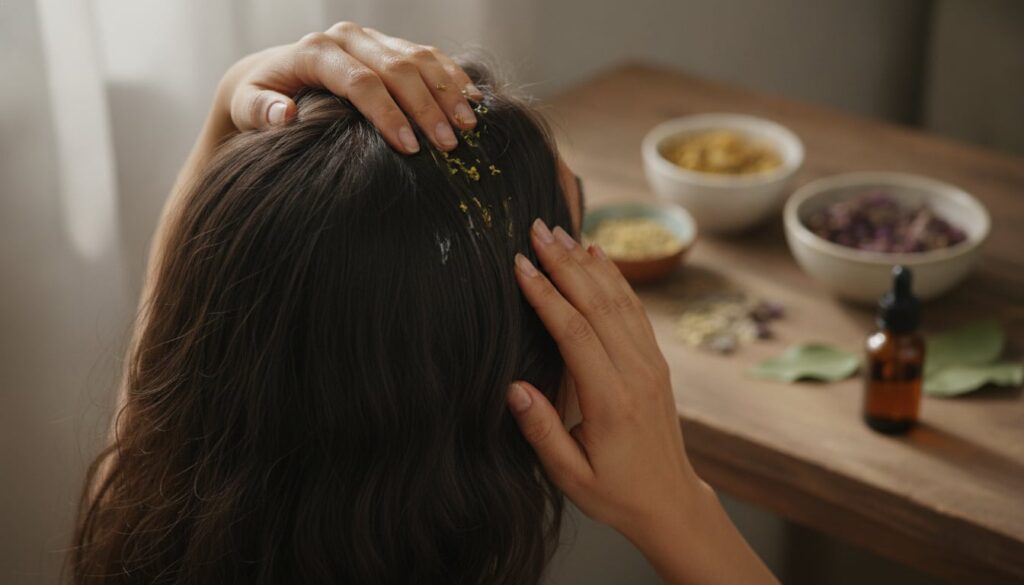
- Prepare Your Hair: You can apply this oil to dry or slightly damp hair. Section your hair to easily access your scalp.
- Apply to Scalp: Take a small amount of the herbal oil and gently massage it directly into your scalp using your fingertips. Focus on areas where you want to support growth or reduce hair fall.
- Work Through Hair: Once your scalp is covered, you can apply a small amount of oil to the lengths of your hair, especially the ends, to help condition and add shine.
- Leave-in Time: Leave the oil on for at least 30 minutes, or for an intensive treatment, you can leave it overnight. For overnight use, cover your hair with a shower cap or towel to protect your pillow.
- Rinse and Shampoo: Wash your hair thoroughly with a mild shampoo and conditioner. You may need to shampoo twice to ensure all oil is removed.
How Often to Use It
For best results, use this DIY herbal hair oil 1-2 times a week. Consistent use is often key when incorporating natural remedies into your beauty routine.
Why These Ingredients Are Used
Rosemary
Rosemary is a popular herb in many traditional hair care routines. It’s often used to help stimulate the scalp and may support the appearance of thicker, fuller hair. Its properties are thought to contribute to a healthy hair growth cycle.
Fenugreek Seeds
Fenugreek seeds are a staple in many ancient beauty traditions, especially for hair care. They are rich in nutrients and are commonly believed to help strengthen hair, reduce the appearance of hair fall, and add a natural shine.
Amla
Also known as Indian Gooseberry, Amla is revered for its high vitamin C content and antioxidant properties. It’s widely used to condition the hair and scalp, support scalp health, and contribute to the overall vibrancy and softness of hair.
What Results to Expect
Consistent use of this DIY herbal hair oil may help support a healthier-looking scalp and encourage the appearance of thicker, more vibrant hair. It can leave your hair feeling softer, looking shinier, and may help reduce the visible effects of hair fall over time. Results can vary, and patience is key when using natural remedies.
Safety Notes
- Patch Test First: Always perform a patch test on a small area of your skin (e.g., behind your ear or inner arm) at least 24 hours before full application to check for any allergic reactions or sensitivities.
- Use Gently: Apply the oil and massage your scalp gently. Avoid vigorous rubbing.
- Avoid Irritated Skin: Do not apply the oil to irritated, broken, or sensitive skin on your scalp.
- Stop if Discomfort Occurs: If you experience any redness, itching, burning, or discomfort, discontinue use immediately.
- External Use Only: This remedy is for external, topical use on the hair and scalp only. Do not ingest.
- Consult a Professional: If you have any underlying scalp conditions, allergies, or are pregnant or breastfeeding, consult with a healthcare professional or dermatologist before using new home remedies.
FAQ
Can I use fresh herbs instead of dried ones?
It’s generally recommended to use dried herbs for oil infusions as fresh herbs contain water, which can lead to mold and spoilage in the oil. If you must use fresh, ensure they are thoroughly air-dried before infusing.
How long can I store this herbal hair oil?
When stored in a cool, dark place in an airtight bottle, your homemade herbal hair oil can last for 3-6 months. Always check for any changes in smell or appearance before use.
Will this oil make my hair greasy?
To avoid greasiness, use a small amount of oil, especially when first starting. Ensure you rinse your hair thoroughly with shampoo after treatment. If you have very oily hair, you might reduce the leave-in time.
Final Thoughts
Embracing natural remedies like this DIY herbal hair oil can be a rewarding step in your hair care journey. By harnessing the power of traditional herbs, you can create a nourishing treatment that supports your hair’s natural beauty. Give it a try and share your experience with our community!