Are you looking for natural ways to support your metabolism and keep those pesky sugar cravings at bay? The answer might lie in a lesser-known but vital mineral: chromium. Often overlooked, chromium plays a crucial role in how your body handles blood sugar and processes nutrients. Learning about this powerhouse mineral and the foods rich in it can be a game-changer for your health.
In this article, we’ll dive deep into the benefits of chromium, explore the top food sources to easily incorporate into your diet, and understand how this essential mineral supports overall well-being. Get ready to power up your plate and discover how to boost your chromium intake for better health!
The Amazing Benefits of Chromium for Your Health
Chromium is an essential trace mineral that your body needs in small amounts for proper function. Its most well-known role is in enhancing the action of insulin, a hormone critical for metabolism and storage of carbohydrates, fats, and proteins.
Supports Healthy Blood Sugar Levels
Perhaps chromium’s most significant benefit is its ability to help regulate blood sugar. Research suggests that chromium may improve insulin sensitivity, meaning your body’s cells respond more effectively to insulin. This can help stabilize blood glucose levels, which is vital for sustained energy and preventing sharp spikes and crashes.
Aids in Metabolism and Weight Management
By optimizing insulin function, chromium can support your body’s overall metabolism. An efficient metabolism helps your body convert food into energy more effectively. Some studies indicate that chromium might play a role in reducing body fat and increasing lean muscle mass, potentially assisting in weight management efforts, though more research is needed.
May Help Reduce Sugar Cravings
Many people find themselves battling sugar cravings. Because chromium is involved in carbohydrate and fat metabolism, maintaining adequate levels may help regulate appetite and reduce cravings for sugary foods. When blood sugar is more stable, the body might experience fewer intense urges for quick energy sources like sweets.
Top Foods High in Chromium
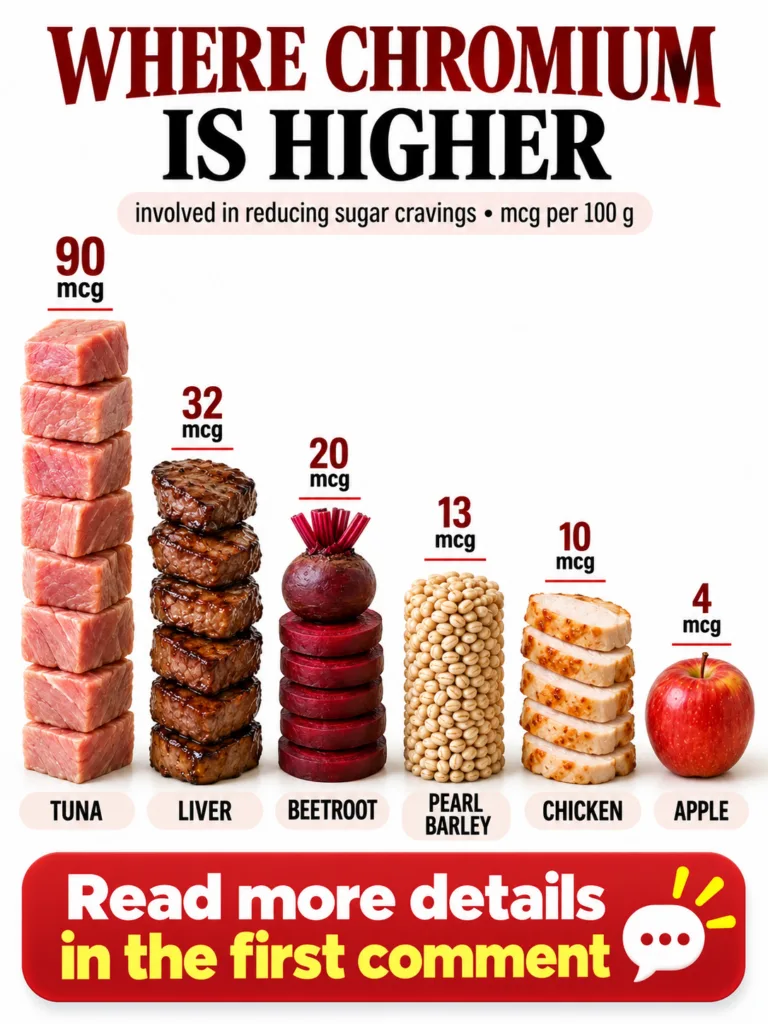
Incorporating chromium-rich foods into your diet is a straightforward way to ensure you’re getting enough of this vital mineral. Here are some excellent sources:
| Food | Approx. Chromium (mcg/100g) | Best Benefit |
|---|---|---|
| Tuna | 50-90 | Protein-packed, heart-healthy omega-3s |
| Liver (Beef) | 30-50 | Rich in iron, B vitamins, and protein |
| Beetroot | 15-25 | High in fiber, antioxidants, and nitrates |
| Pearl Barley | 10-20 | Excellent source of soluble fiber |
| Chicken (Breast) | 5-15 | Lean protein, versatile ingredient |
| Apples | 2-5 | Fiber-rich, natural sweetness, antioxidants |
Understanding Chromium in Your Diet
These values are approximate, as chromium content can vary based on soil quality, processing, and cooking methods. However, focusing on a diverse diet that includes these foods can significantly boost your intake.

The Science Behind Chromium’s Role
Chromium’s primary mechanism involves potentiating the action of insulin. When you eat, your body breaks down carbohydrates into glucose (sugar), which enters your bloodstream. Insulin, released by the pancreas, helps transport this glucose into your cells for energy or storage.
Chromium is believed to be a component of a molecule called chromodulin, which helps insulin bind to cell receptors and enhances its signaling. This improved insulin sensitivity means your cells can absorb glucose more efficiently, leading to better blood sugar control and more effective energy utilization. Without sufficient chromium, insulin’s effectiveness can be impaired, potentially leading to higher blood sugar levels.
Best Ways to Eat Chromium-Rich Foods
- Tuna: Enjoy canned tuna in salads, sandwiches, or mixed with avocado for a quick, high-protein snack. Fresh tuna can be grilled or pan-seared.
- Liver: While not for everyone, liver can be a nutritional powerhouse. Try preparing liver patties or incorporating finely chopped liver into ground meat dishes to mask the flavor.
- Beetroot: Roast, boil, or steam beetroot for a vibrant side dish. You can also add raw beetroot to salads or blend it into smoothies for an earthy sweetness.
- Pearl Barley: Use barley as a healthy alternative to rice in pilafs, soups, or stews. It adds a chewy texture and nutty flavor.
- Chicken: Grilled, baked, or stir-fried chicken breast is a lean and versatile source of chromium. Pair it with vegetables for a complete meal.
- Apples: A simple and delicious snack, eat apples whole, slice them into salads, or bake them with cinnamon for a healthy dessert.

Potential Risks and Considerations
While essential, it’s important to consume chromium from food sources primarily. The Recommended Daily Allowance (RDA) for chromium is quite low (20-35 mcg for adults), and most people can meet this through a balanced diet.
Excessive intake, particularly from high-dose supplements, may lead to adverse effects, though toxicity from food sources is very rare. People with kidney disease or those taking certain medications should be cautious with chromium supplements and always consult a healthcare professional before adding them to their regimen. Always prioritize whole food sources over supplements unless advised by a doctor.
Practical Tips for Boosting Chromium Intake
- Diversify Your Plate: Regularly include a variety of chromium-rich foods in your meals.
- Smart Snacking: Grab an apple or a small handful of nuts (some nuts contain chromium) for a healthy, chromium-boosting snack.
- Meal Prep: Cook a batch of pearl barley or roast some beetroot at the beginning of the week to easily add to meals.
- Read Labels: Some fortified cereals and whole-grain products may also contain chromium.
- Cook at Home: Preparing your own meals gives you control over ingredients and ensures you’re eating fresh, wholesome foods.
FAQs About Chromium
What is chromium good for?
Chromium is good for supporting healthy blood sugar levels, enhancing insulin sensitivity, aiding in metabolism, and potentially helping to reduce sugar cravings.
Can chromium help with weight loss?
Research suggests that chromium may play a role in metabolism and body composition, potentially assisting in weight management, but it’s not a magic bullet. It works best as part of a balanced diet and active lifestyle.
What foods are highest in chromium?
Foods like tuna, liver, beetroot, pearl barley, chicken, and apples are among the best natural sources of chromium.
Is it better to get chromium from food or supplements?
It is generally better and safer to obtain chromium from whole food sources. Supplements should only be considered under the guidance of a healthcare professional.
How much chromium do I need daily?
The adequate intake for adult women is around 25 micrograms (mcg) per day, and for adult men, it’s about 35 mcg per day. These amounts are typically met through a balanced diet.
Are there any side effects of too much chromium?
While rare from food, excessive chromium from high-dose supplements can potentially lead to side effects such as digestive issues, kidney problems, or skin irritation. Always consult a doctor before taking supplements.
Conclusion
Chromium, though often overlooked, is a powerhouse mineral essential for many bodily functions, especially supporting healthy blood sugar and metabolism. By incorporating foods like tuna, liver, beetroot, pearl barley, chicken, and apples into your diet, you can naturally boost your intake and harness its benefits.
Making conscious food choices can lead to improved energy, stable blood sugar, and better overall health. Start powering up your plate with these chromium-rich options today!
This content is for educational purposes only and should not be considered medical advice. Consult a qualified healthcare professional for personalized dietary recommendations.