Are you ready for a simpler way to eat healthy and see real results? It’s time to transform your week with a proven path to healthier eating that delivers tangible outcomes. Many of us struggle with finding a balanced approach to nutrition that is both effective and easy to follow. That’s where a well-structured meal plan, like our 7-day, 1200-calorie program, can make all the difference.
Designed to take the guesswork out of healthy eating, this plan focuses on delicious, protein-rich meals that are crafted to support your goals. Beyond just weight management, it aims to boost your energy levels and improve your digestion, helping you feel your best from the inside out. Let’s explore how a thoughtfully designed 1200-calorie meal plan can be your secret weapon for a healthier, more vibrant you.
Unlocking the Power of a 1200-Calorie Meal Plan for Weight Loss and Wellness
Embarking on a journey towards better health often begins with understanding the basics of nutrition. A 1200-calorie meal plan is frequently recommended for individuals looking to create a calorie deficit to support weight loss. However, its benefits extend far beyond just shedding pounds. When structured correctly, it can be a powerful tool for overall wellness.
Why a 1200-Calorie Plan? Understanding the Calorie Deficit
At its core, weight loss occurs when you consume fewer calories than your body burns, known as a calorie deficit. A 1200-calorie plan is often suggested as a starting point for many individuals, as it typically creates this deficit without being excessively restrictive. It encourages your body to use stored fat for energy, facilitating a sustainable approach to weight management.
However, it’s crucial to understand that calorie needs vary greatly based on age, gender, activity level, and individual metabolism. Always consult with a healthcare professional or a registered dietitian to determine if a 1200-calorie plan is appropriate and safe for your specific needs.
Beyond Weight Loss: Boosting Energy and Improving Digestion
Our 7-day, 1200-calorie meal plan is not just about the numbers; it’s about the quality of what you eat. By focusing on protein-rich foods and balanced nutrition, it aims to deliver several key benefits:
- Increased Energy: Lean proteins and complex carbohydrates provide a steady release of energy, helping to prevent the crashes often associated with sugary or processed foods. You’ll likely feel more vibrant and focused throughout your day.
- Improved Digestion: The plan emphasizes whole, unprocessed foods and a good intake of fiber (from fruits, vegetables, and whole grains). This supports a healthy digestive system, which can alleviate bloating, promote regularity, and enhance nutrient absorption.
The Core Principles of Our Healthy Eating Plan
Success with any meal plan comes from its underlying philosophy. Our 7-day program is built on principles designed for both effectiveness and ease of adherence.
Protein-Rich Meals for Satiety and Muscle Support
Protein is a cornerstone of this meal plan. It plays a vital role in:
- Satiety: Protein helps you feel fuller for longer, reducing cravings and overeating.
- Muscle Maintenance: Adequate protein intake is crucial for preserving muscle mass, especially when you’re in a calorie deficit. This supports a healthy metabolism.
- Energy: Protein also contributes to sustained energy levels throughout the day.
Expect meals that feature lean protein sources like chicken, fish, eggs, tofu, lentils, and Greek yogurt.
Balanced Nutrition for Optimal Health
While protein is key, balance is essential. Each meal in the plan aims to include a mix of:
- Lean Proteins: As mentioned, for satiety and muscle support.
- Complex Carbohydrates: Found in whole grains, fruits, and vegetables, providing sustained energy and fiber.
- Healthy Fats: From sources like avocados, nuts, seeds, and olive oil, crucial for hormone production and nutrient absorption.
Simplicity and Enjoyment for Sustainable Habits
We believe healthy eating should be simple and enjoyable, not a chore. The plan focuses on straightforward meal ideas that are easy to prepare and use common, accessible ingredients. The goal is to build sustainable habits that you can maintain long-term, moving away from restrictive diets and towards a lifestyle of mindful nutrition.
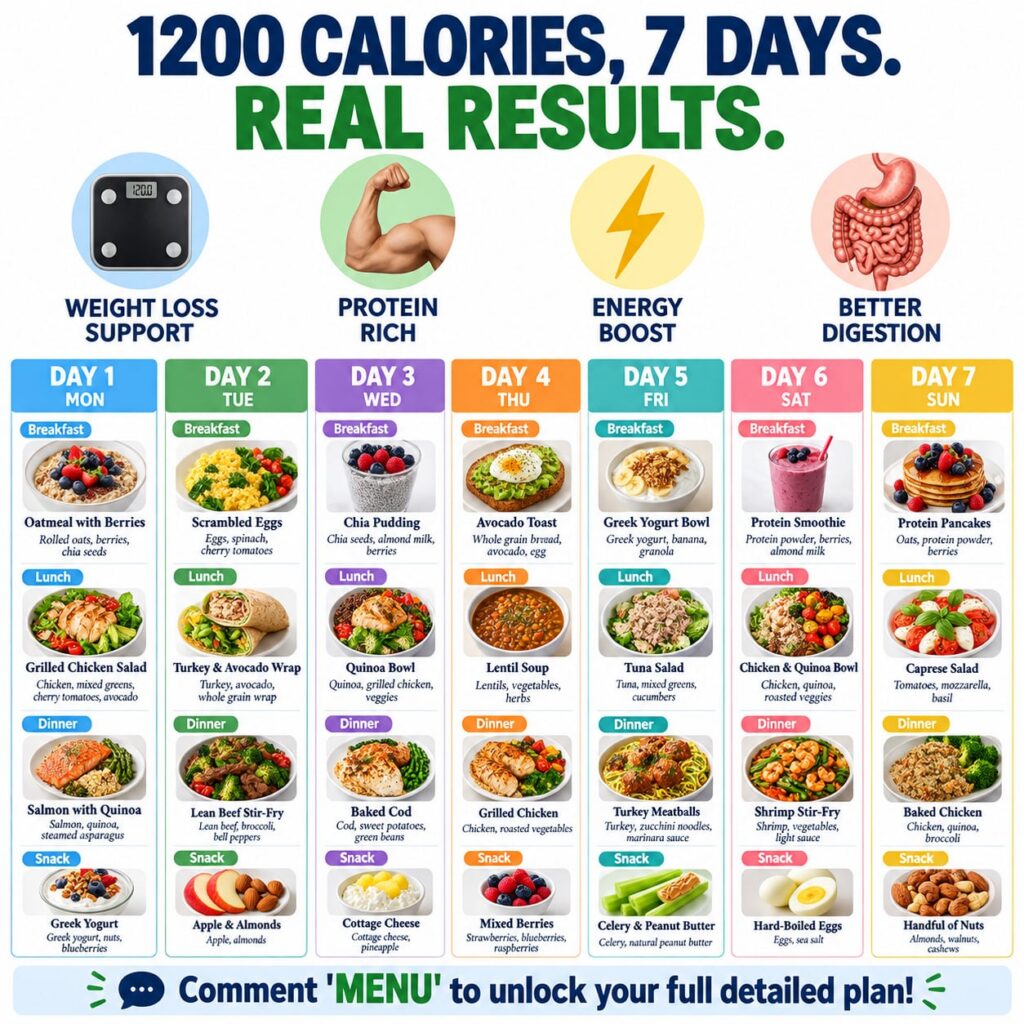
Your Sample 7-Day, 1200-Calorie Meal Plan
To give you a clearer picture of what a delicious, protein-rich, 1200-calorie week might look like, here’s an illustrative example. Remember, this is a sample to inspire and guide you, and individual portion sizes may need slight adjustments based on your specific needs and the exact calorie content of your chosen ingredients.
Day 1
- Breakfast (approx. 300 kcal): 2 scrambled eggs with 1 cup spinach, 1/2 whole-wheat English muffin.
- Lunch (approx. 400 kcal): Grilled chicken salad: 4 oz grilled chicken breast, 2 cups mixed greens, 1/2 cup chopped bell peppers, 2 tbsp light vinaigrette.
- Dinner (approx. 400 kcal): 4 oz baked cod with 1 cup steamed green beans and 1/2 cup quinoa.
- Snack (approx. 100 kcal): 1/2 cup plain Greek yogurt with a few berries.
Day 2
- Breakfast (approx. 300 kcal): 1/2 cup rolled oats cooked with water, topped with 1/4 cup berries and 1 tbsp chopped almonds.
- Lunch (approx. 400 kcal): Lentil soup (1.5 cups) with a small whole-grain roll.
- Dinner (approx. 400 kcal): 4 oz lean ground turkey stir-fry with 2 cups mixed vegetables (broccoli, carrots, snow peas) and 1/2 cup brown rice, seasoned with low-sodium soy sauce.
- Snack (approx. 100 kcal): 1 hard-boiled egg and 1 small apple.
Day 3
- Breakfast (approx. 300 kcal): Smoothie: 1 scoop protein powder, 1/2 cup unsweetened almond milk, 1/2 banana, 1 cup spinach.
- Lunch (approx. 400 kcal): Turkey and veggie wrap: 3 oz sliced turkey breast, lettuce, tomato, cucumber, 1 tbsp hummus, wrapped in a large whole-wheat tortilla.
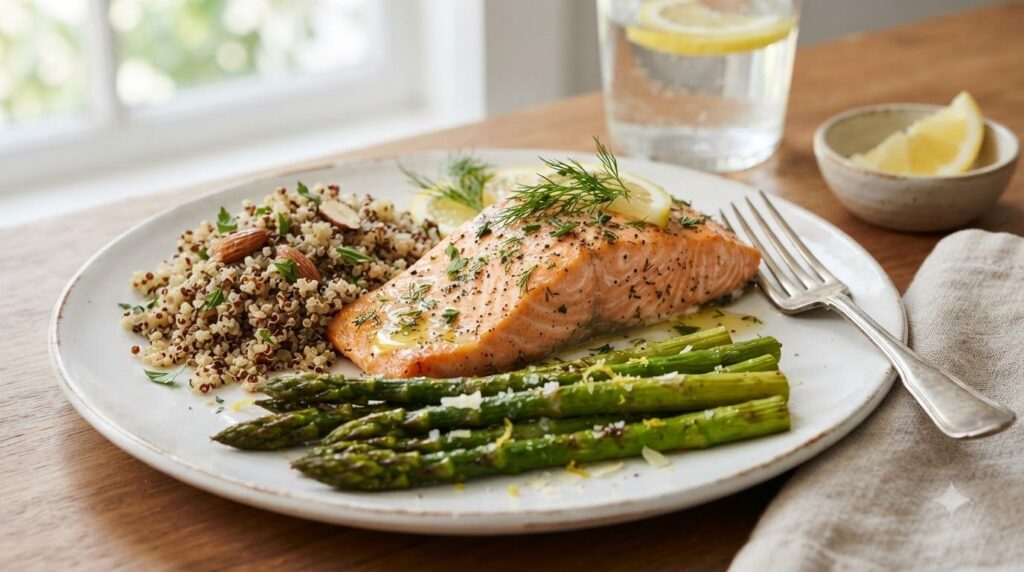
- Dinner (approx. 400 kcal): 4 oz baked salmon with 1.5 cups roasted asparagus.
- Snack (approx. 100 kcal): 1/4 cup unsalted almonds.
Day 4
- Breakfast (approx. 300 kcal): Cottage cheese (1 cup, low-fat) with 1/2 cup sliced peaches.
- Lunch (approx. 400 kcal): Leftover baked cod and green beans from Day 1.
- Dinner (approx. 400 kcal): Chicken and veggie skewer (4 oz chicken, bell peppers, onion, zucchini) grilled, served with a small side salad.
- Snack (approx. 100 kcal): Small orange.
Day 5
- Breakfast (approx. 300 kcal): Whole-wheat toast (1 slice) with 1/4 avocado and everything bagel seasoning, plus 1 hard-boiled egg.
- Lunch (approx. 400 kcal): Large mixed green salad with 3 oz canned tuna (in water), 1/2 cup chickpeas, and lemon-tahini dressing.
- Dinner (approx. 400 kcal): Veggie and tofu curry (1 cup) with 1/2 cup brown rice.
- Snack (approx. 100 kcal): 1/2 cup plain Greek yogurt.
Day 6
- Breakfast (approx. 300 kcal): Protein pancakes: 1/2 cup whole-wheat pancake mix prepared with water and 1 scoop protein powder, topped with 1/4 cup berries.
- Lunch (approx. 400 kcal): Leftover turkey stir-fry from Day 2.
- Dinner (approx. 400 kcal): Lean beef stir-fry (4 oz beef) with 2 cups mixed veggies and 1/2 cup quinoa.
- Snack (approx. 100 kcal): Small handful of walnuts.
Day 7
- Breakfast (approx. 300 kcal): Greek yogurt (1 cup, plain) with 1 tbsp chia seeds and 1/2 cup mixed berries.
- Lunch (approx. 400 kcal): Large bowl of minestrone soup (2 cups) with a small whole-grain roll.
- Dinner (approx. 400 kcal): Baked chicken breast (4 oz) with 1.5 cups steamed broccoli and 1/2 sweet potato.
- Snack (approx. 100 kcal): Carrot sticks and 2 tbsp hummus.
Tips for Success on Your Healthy Eating Journey
Adopting a new meal plan, even a simple one, can come with its challenges. Here are some practical tips to help you stay on track and maximize your results:
- Hydration is Key: Drink plenty of water throughout the day. Sometimes, thirst is mistaken for hunger. Keep a water bottle handy and aim for at least 8 glasses daily.
- Embrace Meal Prepping: Dedicate some time once or twice a week to prepare your meals and snacks in advance. This can prevent impulse eating and ensure you always have healthy options ready, especially for healthy breakfast ideas and high protein low calorie meals. Consider investing in quality meal prep containers.
- Listen to Your Body: While a plan provides structure, your body’s signals are important. If you’re genuinely hungry, opt for a healthy, small snack like a handful of nuts or some veggie sticks.
- Plan Your Snacks Wisely: Include protein-rich snacks to keep hunger at bay between meals. Options like Greek yogurt, a handful of almonds, or a hard-boiled egg can be very effective.
- Consult a Professional: Before making significant dietary changes, especially if you have underlying health conditions, always consult with a qualified healthcare professional or a registered dietitian. They can provide personalized advice tailored to your unique needs.
- Spice It Up: Don’t be afraid to use herbs and spices to add flavor to your meals without adding extra calories. Explore different seasonings to keep your healthy food exciting.
Frequently Asked Questions About 1200-Calorie Plans
Is a 1200-calorie plan suitable for everyone?
No, a 1200-calorie plan is not suitable for everyone. It is often recommended for smaller individuals or those with a very sedentary lifestyle seeking weight loss. People who are very active, taller, or have higher muscle mass may require more calories. Always consult a healthcare professional to determine your individual caloric needs.
Can I customize the meals in the plan?
Absolutely! The sample plan provided is a guide. You can swap out similar protein sources (e.g., chicken for fish, lentils for tofu) or vegetables, as long as you maintain similar portion sizes and calorie counts. The key is to keep meals protein-rich and balanced, focusing on whole, unprocessed foods for digestion.
What if I get hungry on a 1200-calorie plan?
Feeling hungry occasionally is normal, especially when starting. Ensure your snacks are protein-rich and fiber-filled to maximize satiety. If persistent hunger occurs, it might indicate that the 1200-calorie intake is too low for your body, and you should consult a professional.
Do I need to exercise while on this plan?
Exercise is always beneficial for overall health and can certainly complement a 1200-calorie meal plan for weight loss. However, intense exercise may require a higher calorie intake to fuel your body adequately and prevent nutrient deficiencies. Discuss your activity level with a healthcare provider.
Final Thoughts
Embracing a structured eating approach, like our 7-day, 1200-calorie meal plan, can be a transformative step towards achieving your health and wellness goals. By focusing on delicious, protein-rich meals, you’re not just supporting weight loss but also boosting your energy and promoting better digestion. Remember, consistency and a commitment to nourishing your body are the keys to long-term success. Ready to experience a simpler, more effective way to eat healthy and see real results? Take the first step today towards a healthier you.