Most people toss their vegetable scraps without a second thought, unaware that these discarded pieces hold the secret to a continuous harvest right on their countertop. Imagine turning what you consider waste into a fresh, budget-friendly source of greens and herbs. You don’t need a sprawling garden, just a sunny spot, some water, and a few simple steps to bring your kitchen scraps back to life.
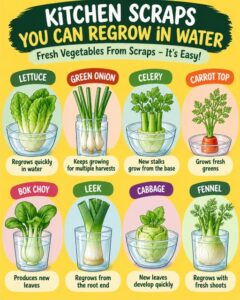
What is Regrowing Vegetables from Scraps?
Regrowing vegetables from kitchen scraps is a sustainable practice that uses the discarded root ends, bases, or other parts of certain plants to cultivate new growth. Instead of composting these pieces, you provide them with water and light, triggering their natural ability to sprout. It’s an easy, low-cost way to reduce food waste and enjoy a continuous supply of some of your favorite veggies right in your home.
The Simple Method: Water & Light
The core technique for most regrowing projects is straightforward, focusing on a few essential elements:
- Select Healthy Scraps: Always choose firm, fresh bases or root ends, free from any signs of rot or mold.
- Shallow Water: Place the scrap in a dish or glass with just enough water to cover the very bottom. Submerging too much can lead to rot.
- Sunny Spot: Position your container in a location that receives plenty of indirect sunlight for several hours each day. A windowsill is ideal.
- Daily Water Changes: Refresh the water every day, or at least every other day, to keep it clean, oxygenated, and prevent bacterial growth.
8 Favorite Vegetables You Can Easily Regrow
1. Romaine Lettuce
What to use: The bottom 2-3 inches of the lettuce heart after removing leaves.
Method: Place the base in a shallow dish with about an inch of water. Position on a sunny windowsill, changing water daily. New leaves will sprout from the center within days.
How to use: Harvest outer leaves as needed, allowing the center to continue growing for multiple harvests.
2. Celery
What to use: The bottom 2-3 inches of the celery stalk.
Method: Place the base cut-side up in a shallow bowl with about 1 inch of water. Keep in a sunny spot, changing water every 1-2 days. Small leaves will appear, and roots will grow from the bottom.
How to use: Harvest outer stalks as they grow. For larger plants, transplant to soil once roots are established.
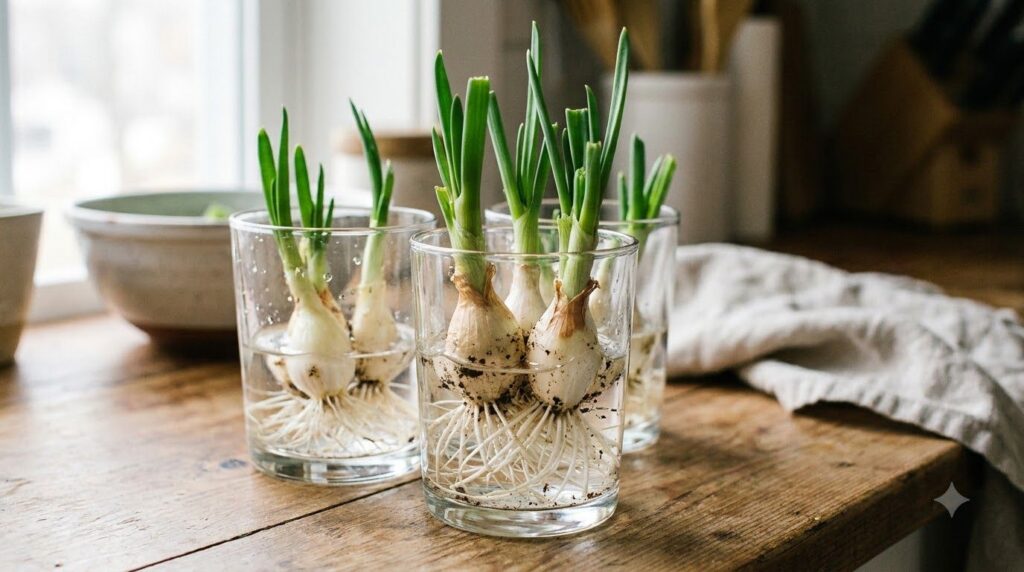
3. Green Onions (Scallions)
What to use: The white ends of green onions, ensuring 1-2 inches of the white part and roots are intact.
Method: Place root-side down in a small glass with just enough water to cover the roots. Place in direct sunlight. New green shoots emerge rapidly, often in 24 hours!
How to use: Snip off the green tops as needed; they will regrow multiple times. Change water every other day.
4. Bok Choy
What to use: The bottom 2-3 inches of the bok choy head.
Method: Place the base in a shallow dish with about an inch of water. Keep on a sunny windowsill, changing water daily. New leaves will grow from the center.
How to use: Harvest outer leaves as they mature. Transplant to soil once roots are established for a larger yield.
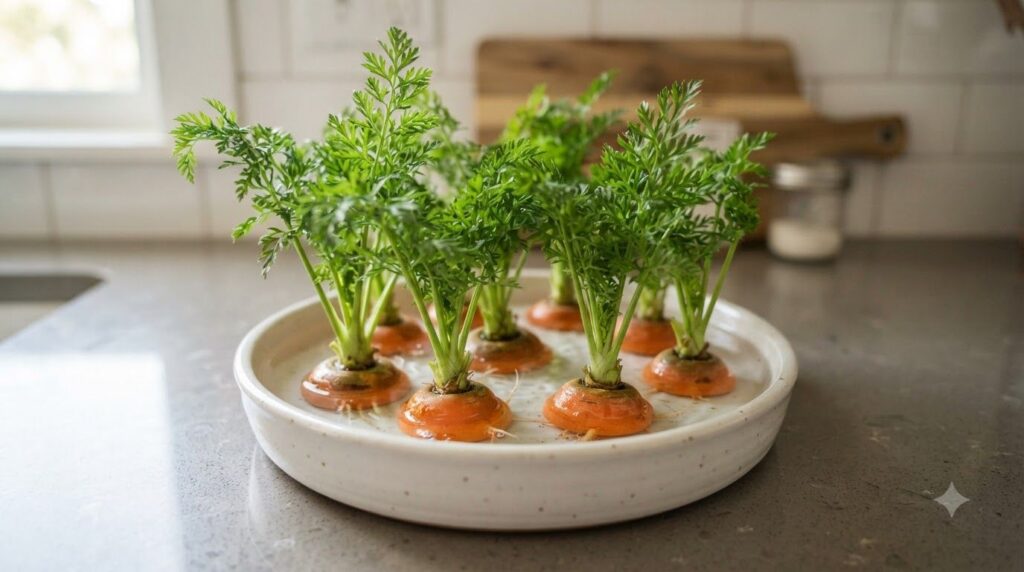
5. Carrots (Greens Only)
What to use: The top 1 inch of a carrot.
Method: Slice the top off a carrot. Place cut-side down in a shallow dish with just enough water to cover the bottom half-inch. Place in a sunny spot, changing water daily. Feathery green sprouts will emerge.
How to use: The greens are edible and can be added to salads, pestos, or used as a garnish. The carrot root itself will not regrow.
6. Beets (Greens Only)
What to use: The top 1-2 inches of a beet.
Method: Cut off the top 1-2 inches. Place cut-side down in a shallow dish with about half an inch of water. Keep in a sunny location, changing water daily. Green shoots will grow from the top.
How to use: Beet greens are delicious in salads or sautéed. You won’t regrow a new beet root, but you get tasty, nutritious greens.
7. Ginger
What to use: A piece of ginger root with visible

