Some of the most overlooked healing plants are the ones growing quietly underfoot.
Common chickweed is one of those humble herbs people often pull out of the garden without realizing it has a long traditional reputation in home wellness. This soft green plant, with its tiny white star-like flowers, has often been used in simple folk preparations for skin comfort, cooling relief, and gentle internal support.
Most people never expect much from chickweed because it looks so ordinary. But that is exactly why it has stayed popular in traditional remedies for generations. It is easy to gather, easy to prepare, and often used when the body feels hot, irritated, or inflamed.
What This Herb Is Traditionally Used For
Chickweed is commonly linked with cooling, soothing, and softening support.
In traditional home use, people often turn to it for:
- Mild skin irritation
- Itchy or overheated skin
- Rough patches that need soothing care
- Gentle cleansing and plant-based wellness support
This herb is usually valued for its calm, cooling nature, not for being strong or dramatic. That makes it especially appealing in simple homemade remedies.
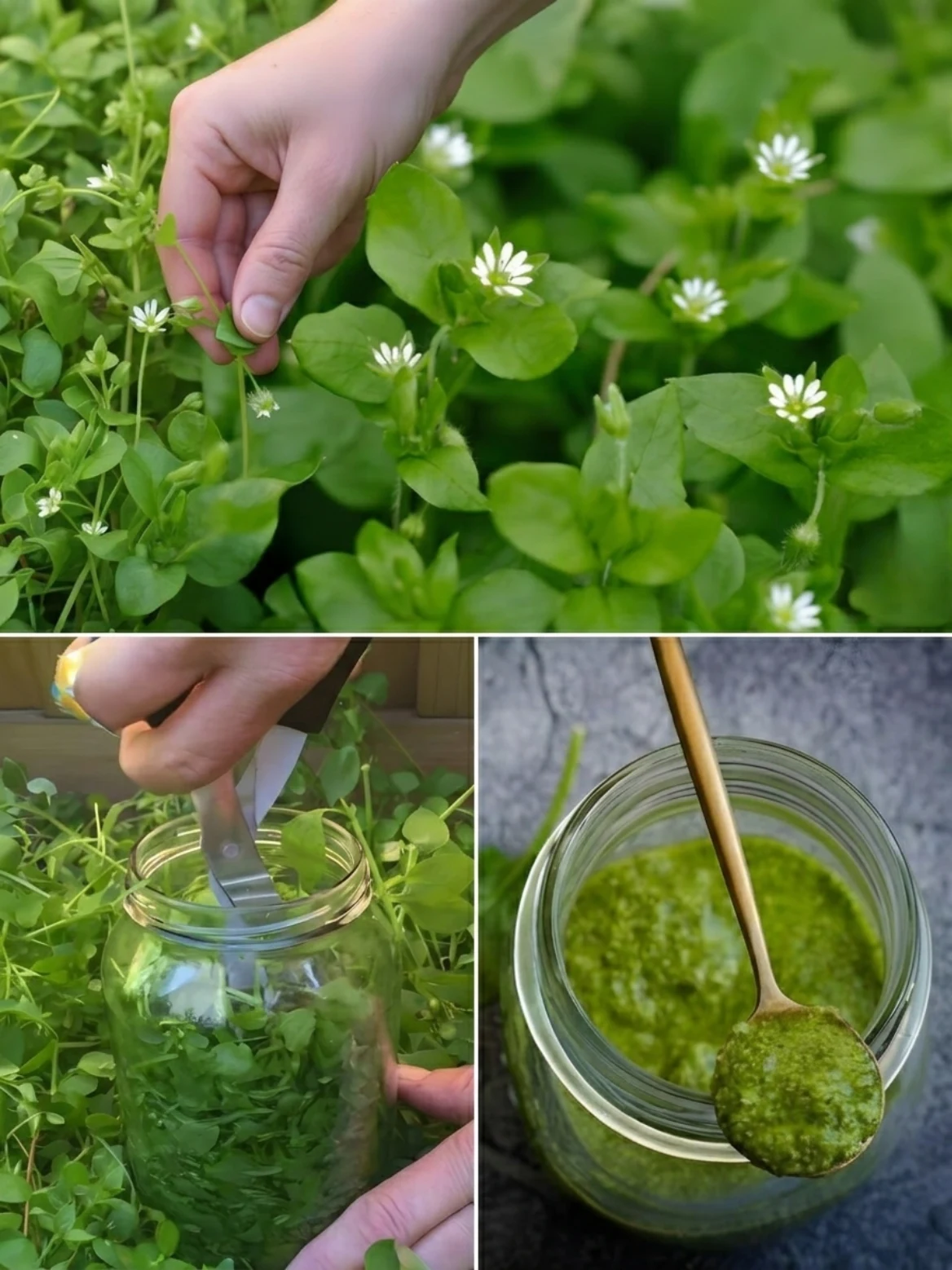
Ingredients
A basic chickweed preparation uses only a few simple ingredients.
What you need
- 1 to 2 cups fresh chickweed, washed well
- 2 to 4 tablespoons clean water, as needed
- Optional small amount of honey or aloe vera if using it as a skin-friendly paste
If you are making a very simple traditional green blend, fresh chickweed and a little water are enough.
How to Prepare
This kind of remedy is usually made fresh.
Step 1: Harvest carefully
Pick fresh chickweed from a clean area away from roadsides, sprayed lawns, or pet-contaminated ground.
Step 2: Wash thoroughly
Rinse the herb very well to remove dirt or tiny debris. This matters because chickweed grows low to the ground.
Step 3: Chop or crush
Place the chickweed in a clean jar, mortar, or blender.
Step 4: Blend into a paste
Add a small amount of water and crush or blend until it becomes a soft green paste.
Step 5: Use fresh
This remedy is best used right away rather than stored for long periods.
How to Use It
The form shown here looks like a fresh chickweed paste, which is most often associated with external use.
For skin comfort
Apply a thin layer to a small area of clean skin and leave it on briefly before rinsing. This is the traditional style of use people often mention for itchy, warm, or irritated skin.
As a gentle herbal spoonful
Some traditional home users also blend soft herbs like this into very small fresh green mixtures. If using chickweed internally, it should only be from a correctly identified, clean food-safe source and used in modest amounts.
Best time to use
For external comfort, it is often used when the skin feels irritated or overheated. For fresh herbal wellness use, people often prepare it the same day they harvest it.
Why People Use Chickweed
Chickweed has stayed popular in home remedies for a few simple reasons.
It feels cooling
Unlike spicy or bitter herbs, chickweed is associated with a fresh, soft cooling effect. That is why people often use it for comfort rather than stimulation.
It is gentle
This is not the kind of herb people usually describe as harsh. Its reputation is more about easing and softening.
It grows easily
Another reason chickweed became a folk remedy is practicality. It grows fast, appears in many places, and can be gathered without much effort.
It suits simple preparations
It does not need a complicated recipe. A quick wash and crush is often enough for traditional use.
Why It May Feel Helpful
The appeal of chickweed comes from the kind of relief it is associated with.
When skin feels hot, dry, or irritated, people often prefer herbs that feel light and cooling rather than strong and intense. Chickweed fits that role well in traditional herbal practice.
As a green paste, it also feels fresh and moist, which may be one reason it has long been used in simple skin-comfort remedies. Sometimes the biggest benefit is not chemistry alone. It is the whole experience of applying something cool, soft, and plant-based to irritated skin.
Who May Benefit Most
This herb may be especially appealing for people who:
- Want a gentle skin-soothing herbal remedy
- Prefer fresh green plant preparations
- Like simple folk remedies made from common plants
- Want an herb associated with cooling rather than heating
It is especially suited to people who enjoy old-fashioned garden-style remedies.
Quick Relief Timeline
This kind of remedy is usually subtle and comfort-focused.
If used externally, some people notice a cooling or soothing feeling fairly quickly, often within minutes to an hour.
If used as part of a broader herbal wellness routine, the effect is usually more gradual and gentle. This is not the kind of herb people use expecting instant dramatic results.
Safety Notes
This part matters.
Correct identification is very important because many small green plants can look similar at first glance.
A few simple precautions:
- Do not use wild plants from polluted or sprayed areas.
- Wash the herb thoroughly before any preparation.
- Test a small amount on the skin first in case of sensitivity.
- Do not apply to deep wounds, infected skin, or serious rashes without medical advice.
- Do not rely on this herb alone for severe swelling, spreading redness, fever, or ongoing skin problems.
If using any wild herb internally, extra caution is needed. Clean sourcing and correct plant identification matter every time.
Final Takeaway
Common chickweed is one of those quiet traditional herbs people often overlook until they learn what it has been used for. In folk wellness, it is often valued for its cooling, soothing, and gentle skin-comfort properties, especially when made into a fresh green paste.
It may not look impressive at first, but sometimes the most useful remedies are the softest ones.