Imagine stepping into your garden and knowing you can harvest fresh, vibrant vegetables and herbs week after week, without ever replanting. Sounds like a dream, right? Welcome to the wonderful world of perpetual harvesting! This guide will unlock the secrets to continuously enjoying your homegrown bounty, turning your garden into a never-ending source of fresh produce.
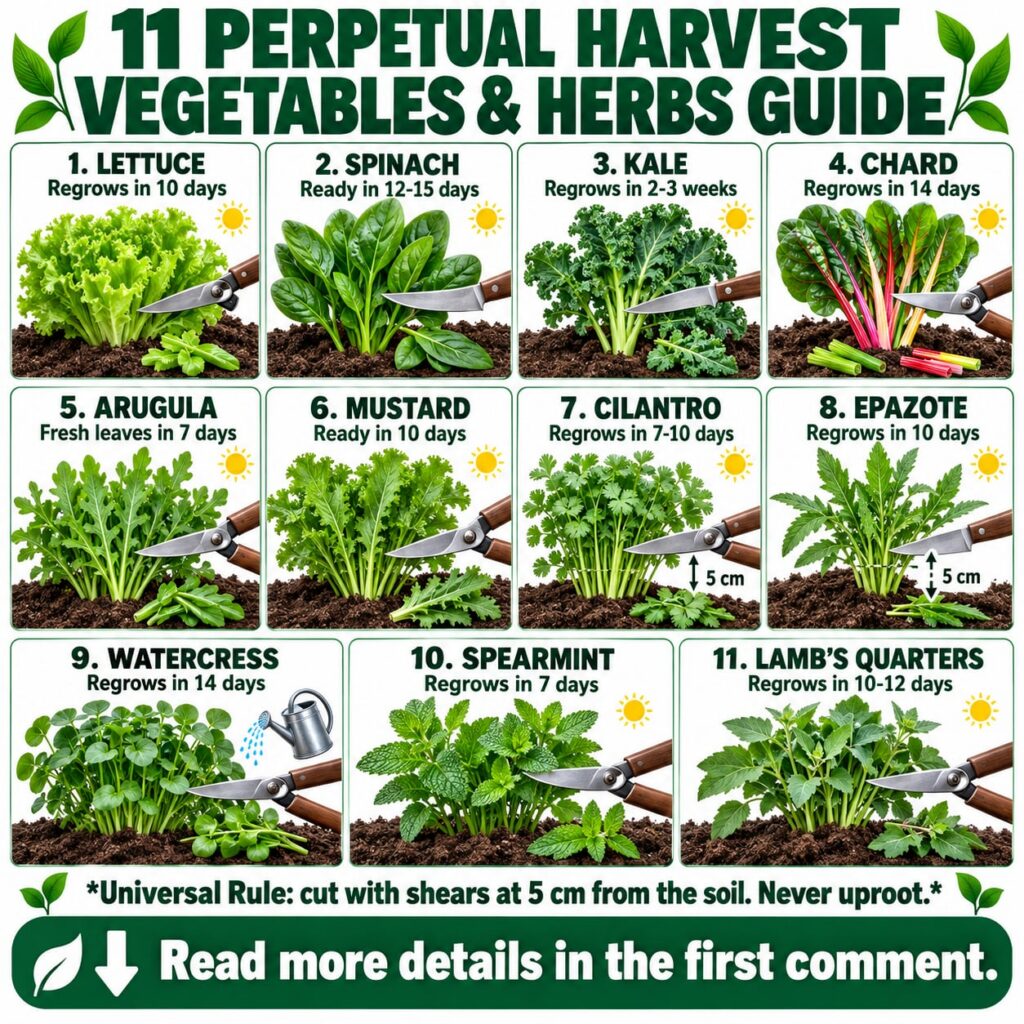 Discover the plants that keep on giving!
What is Perpetual Harvesting?
Perpetual harvesting, also known as ‘cut-and-come-again’ gardening, is a technique where you harvest only a portion of a plant, allowing the remaining part to regrow and produce more. This sustainable method ensures a continuous supply of fresh produce, reduces waste, and helps your plants stay productive longer. It’s a game-changer for home gardeners looking to maximize their yield with minimal effort.
The Universal Rule for Continuous Growth
To successfully practice perpetual harvesting, there’s one golden rule that applies to most plants: cut with shears at 5 cm (about 2 inches) from the soil. Never uproot the plant.
- Why 5 cm? Leaving a small portion of the plant, including its root system and some stem, allows it to easily regenerate new growth. This vital part contains dormant buds and energy reserves that kickstart the regrowth process.
- Why not uproot? Uprooting destroys the plant’s entire life support system, making it impossible for it to regrow. The goal is to encourage the plant to produce new leaves or stems from its base.
- Use Clean Shears: Always use sharp, clean gardening shears or scissors to make a clean cut. This prevents damage to the plant and reduces the risk of disease.
Top Vegetables and Herbs for Perpetual Harvesting
Many common garden favorites are perfect for the cut-and-come-again method. Here are some you can start with:
Leafy Greens
- Lettuce (Loose Leaf Varieties): Harvest outer leaves as needed. They can regrow in as little as 10-14 days.
- Spinach: Pick the larger, outer leaves. New leaves will emerge from the center. Expect regrowth in about 14-21 days.
- Kale: Similar to spinach, harvest outer leaves. Kale is very resilient and will keep producing throughout its season.
- Swiss Chard: Cut outer stalks at the base. New stalks will develop from the crown.
Herbs
- Basil: Pinch off leaves or cut stems just above a leaf node. This encourages bushy growth. Regrows quickly, often within 7-10 days.
- Mint: Harvest stems and leaves. Mint is a vigorous grower and will quickly bounce back.
- Cilantro: Snip outer leaves, leaving the inner ones to mature. It’s best to harvest regularly to prevent bolting.
- Parsley: Cut outer stems at the base. New growth will come from the center.
- Chives: Snip leaves 2 inches from the ground. They’ll quickly send up new green shoots.
Other Perennial Favorites
- Green Onions (Scallions): Cut the green tops about an inch from the white base. The base can be left in the ground or even regrown in a glass of water.
- Celery: Cut outer stalks near the base, leaving the inner stalks to continue growing. You can also regrow a celery base in water.
Tips for Successful Perpetual Harvesting
Beyond the cutting technique, a few other factors contribute to your plants’ ability to regrow vigorously:
1. Provide Adequate Sunlight
Most vegetables and herbs thrive with at least 6 hours of direct sunlight per day. Good light is crucial for photosynthesis, which provides the energy for regrowth.
2. Maintain Healthy Soil
Rich, well-draining soil provides essential nutrients. Amend your soil with compost regularly to keep it fertile and support continuous growth. Healthy soil means healthy roots, which are key to regeneration.
3. Consistent Watering
Keep the soil consistently moist, but not waterlogged. Especially after harvesting, ensure plants receive enough water to encourage new shoots. Drought stress will hinder regrowth.
4. Fertilize Regularly
Since plants are continuously producing, they need a steady supply of nutrients. Use a balanced, organic fertilizer or compost tea every few weeks, especially after a heavy harvest.
5. Watch for Pests and Diseases
Healthy plants are more resistant, but always keep an eye out for pests or signs of disease. Address issues promptly to ensure your plants remain strong and capable of regrowth.
Start Your Perpetual Garden Today!
Embracing perpetual harvesting is a rewarding way to enhance your gardening experience. It not only provides a steady supply of fresh, organic produce but also deepens your connection to the growing cycle. With a little practice and adherence to these simple techniques, you’ll soon be enjoying endless harvests from your very own garden.
Happy gardening!