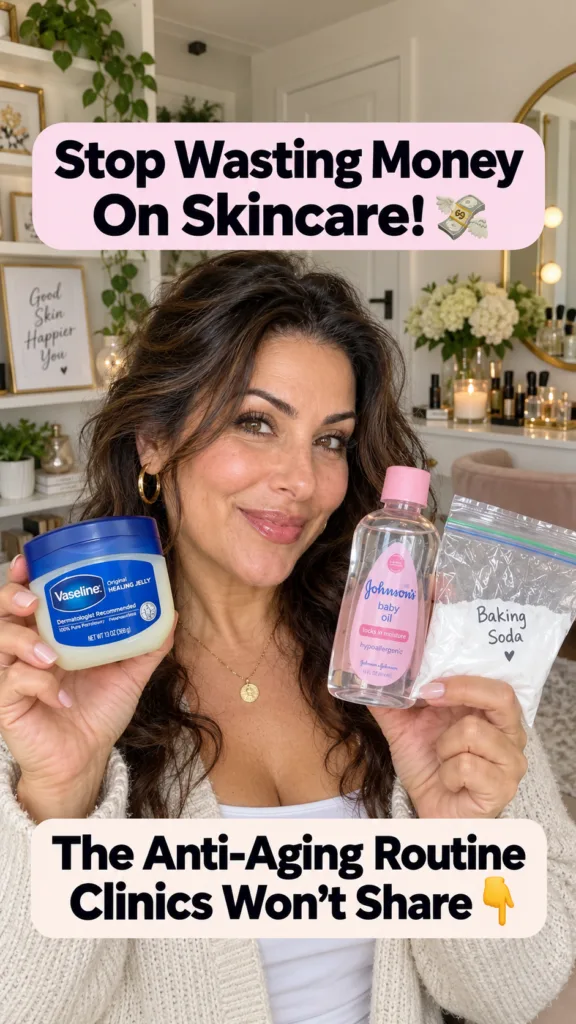
Dreaming of radiant, smoother-looking skin without spending a fortune? You’re in the right place! We often hear about expensive treatments and high-end products, but what if we told you that some everyday household staples might just be the secret to a fresher complexion? Today, we’re diving into a popular beauty routine that people are trying, utilizing common items like Vaseline, Johnson’s Baby Oil, and Baking Soda to achieve a smoother, more refreshed appearance from the comfort of home.
Before we explore this routine, it’s important to remember that DIY beauty solutions are fun to try, but results can vary, and what works for one person might not work for another. Always listen to your skin!
The Budget-Friendly Trio: Exploring the Ingredients
Let’s take a closer look at why these three familiar items have captured the attention of the DIY beauty community:
Vaseline (Petroleum Jelly)
- What it is: A petroleum-based product widely known for its occlusive properties.
- How people are using it: It creates a protective barrier on the skin, which can help lock in moisture. This barrier may help reduce transepidermal water loss, contributing to skin feeling softer and appearing plumper, which can minimize the look of fine lines often associated with dehydration. It’s also popular for ‘slugging’—applying a thin layer as the last step in a nighttime routine.
Johnson’s Baby Oil
- What it is: A mineral oil-based product, traditionally used for baby skin.
- How people are using it: It’s a lightweight moisturizer that can help soften the skin. Many find it effective for makeup removal and as an all-over body moisturizer. For the face, a small amount can help hydrate, leaving the skin feeling supple.
Baking Soda (Sodium Bicarbonate)
- What it is: A common household leavening agent and cleaning product.
- How people are using it: In very diluted and gentle forms, some people use baking soda for mild exfoliation. The fine颗粒 can help gently buff away dead skin cells, which might reveal smoother-looking skin underneath. However, its high pH means it must be used with extreme caution and moderation, as it can be irritating to the skin’s natural acidic mantle.
The DIY Routine People Are Trying for a Fresher Look
Here’s how people are combining these ingredients for what they hope is a youthful glow:
-
Gentle Pre-Cleanse and Soften
- Step: Start by gently massaging a small amount of Johnson’s Baby Oil onto dry skin to help dissolve makeup and impurities.
- Focus: This can act as a gentle first cleanse and help to soften the skin.
- Rinse: Lightly rinse with lukewarm water or wipe off with a soft, damp cloth.
-
Careful Exfoliation (Use with Extreme Caution!)
- Step: In a small bowl, mix a tiny pinch (about 1/4 teaspoon) of baking soda with a tablespoon of Johnson’s Baby Oil or your regular gentle cleanser to create a very mild paste.
- Application: Gently apply the mixture to damp skin, using light, circular motions. Do NOT scrub aggressively. Focus on areas that feel rough.
- Duration: Keep this on the skin for no more than 30 seconds.
- Rinse: Rinse thoroughly with lukewarm water. Follow with a gentle cleanser if desired to ensure all baking soda residue is removed.
- Important Note: Baking soda’s pH is much higher than skin’s natural pH, so this step should only be done occasionally (once every 1-2 weeks at most) and with great care. Always perform a patch test first!
-
Lock in Moisture with Vaseline
- Step: After cleansing and patting your skin almost dry, apply a very thin layer of Vaseline all over your face.
- Focus: This creates an occlusive barrier, helping to seal in the moisture from the previous steps and your skin’s natural hydration.
- Overnight: This is often applied as an overnight treatment, allowing the skin to retain moisture throughout the night.
Important Considerations Before You Try This Routine
While this budget-friendly routine is popular, it’s essential to approach it with caution and awareness of your skin’s needs:
- Patch Test is Key: Always, always perform a patch test on a small, inconspicuous area of your skin (like behind the ear or on your inner arm) for 24-48 hours before applying to your face, especially with baking soda.
- Baking Soda Sensitivity: Baking soda can be irritating for many skin types, particularly sensitive or acne-prone skin. Its alkaline nature can disrupt the skin’s acid mantle, potentially leading to dryness, redness, or breakouts. Use it sparingly, if at all, and consider skipping this step if you have sensitive skin.
- Not a Cure: Remember, DIY routines like this are not a substitute for professional dermatological advice or treatments for specific skin conditions or advanced anti-aging concerns.
- Sun Protection: Regardless of your skincare routine, daily broad-spectrum sun protection is crucial for maintaining youthful-looking skin and preventing damage.
- Listen to Your Skin: If you experience any irritation, redness, burning, or discomfort, discontinue use immediately.
Embrace Your Natural Glow
Exploring budget-friendly beauty solutions can be an empowering way to take care of your skin. By understanding the properties of common ingredients and using them mindfully, you can experiment with routines that aim to support a smoother, more hydrated, and fresher-looking complexion. Remember, the goal is healthy-looking skin, and sometimes, simplicity is key!
Have you tried a similar budget beauty hack? Share your thoughts and experiences in the comments below!