Mastering the Harvest: Secrets for Abundant Vegetable Yields in Your Home Garden
There’s nothing quite like the satisfaction of harvesting fresh vegetables from your own garden. The vibrant colors, the earthy smell, and the unparalleled taste – it’s a reward for all your hard work. But did you know that knowing when and how to harvest can significantly impact not only the flavor and quality of your produce but also the overall yield of your garden? This guide will unlock the secrets to a truly abundant harvest!
Why Timely Harvesting Matters for Your Garden
Harvesting at the right time is crucial for several reasons:
- Peak Flavor and Nutrition: Vegetables picked at their prime are at their most flavorful and nutritious. Under-ripe produce lacks sweetness and depth, while over-ripe produce can become mealy, tough, or bitter.
- Continuous Production: For many fruiting plants, harvesting regularly signals the plant to produce more. If you leave mature fruit on the vine, the plant thinks its job is done and slows down or stops production.
- Plant Health: Removing mature produce reduces stress on the plant, allowing it to focus its energy on new growth and fruit development.
- Pest Prevention: Over-ripe or rotting produce can attract pests and diseases to your garden. Timely harvesting helps maintain a healthy environment.
General Harvesting Principles for Every Gardener
While each vegetable has its specific signs, a few general rules apply across the board:
- Harvest in the Morning: The best time to harvest most vegetables is in the cool of the morning, after the dew has dried but before the heat of the day. At this time, plants are fully hydrated, and the produce is crisp and flavorful.
- Use Sharp Tools: Always use clean, sharp pruning shears or a knife for a clean cut. Tearing or pulling can damage the plant, making it susceptible to disease.
- Check Your Plants Daily: Especially during peak season, vegetables can grow quickly. A daily check ensures you don’t miss the optimal harvesting window.
- Know Your Plant’s Signs: Learn the specific visual cues (size, color, firmness) that indicate a vegetable is ready.
Your Vegetable Harvesting Guide: Specific Tips for Abundant Yields
Let’s dive into some common garden favorites and their harvesting secrets!
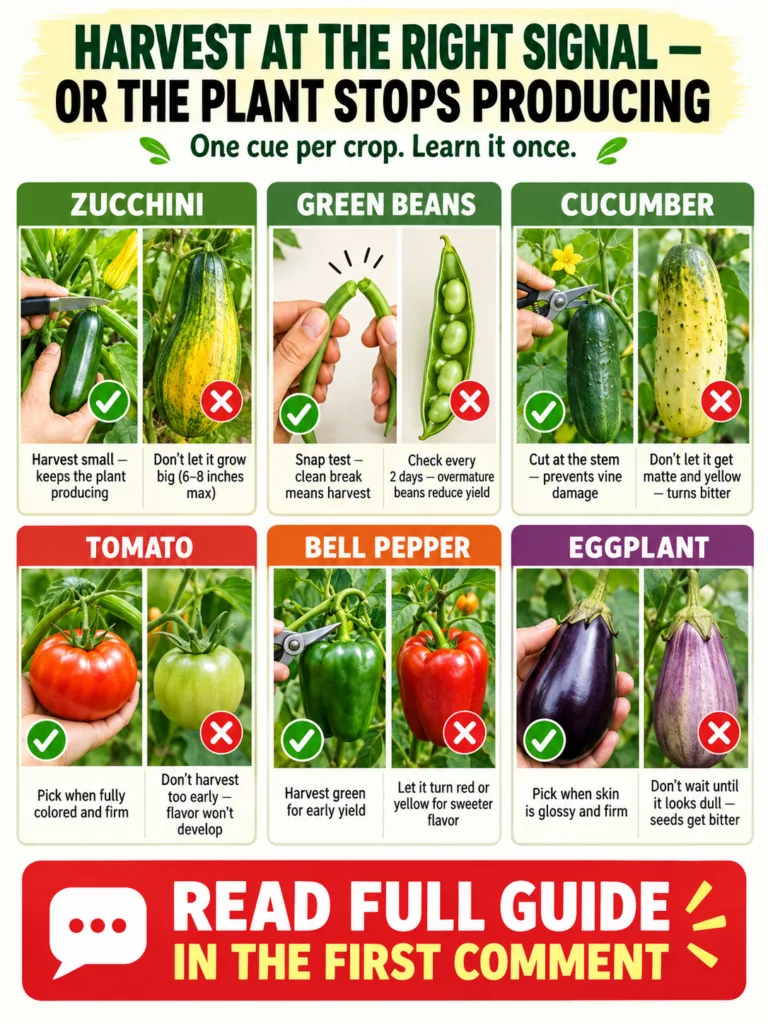
Zucchini
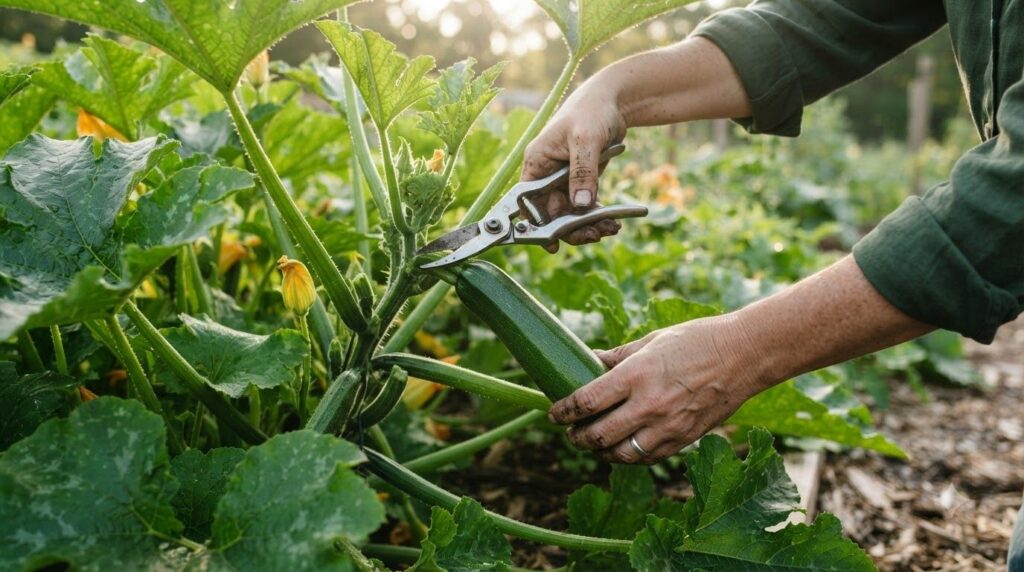
- When to Harvest: Zucchini are best when they are young and tender, typically 6-8 inches long.
- How to Harvest: Use a sharp knife or pruners to cut the stem about an inch from the fruit.
- Why it Matters: Larger zucchini can become watery, seedy, and less flavorful. Harvesting frequently encourages the plant to produce more.
Green Beans
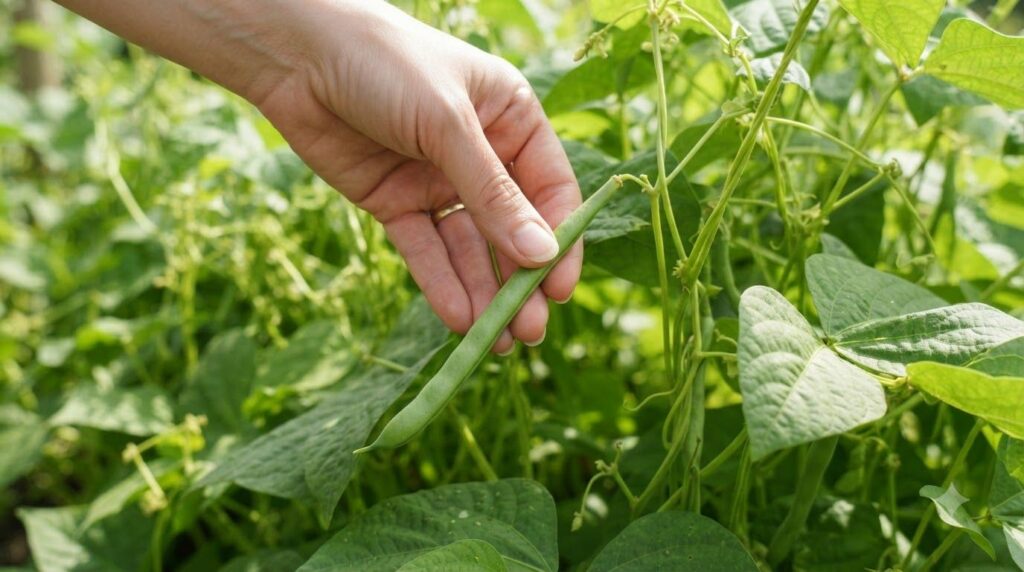
- When to Harvest: Pick green beans when the pods are firm, plump, and snap easily, typically 4-7 inches long, before the seeds inside become too prominent.
- How to Harvest: Gently pull the beans from the plant, or snip them off with scissors to avoid damaging the vine.
- Why it Matters: Regular picking stimulates more flowering and bean production. Over-mature beans become tough and stringy.
Cucumber
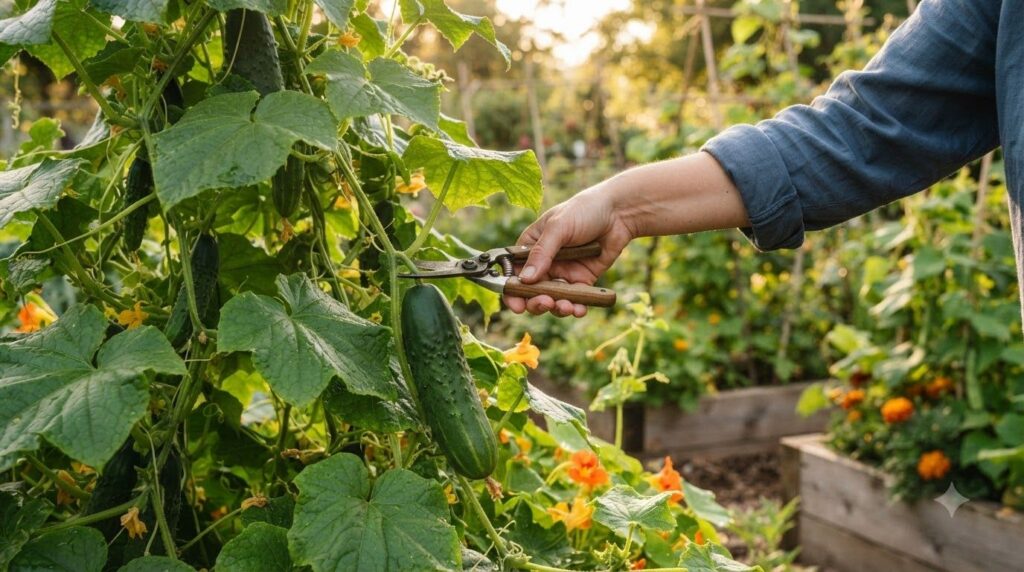
- When to Harvest: Harvest cucumbers when they are firm, green, and according to their variety’s mature size (e.g., 6-8 inches for slicing cucumbers).
- How to Harvest: Use a sharp knife or pruners to cut the stem, leaving a small piece attached to the cucumber. Avoid twisting or tearing.
- Why it Matters: Over-ripe cucumbers turn yellow, become seedy, and can taste bitter. Frequent harvesting encourages continued production.
Tomato
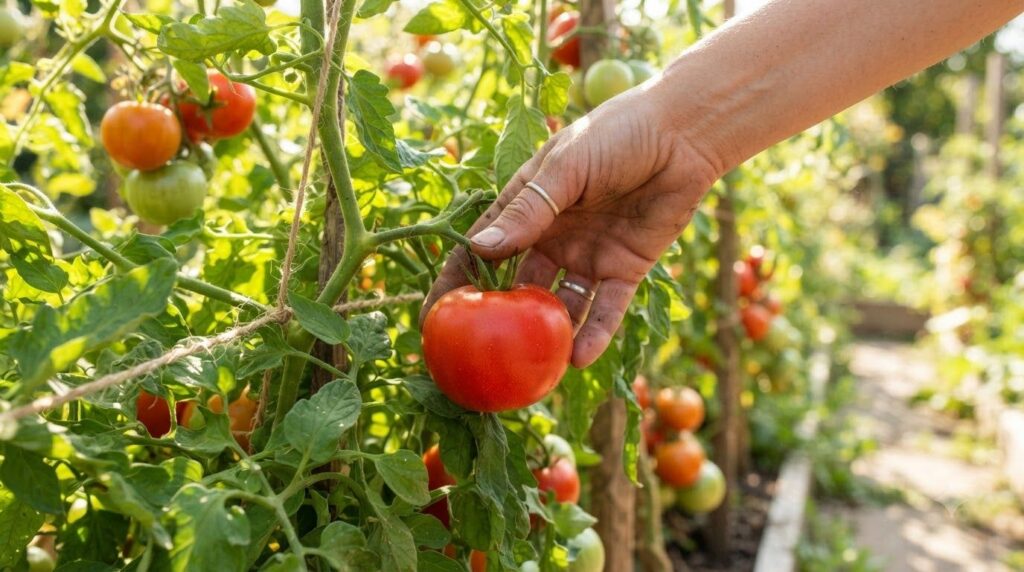
- When to Harvest: Pick tomatoes when they are fully colored for their variety (bright red, yellow, orange, etc.) and feel firm but slightly soft when gently squeezed.
- How to Harvest: Gently twist the fruit until it separates from the vine, or cut the stem with a small piece attached.
- Why it Matters: While green tomatoes can ripen indoors, vine-ripened tomatoes offer the best flavor. Harvesting too early sacrifices taste, while leaving them too long can lead to cracking or spoilage.
Bell Pepper
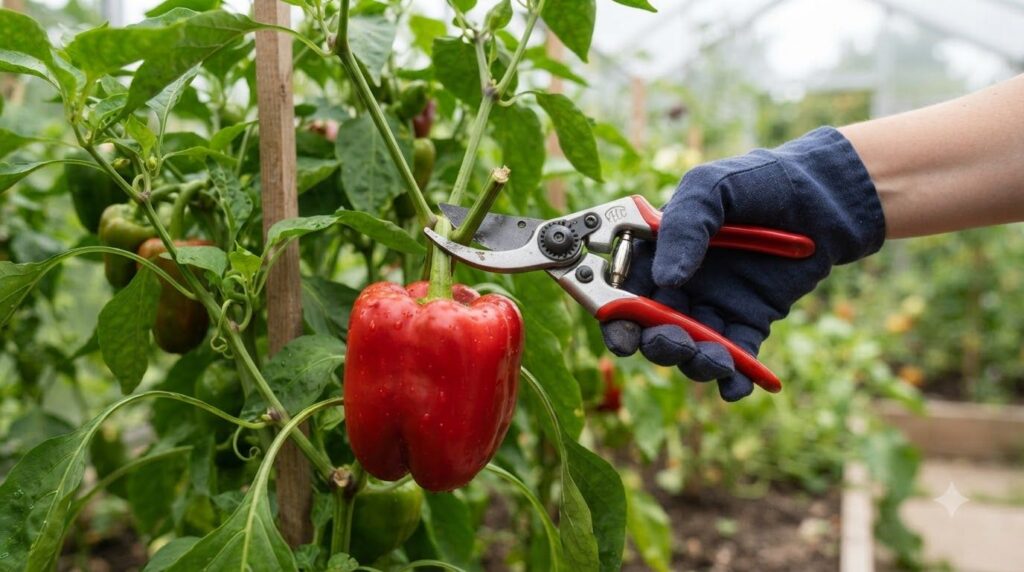
- When to Harvest: Bell peppers can be harvested green (immature) or left on the plant to ripen to their full color (red, yellow, orange) for a sweeter taste. They should feel firm and crisp.
- How to Harvest: Use a sharp knife or pruners to cut the stem about an inch above the pepper. Pulling can damage the plant.
- Why it Matters: Harvesting green peppers will encourage more production. Leaving them to color up will result in sweeter peppers but might slow overall yield.
Eggplant
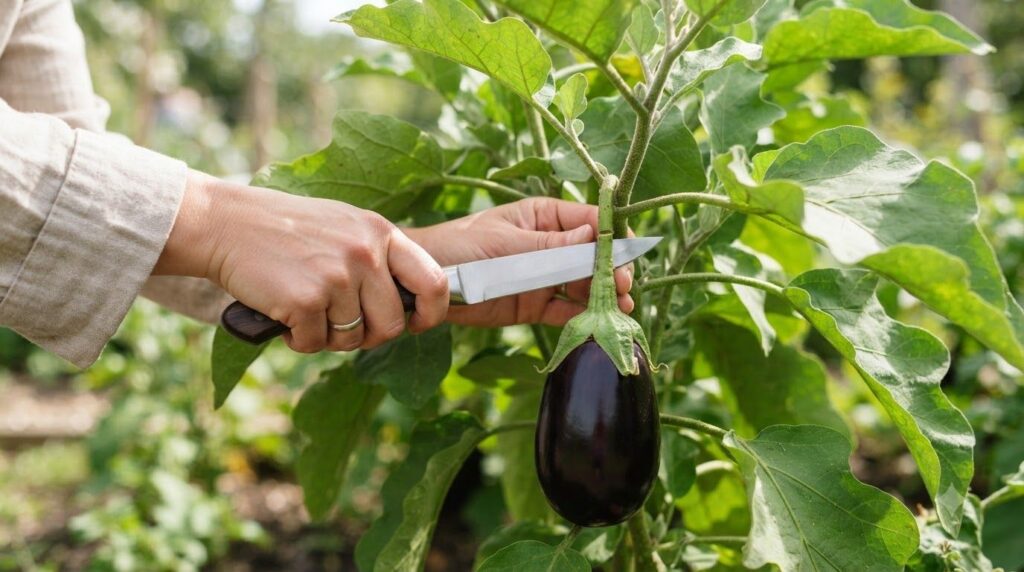
- When to Harvest: Harvest eggplants when they are young, firm, and glossy, typically 6-8 inches long, depending on the variety. The skin should be shiny, not dull.
- How to Harvest: Use a sharp knife or pruners to cut the tough stem, leaving about an inch attached to the fruit.
- Why it Matters: Over-ripe eggplants lose their glossiness, become soft, and can develop a bitter taste and tough seeds. Regular harvesting promotes continued fruiting.
Tools for a Successful Harvest
Having the right tools makes harvesting easier and safer for both you and your plants:
- Pruning Shears or Sharp Knife: Essential for clean cuts.
- Gardening Gloves: Protect your hands from thorns, rough leaves, or irritating sap.
- Harvest Basket or Bucket: A convenient way to collect your bounty without bruising.
Post-Harvest Care and Storage
Once you’ve harvested your delicious vegetables, proper handling ensures they stay fresh longer:
- Gentle Cleaning: Brush off excess dirt, but avoid washing until just before use, as moisture can speed spoilage.
- Appropriate Storage: Store vegetables according to their needs (e.g., refrigeration for most, counter storage for tomatoes).
- Enjoy Freshness: The best part about home-grown produce is enjoying it fresh! Plan your meals around your harvest.
Cultivate Success, Harvest Abundance!
Mastering the art of harvesting is a skill every home gardener can develop. By paying attention to your plants, understanding their signals, and harvesting at the optimal time, you’ll not only enjoy the freshest, most flavorful produce but also encourage your garden to yield more bountiful crops throughout the season. Happy harvesting!