Herbal poultices have been used for generations as traditional herbal remedies for irritated skin, sore feet, minor discomfort, and everyday outdoor skin care. Many wild medicinal plants were historically crushed into soothing skin paste blends or infused into homemade herbal salve recipes.
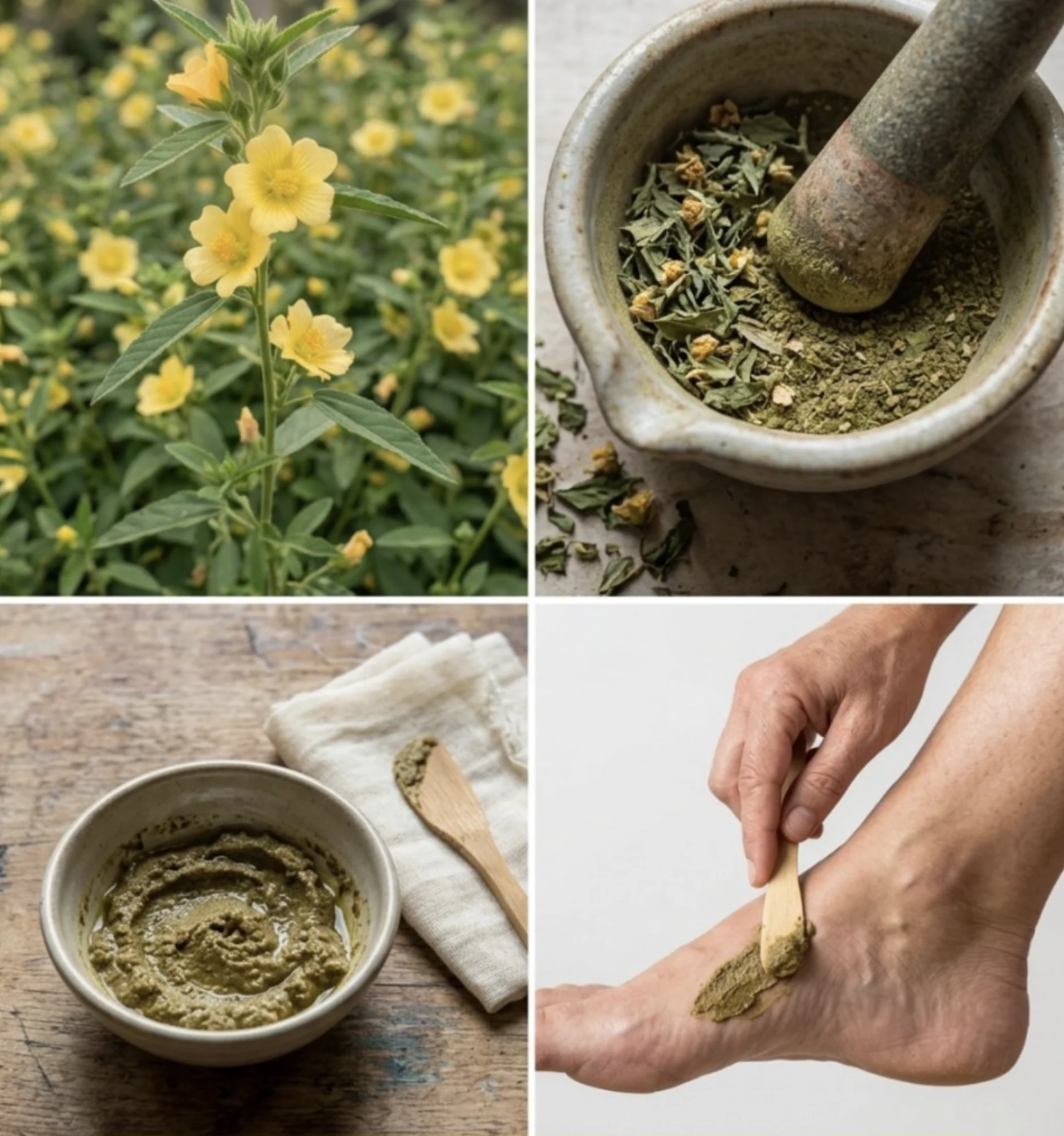
The yellow flowering herb shown above is commonly used in folk herbal practices where the leaves and flowers are ground into a moist paste and applied externally. While many people still enjoy making herbal poultice recipes at home, proper plant identification and safe use are extremely important.
What Is an Herbal Poultice?
A poultice is a soft herbal mixture made by:
- crushing fresh plants
- grinding dried herbs
- mixing herbs with water or oil
- applying the paste externally to the skin
Traditional herbal remedies often used poultices to:
- cool irritated skin
- soften rough areas
- support temporary comfort
- soothe tired feet
- provide herbal moisture barriers
Homemade poultices remain popular in natural skin remedy communities because they are simple and inexpensive to prepare.
Why People Use Herbal Skin Pastes
Many natural wellness enthusiasts prefer soothing skin paste recipes because they:
- use minimal ingredients
- avoid synthetic fragrances
- can be customized easily
- work well for small external applications
Historically, herbal poultice recipes were common in rural communities where people relied on local wild medicinal plants for daily wellness support.
Important Safety Note Before Using Wild Plants
Correct plant identification is critical.
Some wild plants may:
- trigger allergic reactions
- irritate sensitive skin
- interact with medications
- become unsafe if misidentified
Before trying homemade herbal salve or poultice recipes:
- confirm the plant species with a trusted expert
- avoid roadside or chemically treated plants
- patch test on small skin area first
- never apply to deep wounds or infected skin
This article discusses traditional folk uses only and is not medical advice.
Traditional Herbal Poultice Recipe
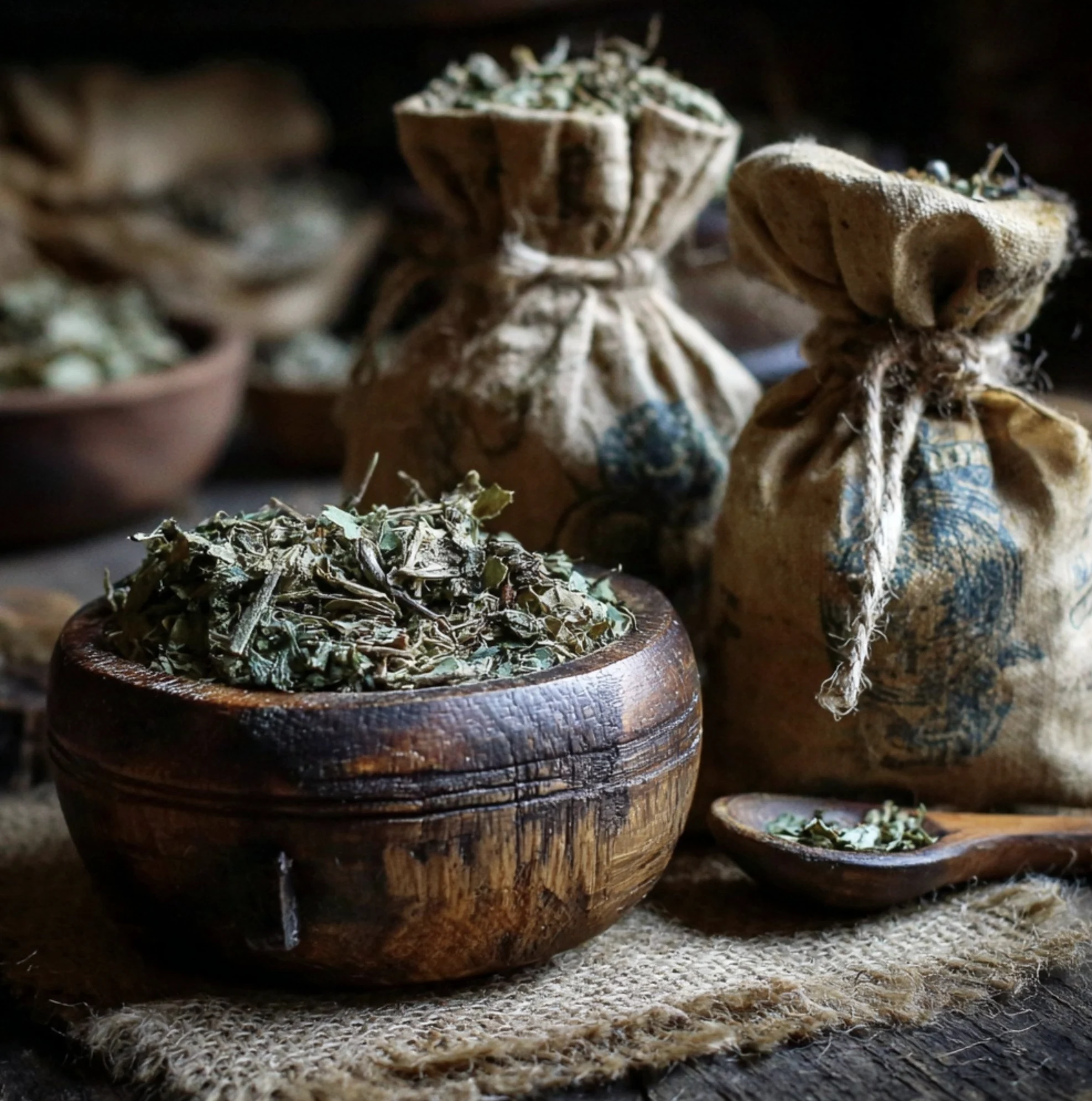
This simple natural skin remedy follows traditional external-use preparation methods.
Ingredients
- 1 cup fresh leaves and flowers
- 1–2 tbsp warm water or olive oil
- Mortar and pestle or blender
- Clean cloth or gauze
Instructions
- Rinse herbs thoroughly.
- Pat dry completely.
- Crush herbs into a thick green paste.
- Slowly add warm water or oil until spreadable.
- Apply directly to external skin area.
- Cover loosely with cloth if desired.
- Leave on for 15–30 minutes before rinsing.
How To Make a Homemade Herbal Salve
Some people prefer longer-lasting homemade herbal salve recipes instead of fresh poultices.
Ingredients
- Dried herbs
- Olive oil
- Beeswax
- Glass jar
Instructions
- Fill jar halfway with dried herbs.
- Cover completely with olive oil.
- Infuse for 2–4 weeks in cool dark area.
- Strain herbs.
- Warm infused oil gently with beeswax.
- Pour into containers and cool.
This creates a firmer balm-style natural skin remedy for external use.
Common Traditional Uses
In folk herbal traditions, poultices and herbal salves were commonly used for:
- dry skin areas
- rough heels
- tired feet
- minor outdoor skin irritation
- gardening skin care
- temporary soothing support
Many herbalists still prepare herbal poultice recipes as part of traditional home wellness routines.
Best Herbs Often Combined in Poultices
Homemade herbal salve and paste blends often combine:
- calendula
- plantain leaf
- comfrey
- yarrow
- chamomile
- lavender
These herbs are popular in traditional herbal remedies because of their soothing botanical properties.
How To Store Herbal Paste
Fresh herbal poultice:
- use immediately
- refrigerate up to 24 hours maximum
Homemade herbal salve:
- store in airtight containers
- keep away from heat
- use within 6–12 months
Signs You Should Stop Using It
Discontinue use immediately if you notice:
- redness
- itching
- rash
- burning sensation
- worsening irritation
Even natural skin remedies may not suit every skin type.
Final Thoughts
Traditional herbal poultice recipes continue to interest people looking for simple homemade herbal salve ideas and natural skin remedy alternatives. Whether prepared as a fresh soothing skin paste or infused into oil-based balms, these traditional herbal remedies remain part of many folk wellness traditions around the world.
As with all wild medicinal plants, safe identification and careful external use are essential before experimenting with homemade herbal preparations.