Wild aralia shoots are one of the most prized edible spring shoots collected by seasonal foragers in many forest regions. These tender young sprouts are known for their earthy flavor, crisp texture, and traditional use in rustic spring meals.
People interested in wild edible plants and mountain vegetables often harvest aralia shoots during early spring when the young stems first emerge from the forest floor. Whether sautéed, pickled, or lightly blanched, these foraged spring greens have become increasingly popular among home cooks and outdoor food enthusiasts.
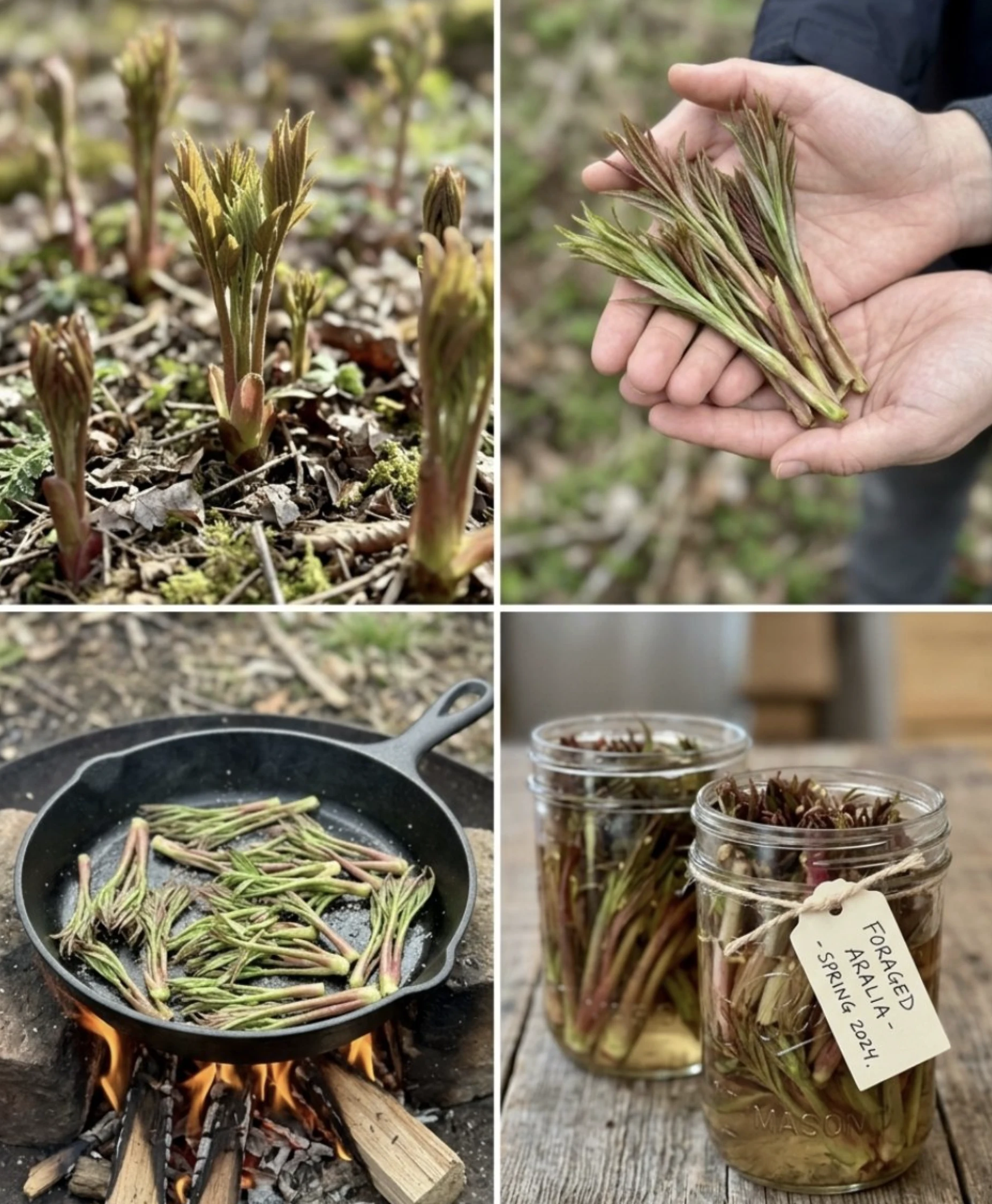
What Are Wild Aralia Shoots?
Wild aralia shoots are the young spring growth of certain aralia species, often harvested before the leaves fully open.
These edible spring shoots are recognized by:
- reddish-green stems
- tightly folded leaves
- clustered emerging growth
- soft tender texture when young
Many people compare their flavor to a mix of:
- asparagus
- fiddleheads
- mild celery
- earthy herbs
In traditional seasonal cooking, wild aralia shoots are considered a valuable spring food because they appear after long winters when fresh greens are limited.
Why People Forage Aralia Shoots
Foragers enjoy wild aralia shoots because they are:
- seasonal and limited
- easy to preserve
- rich in texture
- versatile in cooking
- deeply connected to traditional food culture
Like many foraged spring greens, they are commonly prepared in:
- stir-fries
- soups
- pickles
- tempura
- sautéed vegetable dishes
Important Wild Plant Safety Warning
Correct identification is essential before eating any wild edible plants.
Some toxic plants can resemble edible spring shoots during early growth stages.
Never consume wild plants unless:
- identification is confirmed
- local experts verify safety
- the harvesting area is clean and pesticide-free
Avoid:
- roadside harvesting
- polluted soil areas
- unknown species
- mature bitter shoots
This article discusses traditional culinary use only and is not professional foraging advice.
When To Harvest Wild Aralia Shoots
The best time to collect wild aralia shoots is:
- early spring
- before leaves fully unfold
- while stems remain tender
Ideal shoots are usually:
- 4–8 inches tall
- firm but flexible
- tightly curled at the top
Older shoots quickly become fibrous and bitter.
How To Clean and Prepare Aralia Shoots
Freshly harvested edible spring shoots should be cleaned carefully.
Basic Preparation
- Rinse thoroughly under cold water.
- Remove tough stem ends.
- Peel overly fibrous outer skin if needed.
- Soak briefly in salted water.
Some traditional cooks blanch the shoots for 1–2 minutes to reduce bitterness.
Simple Sautéed Wild Aralia Shoots Recipe
One of the easiest ways to learn how to cook aralia shoots is a quick skillet sauté.
Ingredients
- 2 cups wild aralia shoots
- 1 tbsp olive oil or butter
- 2 garlic cloves
- Pinch of sea salt
- Black pepper
Instructions
- Heat skillet over medium heat.
- Add oil and garlic.
- Add cleaned shoots.
- Cook 3–5 minutes until tender.
- Season lightly and serve warm.
This preparation keeps the shoots crisp while highlighting their earthy flavor.
Traditional Pickled Aralia Shoots
Many people preserve foraged spring greens through simple refrigerator pickling.
Ingredients
- Fresh aralia shoots
- Vinegar
- Water
- Salt
- Garlic or herbs (optional)
Instructions
- Blanch shoots briefly.
- Pack into sterilized jars.
- Pour warm brine over shoots.
- Refrigerate overnight before serving.
Pickled mountain vegetables are popular because they extend the short spring harvest season.
Best Ways To Eat Aralia Shoots
Wild aralia shoots pair well with:
- eggs
- rice bowls
- noodles
- grilled meats
- soups
- mushroom dishes
In many traditional kitchens, edible spring shoots are treated as seasonal delicacies rather than everyday vegetables.
How To Store Fresh Shoots
Fresh foraged spring greens are delicate.
Refrigeration
- Wrap loosely in paper towel
- Store in breathable container
- Use within 2–3 days
Freezing
- Blanch first
- Cool completely
- Freeze in sealed bags
Pickling
One of the best long-term preservation methods for wild aralia shoots.
Common Mistakes Beginners Make
Harvesting Mature Shoots
Older shoots become tough and unpleasant.
Overcooking
Too much heat removes texture quickly.
Improper Identification
Never rely only on internet photos for wild edible plants.
Taking Too Much
Sustainable foraging helps preserve native plant populations.
Final Thoughts
Wild aralia shoots remain one of the most interesting edible spring shoots used in seasonal forest cooking traditions. Whether sautéed over an open fire, lightly pickled, or added to rustic meals, these mountain vegetables offer a unique connection to traditional spring foraging culture.
As interest in wild edible plants and foraged spring greens continues to grow, safe identification and responsible harvesting remain the most important parts of learning how to cook aralia shoots properly.