Understanding how 1200 calories can be distributed throughout a day is a common goal for many seeking to manage their weight or simply become more mindful of their eating habits. While 1200 calories is a specific target that may not be suitable for everyone, visualizing what that looks like in terms of actual food can be incredibly helpful for portion control and healthy meal planning. This article, inspired by our visual guide, breaks down a full day’s worth of meals, showing you how to enjoy nutritious and satisfying foods while staying within this calorie framework.
Join us as we explore a sample 1200-calorie meal plan, providing a clear blueprint for your breakfast, lunch, snack, and dinner. Remember, this serves as an illustrative guide, and individual nutritional needs can vary significantly.
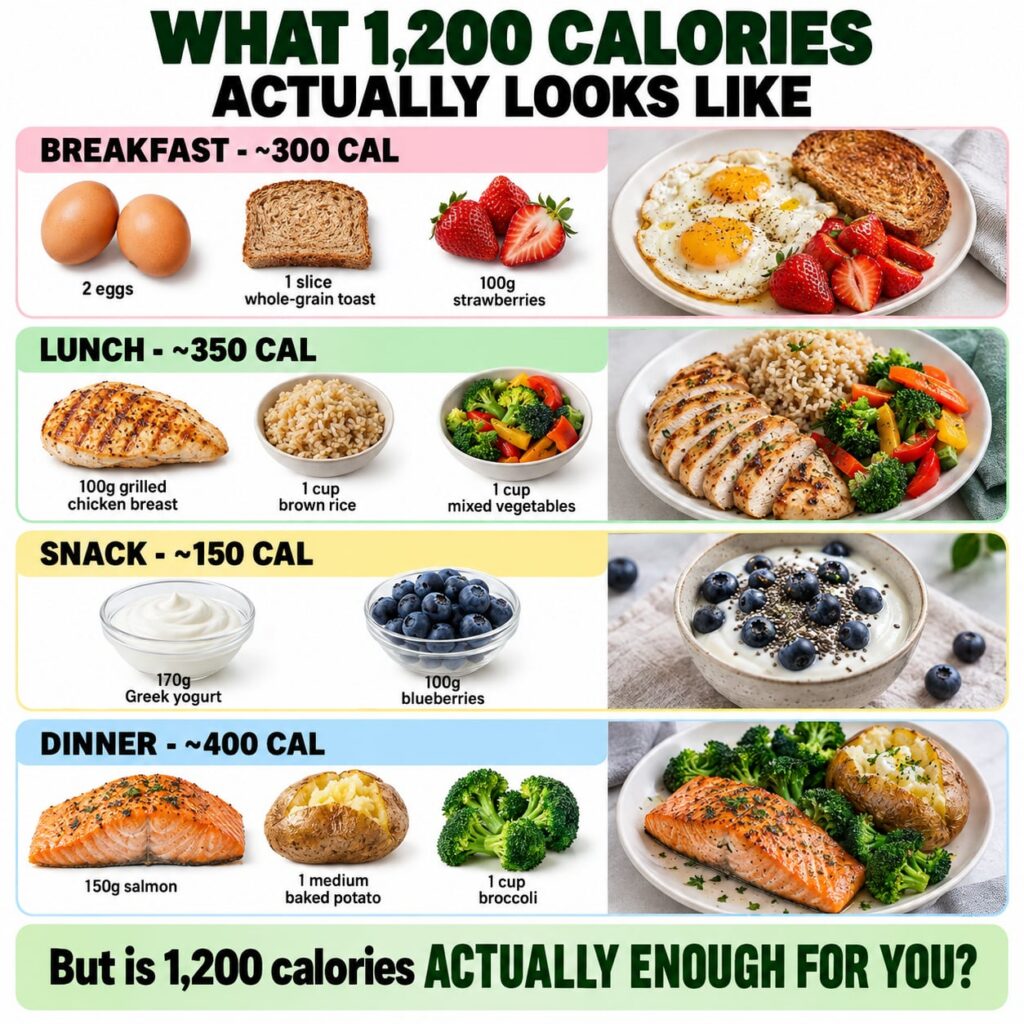 A sample 1200-calorie day, visually broken down for easy understanding.
Your 1200-Calorie Meal Plan: A Visual Breakdown
This sample plan provides a balanced approach to eating within a 1200-calorie target, focusing on nutrient-dense foods that offer satiety and essential nutrients. Let’s dive into each meal.
Breakfast (Approx. 300 Calories)
Start your day with a protein-packed and fiber-rich breakfast to keep you full and energized.
- 2 Eggs: A fantastic source of high-quality protein, which helps with satiety and muscle maintenance. Eggs also contain important vitamins and minerals like Vitamin D and choline.
- 1 Slice Whole-Grain Toast: Provides complex carbohydrates for sustained energy and dietary fiber for digestive health. Opt for 100% whole-grain options.
- 100g Strawberries: Bursting with Vitamin C and antioxidants, strawberries add natural sweetness and a good dose of fiber.
Lunch (Approx. 400 Calories)
A balanced lunch combines lean protein, complex carbohydrates, and plenty of vegetables.
- 1 Grilled Chicken Breast: Lean protein is key for a satisfying lunch, supporting muscle health and preventing afternoon energy slumps. Grilling keeps it healthy.
- 1/2 Cup Brown Rice: A wholesome complex carbohydrate that offers sustained energy and more fiber than white rice.
- 1 Cup Mixed Vegetables: A colorful array of vegetables provides essential vitamins, minerals, and dietary fiber with minimal calories. Think broccoli, carrots, bell peppers, or leafy greens.
Snack (Approx. 150 Calories)
A mid-day snack can help bridge the gap between meals, preventing excessive hunger and supporting stable blood sugar levels.
- 100g Greek Yogurt: Known for its high protein content, Greek yogurt is excellent for satiety. It also provides probiotics, which may support gut health.
- 1/2 Cup Blueberries: These small berries are packed with antioxidants and fiber, adding natural sweetness without a lot of calories.
Dinner (Approx. 350 Calories)
End your day with a nourishing meal that is both satisfying and light.
- 1 Baked Salmon Fillet: An excellent source of omega-3 fatty acids, which are beneficial for heart and brain health. Salmon also provides high-quality protein. Baking is a healthy cooking method.
- 1 Medium Baked Potato: Offers complex carbohydrates and potassium. Keep the skin on for extra fiber!
- 1 Cup Steamed Broccoli: A cruciferous vegetable rich in vitamins C and K, and fiber. Steaming retains its nutritional value.
Is 1,200 Calories Actually Enough For You? Important Considerations
The question posed by our infographic is crucial: ‘But is 1,200 calories ACTUALLY ENOUGH FOR YOU?’ The answer is highly individual. While a 1200-calorie meal plan is often suggested for rapid weight loss, it may not be suitable or healthy for everyone. Several factors influence your daily caloric needs:
- Age: Younger individuals generally require more calories than older adults.
- Gender: Men typically have higher caloric needs than women due to differences in body composition and metabolism.
- Activity Level: Someone with a highly active lifestyle will require significantly more calories than someone who is sedentary.
- Body Composition: Muscle mass burns more calories at rest than fat mass.
- Health Goals: Whether you’re aiming for weight loss, maintenance, or gain, or managing a specific health condition, will impact your caloric intake.
- Underlying Health Conditions: Certain medical conditions may necessitate specific dietary adjustments.
For many adults, especially those who are moderately active, a 1200-calorie diet can be restrictive and potentially lead to nutrient deficiencies, fatigue, and other health issues. It’s often recommended for short periods under medical supervision or for very specific populations. Always consult with a qualified healthcare professional or a registered dietitian before starting any restrictive diet plan to ensure it’s appropriate for your individual needs and health goals.
Tips for Sustainable Calorie Management
Regardless of your specific calorie target, incorporating these strategies can help you manage your intake effectively and promote overall wellness:
- Prioritize Whole Foods: Focus on fruits, vegetables, lean proteins, and whole grains, as demonstrated in our meal plan. These are generally more nutrient-dense and satisfying.
- Practice Portion Control: Even healthy foods can contribute to excess calories if portions are too large. Use measuring cups, a food scale, or visual cues to manage your intake.
- Stay Hydrated: Drinking plenty of water can help with satiety and overall bodily functions. Sometimes, thirst can be mistaken for hunger.
- Meal Prep: Planning and preparing your meals in advance can help you stick to your calorie goals and make healthier choices, especially during busy times.
- Listen to Your Body: Pay attention to your hunger and fullness cues. Eating mindfully can prevent overeating.
Frequently Asked Questions (FAQ)
Can I customize this 1200-calorie meal plan?
Yes, this is a sample. You can swap ingredients while keeping similar calorie counts and nutritional profiles. For example, swap chicken for tofu or lentils, or strawberries for raspberries.
Is a 1200-calorie diet safe for long-term weight loss?
For most adults, a 1200-calorie diet is too restrictive for long-term use and may not provide adequate nutrients. It’s generally recommended for short periods under the guidance of a healthcare professional.
How can I ensure I’m getting enough nutrients on a 1200-calorie diet?
Focus on nutrient-dense foods like lean proteins, plenty of vegetables, fruits, and whole grains. Consider consulting a dietitian to ensure your plan is nutritionally complete and to discuss potential supplementation if needed.
Final Thoughts
Navigating the world of calorie counting can feel overwhelming, but visualizing a 1200-calorie day, as presented in our guide, can demystify the process and equip you with practical tools for healthier eating. This illustrative meal plan offers a blueprint for portion control and balanced nutrition, proving that even with a specific calorie target, your meals can be both wholesome and delicious.
Remember that individual nutritional needs are unique. While a 1200-calorie framework can be a tool for awareness, it’s essential to consider your age, activity level, health goals, and consult with a healthcare professional to determine the most appropriate and sustainable dietary approach for you. Embrace mindful eating and empower your wellness journey with informed choices.
Medical Disclaimer
The information provided in this article is for general informational purposes only and does not constitute medical advice. It is not intended to diagnose, treat, cure, or prevent any disease. Always seek the advice of a qualified healthcare professional or registered dietitian for any questions you may have regarding a medical condition or before making any dietary changes or starting any new health regimen.