Unlock the potential for stronger, healthier hair with this simple homemade rosemary oil recipe. This natural remedy is easy to prepare and focuses on supporting natural hair growth and a balanced scalp environment.

Quick Recipe
Prep time: 10 minutes active; 2-4 weeks infusion
Best for: Supporting natural hair growth, promoting a healthier scalp, strengthening hair
Use type: Oil
Main ingredients:
- Fresh or dried rosemary
- Carrier oil (e.g., olive, jojoba, almond)
Ingredients
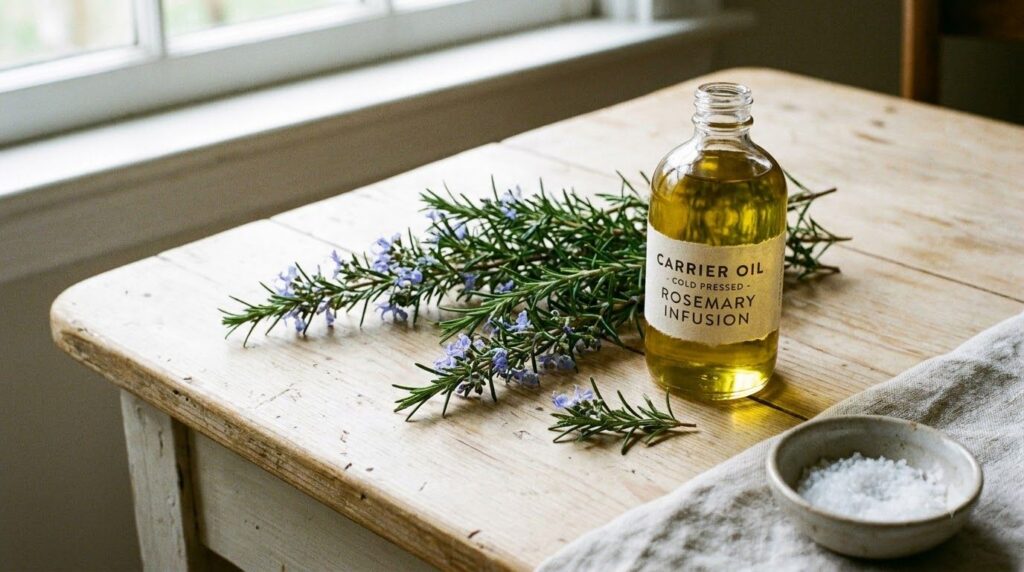
- 1/4 cup fresh rosemary leaves (or 2 tablespoons dried rosemary)
- 1 cup carrier oil (such as extra virgin olive oil, jojoba oil, sweet almond oil, or grapeseed oil)
- A clean, dry glass jar with a lid
How to Make It
- Clean and Prepare Rosemary: If using fresh rosemary, gently rinse the sprigs and allow them to air dry completely to prevent water from introducing bacteria into your oil. Remove the leaves from the stems. If using dried rosemary, no preparation is needed.
- Combine Ingredients: Place the rosemary leaves into your clean, dry glass jar. Pour the carrier oil over the rosemary, ensuring all the leaves are fully submerged.
- Infuse the Oil (Slow Method): Seal the jar tightly. Place it in a sunny spot (like a windowsill) for 2 to 4 weeks, shaking gently every day or two. The warmth from the sun helps infuse the rosemary’s beneficial compounds into the oil.
- Infuse the Oil (Quick Method – Double Boiler): Alternatively, for a quicker infusion, place the open jar (or use a heat-safe bowl) in a saucepan filled with about an inch of water, creating a double boiler. Heat over low-medium heat for 2-3 hours, ensuring the water never boils and the oil remains warm but not hot. This gentle heat speeds up the infusion process.
- Strain the Oil: After the infusion period, strain the oil through a fine-mesh sieve or cheesecloth into another clean, dry glass bottle or jar. Discard the spent rosemary leaves.
- Store Your Oil: Label your bottle and store the finished rosemary oil in a cool, dark place away from direct sunlight.
How to Use It
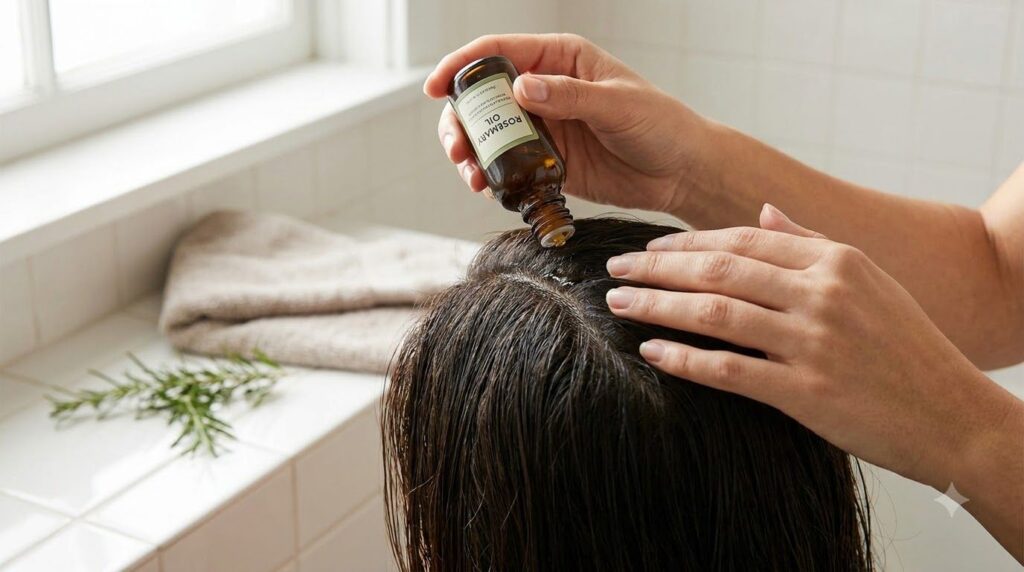
- Scalp Massage: Apply a small amount (1-2 teaspoons) of the rosemary oil directly to your scalp.
- Gentle Application: Using your fingertips, gently massage the oil into your scalp for 5-10 minutes. This helps stimulate blood flow and distribute the oil evenly.
- Hair Distribution (Optional): You can also lightly coat the lengths of your hair if desired, focusing on dry ends.
- Leave-in or Rinse-out: You can leave the oil on for at least 30 minutes, or even overnight for a deeper treatment. When ready, shampoo and condition your hair as usual. Ensure you rinse thoroughly to avoid greasiness.
How Often to Use It
For best results, use your DIY rosemary oil 2-3 times per week. Consistency is key when addressing hair and scalp concerns.
Why These Ingredients Are Used
Rosemary
Rosemary is a popular herb in traditional beauty practices, especially for hair care. It’s often associated with properties that may help to stimulate the scalp and support circulation, creating a more favorable environment for hair follicles. Many believe it can help improve the appearance of hair density and promote a healthier-looking scalp.
Carrier Oil
A good quality carrier oil, such as olive oil, jojoba oil, or almond oil, serves several purposes. It dilutes the potent compounds of rosemary, making them gentle enough for topical application. These oils also provide their own moisturizing and nourishing benefits, helping to hydrate the scalp and soften hair strands. They act as an excellent base to carry the beneficial properties of rosemary deep into the scalp.
What Results to Expect
With consistent use, this DIY rosemary oil may help to support a healthier-looking scalp and contribute to the appearance of stronger, more vibrant hair. While results vary, many users report feeling a difference in hair texture and scalp health, and it can be a supportive part of a routine aimed at encouraging natural hair growth.
Safety Notes
- Patch Test First: Always perform a patch test on a small area of your skin (e.g., inner forearm) before applying the oil to your entire scalp, especially if you have sensitive skin. Wait 24 hours to check for any irritation.
- Use Gently: Apply and massage the oil gently. Avoid vigorous scrubbing, which can irritate the scalp.
- Avoid Irritated Skin: Do not use on irritated, broken, or sensitive skin.
- Stop if Discomfort Occurs: If you experience any redness, itching, burning, or discomfort, discontinue use immediately.
- For External Use Only: This rosemary oil is intended for topical use on hair and scalp only. Do not ingest.
- Pregnancy and Medical Conditions: If you are pregnant, breastfeeding, or have any underlying health conditions, consult with a healthcare professional before using any new home remedy.
FAQ
How long can I store homemade rosemary oil?
When stored in a cool, dark place, your homemade rosemary oil can last for up to 6 months. Be sure to check for any changes in smell or appearance before each use.
Can I use dried rosemary instead of fresh?
Yes, you can absolutely use dried rosemary. In fact, dried herbs often have a more concentrated potency. Just ensure it’s high-quality dried rosemary.
What is the best carrier oil to use for hair?
Jojoba oil is often recommended as it closely mimics the natural oils of our scalp. However, olive oil, sweet almond oil, and grapeseed oil are also excellent choices, each offering unique benefits for hair nourishment.
Final Thoughts
Embracing natural hair care doesn’t have to be complicated. This DIY rosemary oil offers a simple yet potentially powerful way to support your hair’s natural vitality and encourage a healthier scalp. Give it a try and see how this timeless herbal remedy can become a cherished part of your beauty routine. Share your experiences in the comments below!