Do you dream of a lush garden, even if you don’t have a big backyard? Are you longing for fresh, homegrown vegetables and herbs but think you lack the space? Good news, fellow plant lovers! You can turn that dream into a reality with a simple, affordable, and incredibly clever solution: laundry basket gardening!
Laundry baskets aren’t just for dirty clothes anymore. Their sturdy, open-weave design makes them surprisingly perfect for container gardening, offering excellent drainage and portability. Whether you have a small balcony, a sunny patio, or just a tiny corner, this DIY method is a fantastic way to cultivate your very own edible oasis.
Why Laundry Baskets Are Your Secret Gardening Weapon
Before we dive into the ‘how-to’, let’s talk about why humble laundry baskets are such a game-changer for gardeners:
- Excellent Drainage: The holes in most laundry baskets naturally provide superior drainage, preventing root rot – a common issue in traditional containers.
- Affordable & Accessible: They’re inexpensive and easy to find at almost any store, making gardening accessible to everyone.
- Portability: Want to move your tomatoes to a sunnier spot or bring tender herbs indoors when a frost threatens? Laundry baskets make it easy to relocate your plants.
- Air Circulation: The open sides allow for better air circulation around the soil, which can be beneficial for root health.
- Versatile: From root vegetables to sprawling herbs, many plants thrive in these makeshift containers.
Getting Started: Choosing & Preparing Your Baskets
1. Select the Right Baskets
Opt for sturdy plastic laundry baskets. The stiffer the plastic, the longer they’ll last. Look for baskets with plenty of holes for drainage – the more, the better!
2. Prepare for Planting
To prevent soil from washing out through the holes while still allowing water to drain, you’ll need a liner. Here are a few options:
- Landscape Fabric: This material is permeable, allowing water to pass through while keeping soil in. Cut it to fit the basket, lining the bottom and sides.
- Old T-shirts or Burlap: Repurpose old clothes! Just make sure they’re natural fibers that will eventually break down, and that they’re thick enough to hold soil.
- Coffee Filters or Newspaper: For smaller holes, a layer of coffee filters or a few sheets of newspaper at the bottom can work as a temporary barrier.
Remember, the goal is to keep the soil contained while ensuring excellent water flow.
The Perfect Soil & What to Plant
1. The Ideal Soil Mix
Don’t just use garden soil; it’s often too heavy for containers. A good quality potting mix is essential. You can enhance it by adding:
- Compost: For extra nutrients and improved soil structure.
- Perlite or Vermiculite: To enhance drainage and aeration.
Fill your lined basket with this rich, well-draining potting mix, leaving about an inch or two from the rim to prevent overflow when watering.
2. What Can You Grow?
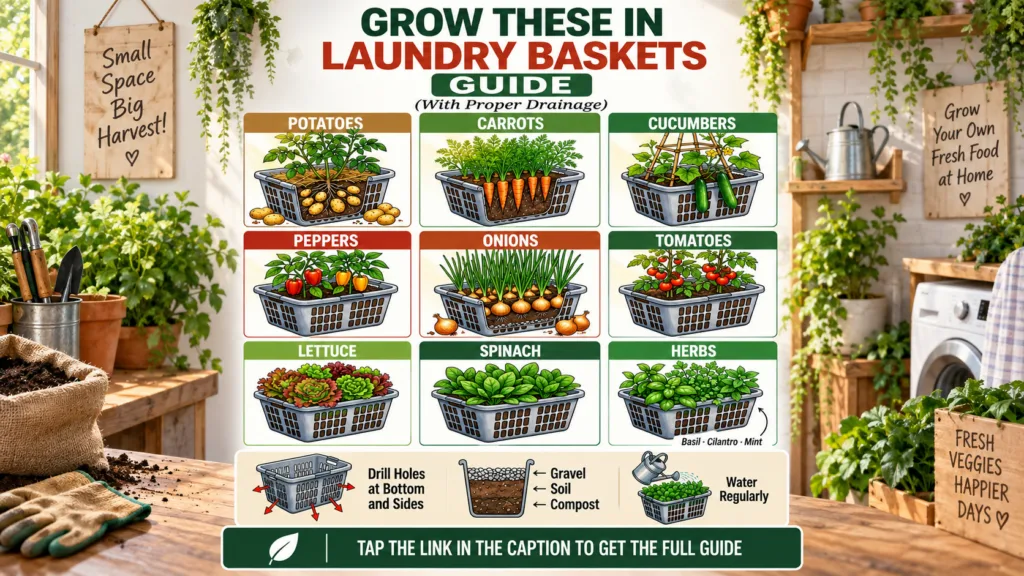
Many plants thrive in laundry baskets! Think about plants that don’t need incredibly deep roots or those that can be trellised. Our infographic highlights some fantastic choices, and here are a few more ideas:
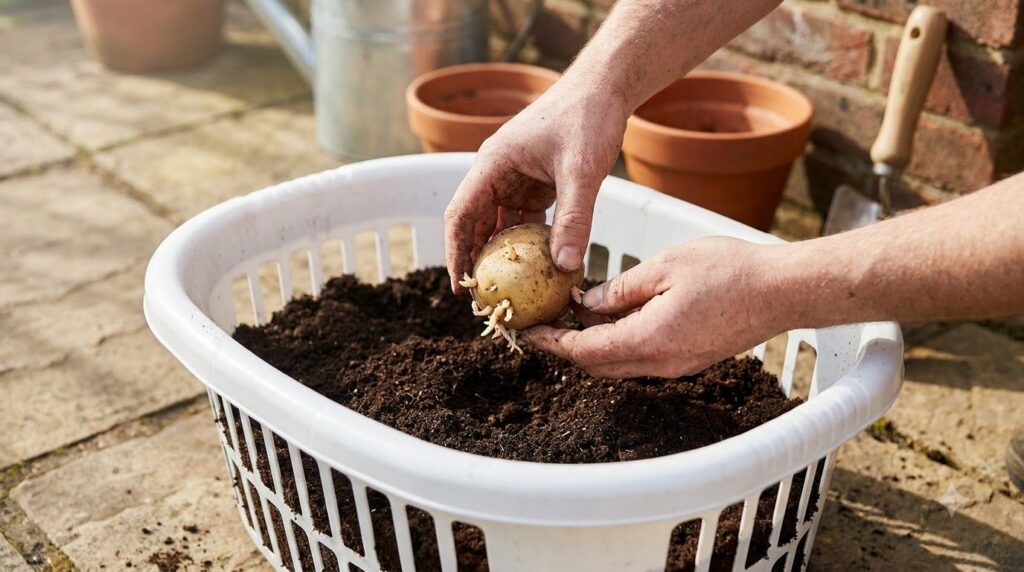
- Root Vegetables: Potatoes, carrots, radishes, and even some smaller varieties of sweet potatoes. The baskets make harvesting incredibly easy – just tip them over!
- Leafy Greens: Lettuce, spinach, kale, and Swiss chard are perfect for continuous harvesting.
- Herbs: Basil, mint, parsley, cilantro, rosemary – nearly all herbs will love a basket home.
- Fruiting Plants: Bush beans, compact cucumber varieties, strawberries, and even determinate (bush) tomatoes can do well. Just be prepared to offer support with stakes or small cages.
- Flowers: Edible flowers like nasturtiums or marigolds, or just cheerful annuals to add beauty.
Care and Maintenance for a Bountiful Basket Garden
1. Watering Wisdom
Container plants generally dry out faster than garden beds. Check your baskets daily, especially during warm weather. Water deeply until you see water draining from the bottom. Consider using a drip tray if you’re concerned about water runoff on your patio.
2. Feeding Your Plants
The nutrients in potting mix can deplete over time. Begin feeding your plants about 3-4 weeks after planting with a balanced liquid fertilizer, following the product’s instructions. For vegetables and herbs, consider an organic option.
3. Sunlight is Key
Most vegetables and herbs require at least 6-8 hours of direct sunlight per day. Place your laundry baskets in the sunniest spot available. The portability of these containers is a huge advantage here – you can chase the sun!
4. Pest Patrol
Even in containers, pests can be an issue. Regularly inspect your plants for any signs of trouble. Many common pests can be deterred with organic solutions like neem oil or insecticidal soap. Healthy plants are generally more resistant to pests.
5. Harvesting Happiness
Harvesting regularly encourages more growth. For leafy greens and herbs, snip off the outer leaves as needed. For root crops like potatoes, simply tip the basket over when the foliage begins to die back – a truly satisfying experience!
Start Your Laundry Basket Garden Today!
Gardening in laundry baskets is an innovative, budget-friendly, and rewarding way to bring fresh produce and vibrant greenery into your life, no matter your space limitations. It’s perfect for beginners and seasoned gardeners alike!
So, grab a few laundry baskets, some good soil, and your favorite seeds or seedlings, and start cultivating your own little piece of paradise. Happy gardening!