Understanding the core nutrients your body needs daily is fundamental to building a healthy plate and keeping you at your best. Far beyond just satisfying hunger, the food we eat provides the essential building blocks and energy our bodies require to function optimally, from brain power to muscle repair. Let’s dive into the vital roles each plays in keeping you at your peak.
The Big Three: Macronutrients
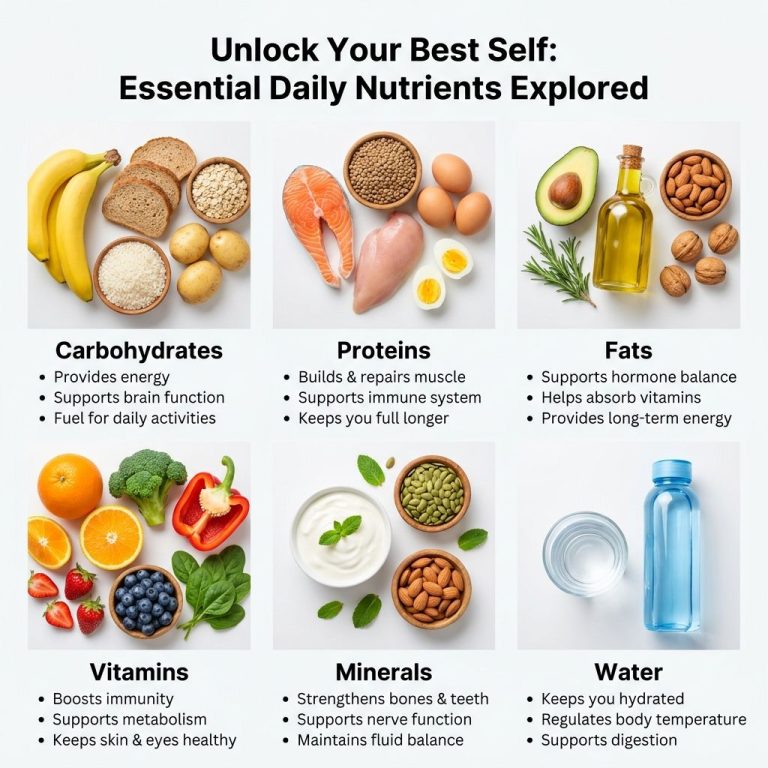
Macronutrients are the nutrients your body needs in larger amounts for energy, growth, and metabolism. They are carbohydrates, proteins, and fats.
Carbohydrates: Your Body’s Primary Fuel Source
Often misunderstood, carbohydrates are your body’s preferred source of energy. They are broken down into glucose, which fuels your cells, tissues, and organs, especially your brain.
- Why they’re important: Provide energy, support brain function, and aid in mood regulation.
- Where to find them: Whole grains (oats, brown rice, quinoa), fruits, vegetables, legumes.
Proteins: The Building Blocks of Life
Proteins are essential for building and repairing tissues, making enzymes and hormones, and supporting immune function. They are complex molecules made up of amino acids.
- Why they’re important: Muscle growth and repair, immune support, hormone production, and satiety.
- Where to find them: Lean meats, fish, eggs, dairy, beans, lentils, tofu, nuts, seeds.
Fats: Essential for Absorption and Protection
Dietary fats are crucial for absorbing fat-soluble vitamins (A, D, E, K), providing energy, protecting organs, and maintaining cell membranes. Not all fats are created equal, so focus on healthy fats.
- Why they’re important: Energy storage, hormone production, nutrient absorption, and brain health.
- Where to find them: Avocados, nuts, seeds, olive oil, fatty fish (salmon), flaxseed.
The Tiny Titans: Micronutrients
Micronutrients are vitamins and minerals that your body needs in smaller quantities, but they are absolutely critical for countless bodily functions and overall health.
Vitamins: Catalysts for Health
Vitamins are organic compounds that your body needs to grow and function properly. They play a role in everything from energy production to immune defense.
- Fat-soluble Vitamins (A, D, E, K): Stored in the body’s fatty tissue. Important for vision, bone health, immune function, and antioxidant protection. Found in leafy greens, dairy, fatty fish, nuts, and seeds.
- Water-soluble Vitamins (B-complex, C): Not stored in the body and need regular replenishment. Vital for energy metabolism, immune system, skin health, and nerve function. Abundant in fruits, vegetables, whole grains, and lean proteins.
Minerals: Regulators and Builders
Minerals are inorganic elements that come from soil and water and are absorbed by plants or eaten by animals. They are essential for bone health, fluid balance, nerve function, and much more.
- Major Minerals (Calcium, Magnesium, Potassium, Sodium): Needed in larger amounts. Support bone strength, muscle contraction, blood pressure, and hydration. Found in dairy, leafy greens, nuts, fruits, and vegetables.
- Trace Minerals (Iron, Zinc, Selenium, Iodine): Needed in smaller amounts. Crucial for oxygen transport, immune function, thyroid health, and antioxidant defense. Available in meats, seafood, whole grains, and legumes.
The Elixir of Life: Water
Often overlooked, water is perhaps the most vital nutrient of all. It makes up about 60% of your body weight and is involved in every bodily function, from regulating body temperature to transporting nutrients and flushing out waste products.
- Why it’s important: Hydration, nutrient transport, temperature regulation, joint lubrication, and organ function.
- Where to find it: Water, fruits, vegetables, herbal teas.
Putting It All Together: Building a Nutrient-Rich Plate
Understanding these nutrients is the first step; the next is incorporating them into your daily diet. Focus on a balanced approach:
- Variety is Key: Eat a wide range of fruits, vegetables, whole grains, lean proteins, and healthy fats.
- Whole Foods First: Prioritize unprocessed, natural foods over highly processed alternatives.
- Listen to Your Body: Pay attention to hunger and fullness cues, and how different foods make you feel.
- Plan Ahead: Meal prepping and planning can help ensure you consistently get the nutrients you need.
By making conscious choices about the nutrients you consume, you empower your body to perform at its best, leading to improved energy, mood, and overall vitality. Which nutrient are you focusing on today to unlock your best self? Start your wellness journey by nourishing your body from the inside out!