Many people hear ‘1500 calories’ and immediately think of hunger, deprivation, and strict dieting. The truth is, how you build those 1500 calories makes all the difference. Ditching restrictive mindsets and focusing on nutrient-dense, whole foods can transform your experience.
Instead of feeling constantly hungry, imagine a day of eating that leaves you genuinely satisfied, energetic, and nourished. This isn’t about cutting calories alone; it’s about smart meal structure, quality ingredients, and choosing foods that work with your body, not against it.
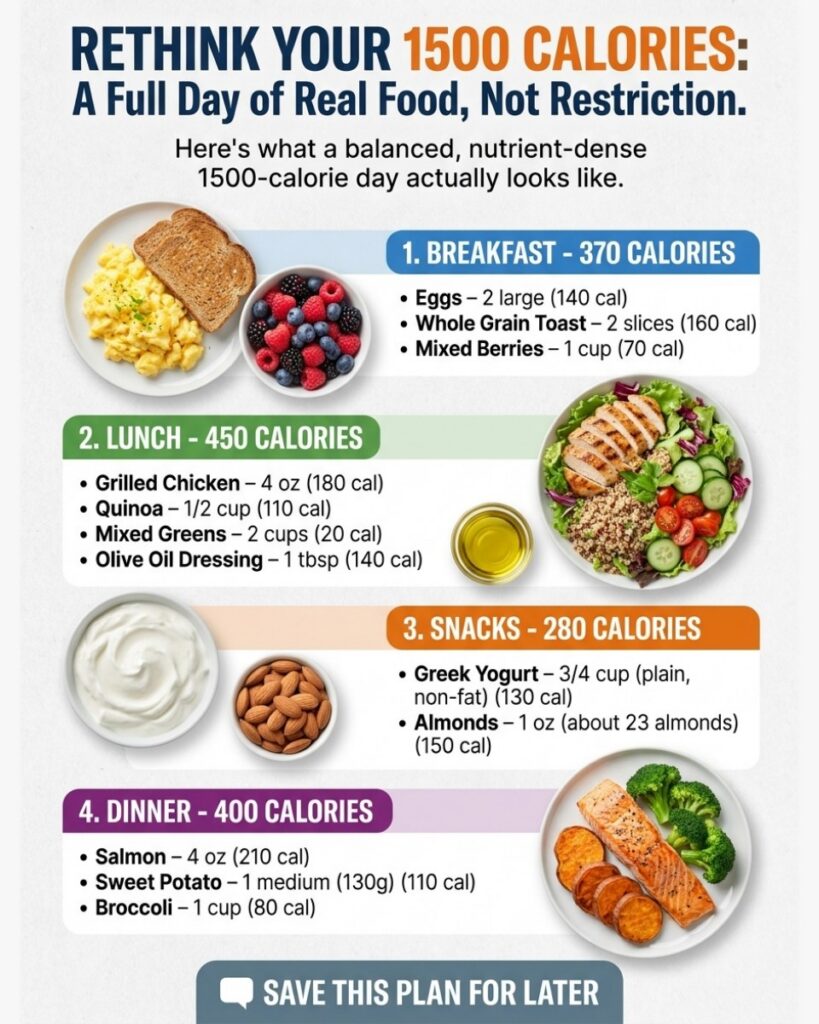 Rethink your 1500 calories with a full day of real food.
Rethinking 1500 Calories: Beyond Just Numbers
The common misconception is that fewer calories automatically mean less food and more hunger. However, when those calories come from protein, fiber, and healthy fats found in whole foods, your body responds differently. These components are critical for satiety and sustained energy.
It’s not just about the number on the label; it’s about the nutritional impact of each bite. A well-planned 1500 calorie meal plan can offer substantial portions and diverse flavors, proving that you don’t have to sacrifice satisfaction for your health goals.
Your Satisfying 1500-Calorie Day: A Real Food Breakdown
Let’s look at how a full day of eating can be structured to provide lasting fullness and essential nutrients within a 1500-calorie framework, using everyday real foods.
Breakfast: Fueling Your Morning Right (approx. 350 calories)
Starting your day with a balanced meal sets the tone for sustained energy and helps prevent mid-morning crashes.
- 2 hard-boiled eggs (160 calories)
- 1 slice whole-grain toast (90 calories)
- 1 cup mixed berries (100 calories)
This combination provides protein from eggs, complex carbohydrates from toast, and fiber and antioxidants from berries. It’s a simple yet powerful start to your day.
Lunch: Sustaining Energy Through Your Day (approx. 450 calories)
A hearty lunch is essential to keep you focused and energized through the afternoon, avoiding the temptation for less healthy snacks.
- 4 oz grilled chicken breast (190 calories)
- 1/2 cup cooked quinoa (110 calories)
- 2 cups mixed greens (20 calories)
- 1 tbsp olive oil vinaigrette (130 calories)
Lean protein, fiber-rich grains, and healthy fats make this lunch a winner for fullness. Consider preparing chicken and quinoa ahead of time in meal prep containers for convenience.
Snack: Smart Choices to Bridge the Gap (approx. 200 calories)
A well-chosen snack can prevent overeating at your next meal and keep your energy stable. The key is to pick options that offer both protein and fiber.
- 1 cup plain Greek yogurt (100 calories)
- 1/4 cup almonds (100 calories)
Greek yogurt provides a significant protein boost, while almonds offer healthy fats and fiber. This pairing is excellent for curbing hunger and providing essential nutrients.
Dinner: A Fulfilling End to Your Day (approx. 500 calories)
End your day with a satisfying dinner that contributes to your overall well-being and aids in recovery. Focus on lean protein and plenty of vegetables.
- 4 oz baked salmon (250 calories)
- 1 medium sweet potato (160 calories)
- 1 cup steamed broccoli (30 calories)
- 1 tbsp olive oil (120 calories)
Salmon delivers omega-3 fatty acids and protein, sweet potatoes offer complex carbs and fiber, and broccoli is packed with vitamins. A drizzle of olive oil adds flavor and healthy fats.
Why This 1500-Calorie Plan Works for Satiety
This approach to a 1500 calorie meal plan focuses on a few key principles that contribute to feeling full and satisfied:
- High Protein: Protein is crucial for satiety, helping to reduce hunger and cravings. Meals consistently include good protein sources like eggs, chicken, Greek yogurt, and salmon.
- Fiber-Rich Foods: Foods high in fiber, such as berries, whole-grain toast, quinoa, and vegetables, add volume to your meals, slow digestion, and keep you feeling fuller for longer.
- Healthy Fats: Olive oil, almonds, and the fats in salmon contribute to satiety and provide essential nutrients without feeling heavy.
- Meal Volume: By prioritizing non-starchy vegetables and fruits, you can enjoy larger, more satisfying portions without excessive calories.
Sustainable Swaps and Smart Strategies
Making this eating style sustainable is key. Here are some tips to integrate these principles into your daily life:
- Batch Cooking: Prepare larger quantities of chicken, quinoa, or roasted vegetables on a Sunday to simplify weekday meals.
- Smart Snacking: Keep pre-portioned almonds or single-serving Greek yogurts on hand to avoid less nutritious choices when hunger strikes.
- Vary Your Proteins: Feel free to swap chicken for turkey, salmon for cod, or eggs for cottage cheese to keep meals interesting.
- Listen to Your Body: While this plan provides a framework, pay attention to your hunger cues and adjust portion sizes slightly if needed, always prioritizing whole, unprocessed foods.
Optimizing Your Health Journey: Beyond the Plate
For those looking to deepen their understanding of how food impacts their body, integrating objective data and professional guidance can be invaluable. Tools like continuous glucose monitoring (CGM) sensors can offer insights into how different foods affect your blood sugar levels, complementing what you learn about mindful eating.
Regular lab markers, such as HbA1c or fasting glucose blood tests, provide a snapshot of your metabolic health over time. If you’re considering significant dietary changes or managing specific health conditions, a dietitian consultation or medical nutrition therapy might be a beneficial next step. Many find that understanding their options for public versus private coverage or checking their employer health plans for such services can make these resources more accessible.
Learning how to structure your meals for lasting fullness can transform your relationship with food. This 1500 calorie meal plan demonstrates that healthy eating doesn’t have to mean restriction. Focus on real, whole foods, and enjoy the journey to feeling your best.
This is general information, not medical advice.
[Read next: High Protein Breakfast Ideas]
[Source: Mayo Clinic]