Are you dreaming of a bountiful potato harvest but feel limited by space? Or perhaps you’re tired of digging through your garden beds to unearth those earthy treasures? What if we told you there’s a revolutionary way to grow potatoes that saves space, reduces effort, and maximizes your yield? Enter the potato tower – a fantastic vertical gardening technique that’s changing the game for home gardeners everywhere!
At Garden – L. Quyên, we’re always looking for innovative and easy-to-understand methods to help you achieve your gardening dreams. Growing potatoes vertically in towers is not only efficient but also incredibly rewarding. Imagine fresh, homegrown potatoes with less fuss and more convenience!
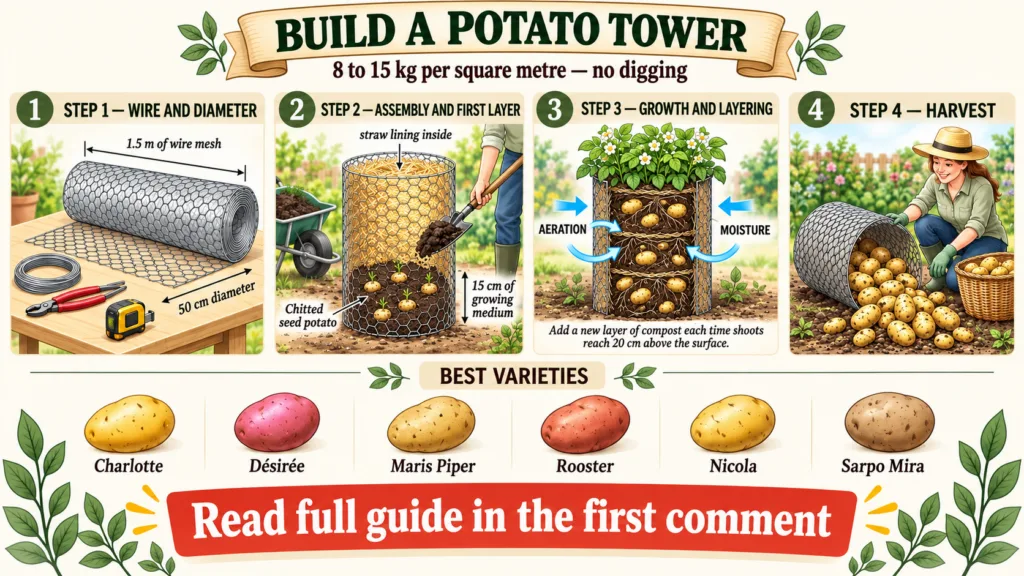
Why Go Vertical with Your Potatoes?
Traditional potato growing requires a significant amount of ground space and often involves a fair bit of digging when it’s time to harvest. Vertical gardening with potato towers offers several compelling advantages:
- Space-Saving: Perfect for small gardens, patios, balconies, or even urban settings. You can grow a surprising amount of potatoes in a compact footprint.
- Easier Harvest: No more back-breaking digging! With a tower, you can simply open the bottom or dismantle the structure to access your potatoes.
- Reduced Pest & Disease Issues: Elevating plants can help deter some ground-dwelling pests and improve air circulation, reducing the risk of certain diseases.
- Better Drainage: Vertical structures often provide superior drainage, which is crucial for healthy potato growth and preventing rot.
- Educational & Fun: It’s a unique and engaging project, great for gardeners of all ages to learn about plant growth.
What Exactly is a Potato Tower?
A potato tower is essentially a vertical container or structure, often made from wire mesh, wood, or repurposed barrels, that allows you to layer soil and seed potatoes as the plant grows upwards. Instead of spreading horizontally, the potato plant produces tubers at different levels within the tower, maximizing yield per square foot.
Your Simple Guide to Building and Planting a Potato Tower
Ready to get started? Here’s a step-by-step guide to creating your own potato tower for an abundant harvest!
Materials You’ll Need:
- Wire Mesh: Galvanized hardware cloth with a small grid (like 1/2-inch or 1-inch) is ideal. Aim for a piece that’s about 4-6 feet long and 2-3 feet tall.
- Zip Ties or Wire: To secure your mesh into a cylinder.
- Seed Potatoes: Choose certified disease-free seed potatoes from a reputable supplier. Look for varieties suitable for your climate.
- Potting Mix/Compost: A rich, well-draining soil mix is key.
- Straw or Shredded Leaves: For layering and moisture retention.
- Shovel or Trowel: For handling soil.
- Watering Can or Hose: For consistent moisture.
Step 1: Choose Your Spot and Prepare Your Structure
Select a location that receives at least 6-8 hours of direct sunlight per day. Potatoes are sun-lovers! Form your wire mesh into a cylinder and secure the ends tightly with zip ties or wire. The diameter can be anywhere from 1.5 to 2 feet. Place it directly on the ground in your chosen sunny spot.
Step 2: Layering for Success – Soil, Straw, and Seed Potatoes
Start by adding about 6-8 inches of good quality potting mix or compost to the bottom of your tower. This provides a strong base. Then, place your seed potatoes directly on top of the soil layer, spacing them about 6 inches apart. You can use 3-5 seed potatoes for a tower of this size. Cover them with a couple of inches of soil, then add a layer of straw or shredded leaves. This helps retain moisture and keeps the soil light.
Step 3: Watering and Care
Water thoroughly after planting. Potatoes need consistent moisture, especially during flowering and tuber formation. Ensure the soil remains moist but not waterlogged. Check the moisture level regularly by sticking your finger a few inches into the soil.
Step 4: The Hilling Process as Plants Grow
As your potato plants grow, reaching about 6-8 inches in height, it’s time to

