As the days grow shorter and a crisp chill fills the air, gardeners everywhere know that the first frost is just around the corner. While it marks the end of one growing season, it’s also a crucial time to protect your beloved plants and prepare your garden for a dormant winter. Don’t let your hard work go to waste! Taking a few essential steps now can make all the difference, ensuring your garden thrives again next spring.
We understand that preparing for winter can feel a bit daunting, especially if you’re not sure where to start. That’s why we’ve put together a simple, comprehensive guide to help you tackle the most important garden chores before that first frost hits. Think of it as giving your garden a cozy blanket for the winter!
6 Essential Garden Chores Before the First Frost
Here are the vital tasks to complete to ensure your garden’s health and longevity through the colder months:
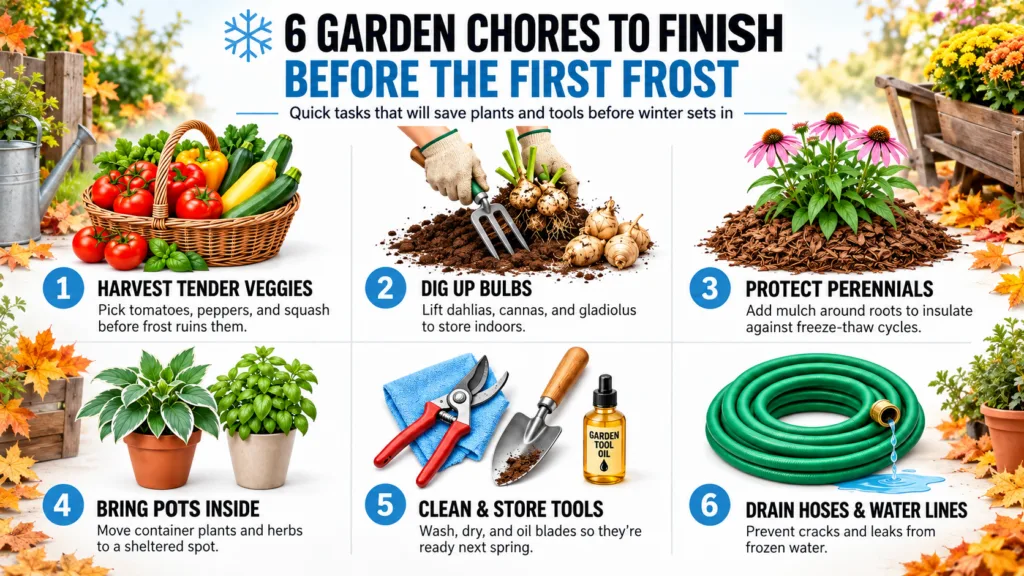
1. Harvest Your Remaining Vegetables and Herbs
Don’t leave your hard-earned bounty to succumb to the cold! Many vegetables and tender herbs won’t survive a hard frost. Now is the time to harvest crops like tomatoes, peppers, squash, beans, basil, and cilantro. Even if tomatoes aren’t fully ripe, you can pick them and let them ripen indoors. Root vegetables like carrots, beets, and potatoes can often tolerate a light frost, but it’s best to dig them up before a deep freeze sets in, or at least heavily mulch them if you plan to leave them in the ground.
2. Dig Up Tender Bulbs
While many spring-flowering bulbs like tulips and daffodils are winter hardy, some of your favorite summer bloomers, such as dahlias, gladioli, cannas, and tuberous begonias, are not. These tender bulbs need to be carefully dug up and stored indoors once their foliage has been touched by the first light frost. Clean off excess soil, allow them to dry for a few days in a cool, dark place, and then store them in peat moss, vermiculite, or sawdust in a cool, dry, and frost-free location for the winter. This ensures they’ll be ready to bring vibrant color back to your garden next year!
3. Mulch Your Perennials and Young Plants
Applying a generous layer of mulch is like giving your garden a warm, protective hug. A 2-4 inch layer of organic mulch (like straw, shredded leaves, or wood chips) around the base of your perennial plants, shrubs, and even young trees can help insulate the soil. This insulation protects roots from extreme temperature fluctuations and prevents frost heave, where freezing and thawing cycles can push plants out of the ground. Wait until after the ground has frozen solid to apply mulch to avoid creating a cozy home for rodents.
4. Bring Potted Plants Indoors
Many of our beautiful container plants, especially tropical varieties, succulents, and annuals, are not built to withstand freezing temperatures. Before the first frost, identify which potted plants need to come inside. Give them a good inspection for pests, gently clean them, and transition them to a suitable indoor spot where they can receive adequate light and warmth. This includes delicate herbs, exotic flowers, and even small citrus trees that have been enjoying the summer sun on your patio.
5. Clean and Store Garden Tools
Just like your plants, your garden tools need some TLC before winter. Cleaning and properly storing your tools prolongs their life and prevents rust and damage. Remove all dirt and debris, sharpen blades (if applicable), and apply a thin layer of oil to metal parts to prevent corrosion. Store them in a dry, protected area, away from the elements. A little maintenance now saves you money and frustration next spring.
6. Drain Hoses and Irrigation Systems
Water expands when it freezes, and trapped water in hoses, sprinklers, and irrigation systems can cause pipes to burst, leading to costly repairs. Before temperatures drop consistently below freezing, ensure all garden hoses are drained, coiled, and stored indoors. For irrigation systems, follow manufacturer instructions to properly winterize them, which usually involves shutting off the water supply and blowing out any remaining water with an air compressor. Don’t forget to drain and shut off any outdoor faucets as well!
Preparing your garden for winter might seem like a lot of work, but it’s an investment in your garden’s future health and beauty. By taking these essential steps, you’re not just protecting your plants; you’re also setting yourself up for an easier, more successful gardening season when spring arrives. Happy gardening, and here’s to a flourishing garden year-round!