Chia seeds have cemented their place in the healthy eating world as tiny powerhouses packed with fiber, omega-3 fatty acids, protein, and various micronutrients. But did you know that the simple choice of liquid you use to soak them can dramatically alter their texture, nutritional profile, and how they benefit your body? Whether you’re aiming for sustained energy, quick hydration, or a satisfying meal, understanding the difference between soaking chia seeds in milk versus water is key to unlocking their full potential.
Let’s dive into the fascinating transformation chia seeds undergo and help you decide which liquid is best for your wellness journey!
The Magic of Chia Seeds: A Quick Recap
Before we compare liquids, let’s briefly celebrate chia seeds themselves. These ancient seeds are renowned for their ability to absorb up to 10-12 times their weight in liquid, forming a gel-like consistency. This unique property contributes to their impressive health benefits, including:
- High Fiber Content: Supports digestive health, helps regulate blood sugar, and promotes a feeling of fullness.
- Omega-3 Fatty Acids (ALA): Essential for brain health, reducing inflammation, and cardiovascular well-being.
- Protein: A good plant-based source of protein, especially for vegetarians and vegans.
- Antioxidants: Protect the body from free radicals.
- Minerals: Rich in calcium, magnesium, and phosphorus, vital for bone health.
Chia Seeds with Water: The Hydrating Powerhouse
When soaked in water, chia seeds create a translucent, jelly-like mixture. This is often the simplest and most common preparation, favored for its light feel and pure hydration benefits.
Texture and Digestion
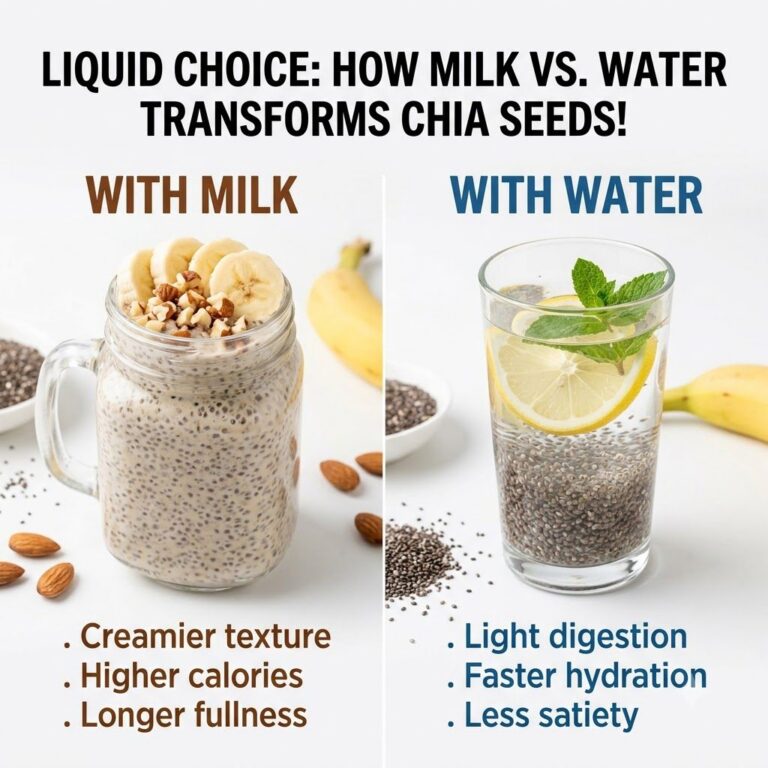
- Lighter Gel: The resulting texture is a light, somewhat slimy gel. It’s less dense than milk-based preparations.
- Easier Digestion: For some, water-soaked chia seeds are easier to digest, as the body doesn’t need to process the added fats or proteins from milk.
Key Benefits
- Optimal Hydration: Excellent for boosting hydration, especially important for active individuals or during warmer weather.
- Lower Calories: As water contains no calories, this is the lowest-calorie way to consume chia seeds, making it ideal for weight management or calorie-controlled diets.
- Faster Absorption: Nutrients from the seeds are readily available for absorption, making it a great option for pre- or post-workout fuel.
- Detox Support: Can contribute to a feeling of cleansing and lightness.
Best for When You Need:
- Quick hydration.
- A light, refreshing snack or breakfast.
- To add fiber and omega-3s without extra calories.
- A base for fruit-infused drinks or smoothies.
Chia Seeds with Milk: The Creamy, Sustaining Fuel
Soaking chia seeds in milk (dairy or plant-based) results in a thicker, creamier, and more pudding-like consistency. This preparation transforms chia seeds into a more substantial and satisfying meal or snack.
Texture and Digestion
- Creamy Pudding: The milk adds richness and body, creating a dessert-like texture that’s often compared to tapioca pudding.
- Slower Digestion: The added fats and proteins from milk can slow down digestion, providing a sustained release of energy.
Key Benefits
- Enhanced Satiety: The combination of fiber from chia seeds and protein/fat from milk keeps you feeling fuller for longer, reducing cravings and overeating.
- Added Nutrients: Milk contributes its own set of nutrients. Dairy milk offers calcium, vitamin D, and protein. Plant-based milks (almond, soy, oat, coconut) also offer various benefits and often come fortified with vitamins and minerals.
- Sustained Energy: Ideal for a breakfast or snack that needs to power you through several hours.
- Meal Replacement Potential: With additional toppings (fruit, nuts, seeds), milk-based chia pudding can serve as a complete and balanced meal.
Best for When You Need:
- A satisfying breakfast or dessert.
- A snack that keeps you full until your next meal.
- To boost your protein or calcium intake.
- A base for a richer, more indulgent treat.
Nutritional Showdown: Milk vs. Water
While the chia seeds themselves remain nutritionally consistent, the liquid dramatically changes the overall nutritional profile of your meal. Here’s a general comparison (values vary greatly depending on milk type and portion size):
Chia Seeds (2 tbsp) + Water (1 cup)
- Calories: Approx. 140-150 kcal (from chia seeds only)
- Protein: Approx. 5g
- Fat: Approx. 9g (mostly healthy omega-3s)
- Carbohydrates: Approx. 12g (mostly fiber)
- Additional Nutrients: Minimal beyond chia seeds.
Chia Seeds (2 tbsp) + Dairy Milk (1 cup, 2%)
- Calories: Approx. 290-300 kcal
- Protein: Approx. 13g
- Fat: Approx. 14g
- Carbohydrates: Approx. 24g
- Additional Nutrients: Significant calcium, Vitamin D, B vitamins.
Chia Seeds (2 tbsp) + Unsweetened Almond Milk (1 cup)
- Calories: Approx. 180-190 kcal
- Protein: Approx. 6g
- Fat: Approx. 11g
- Carbohydrates: Approx. 13g
- Additional Nutrients: Often fortified with Calcium, Vitamin D, Vitamin E.
Note: These are approximate values. Always check the nutrition labels of your specific milk products.
How to Choose Your Perfect Pair
The best liquid for your chia seeds ultimately depends on your individual health goals, dietary needs, and taste preferences. Here are some questions to consider:
- What is your primary goal? Hydration and low calories (water)? Satiety and added nutrients (milk)?
- Are you managing your weight? Water-based is generally lower in calories.
- Do you need sustained energy? Milk-based will likely keep you fuller longer due to protein and fat.
- Are there any dietary restrictions? Lactose intolerance? Vegan diet? Plant-based milks offer excellent alternatives.
- What time of day are you eating it? A light water-based chia drink might be perfect for pre-workout, while a creamy milk-based pudding is ideal for breakfast.
- What flavors are you adding? Water allows the natural flavors of fruit or spices to shine, while milk adds its own creamy backdrop.
Tips for Preparing Perfect Chia Seed Dishes
- Ratio is Key: A good starting point is 1-2 tablespoons of chia seeds per 1 cup of liquid. Adjust for desired thickness.
- Stir Well: Mix thoroughly initially to prevent clumping. Stir again after 5-10 minutes.
- Soak Time: Allow at least 20-30 minutes for the seeds to fully gel. Overnight soaking in the refrigerator is ideal for a creamier texture.
- Flavor It Up: Don’t be afraid to experiment! Add fresh fruit, berries, a drizzle of honey or maple syrup, a dash of cinnamon, vanilla extract, or cocoa powder for a delicious twist.
- Storage: Prepared chia seed puddings can be stored in an airtight container in the refrigerator for 3-5 days.
Conclusion
Whether you opt for the simplicity and hydrating power of water or the creamy richness and sustained energy of milk, chia seeds remain an incredibly versatile and nutritious addition to your diet. Both options offer distinct advantages, allowing you to customize your chia experience to perfectly align with your health and wellness goals. Experiment with both, listen to your body, and discover your favorite way to enjoy these tiny superfoods!
Which option speaks to you today?