When it comes to healthy eating, we often hear that raw is always best. While there’s undeniable merit to consuming fresh, uncooked produce, it’s not the whole story! What if we told you that some of your favorite healthy foods actually become *more* nutritious, and their vital compounds more accessible to your body, once they’ve been cooked? It’s time to rethink how you prep your healthy favorites and unlock their peak nutritional potential.
Understanding the science behind how cooking transforms food can empower you to make more informed choices in the kitchen, ensuring you get the most out of every bite. Let’s dive into the fascinating world where heat enhances health!
The Science Behind Enhanced Nutrition Through Cooking
Why would cooking make some foods healthier? It often comes down to a few key mechanisms:
- Breaking Down Cell Walls: Plant cell walls are tough and fibrous. Heat can break them down, releasing the beneficial nutrients trapped inside, making them easier for your body to absorb during digestion.
- Inactivating Anti-Nutrients: Some raw foods contain compounds known as anti-nutrients (e.g., oxalates, phytates, lectins) that can interfere with nutrient absorption. Cooking can significantly reduce or inactivate these compounds, allowing for better uptake of minerals like iron and calcium.
- Transforming Compounds: Heat can change the chemical structure of certain compounds, converting them into more bioavailable forms or even creating new beneficial compounds.
- Improving Digestibility: Cooked foods are often easier to digest, reducing the energy your body needs for digestion and allowing it to focus on absorbing nutrients.
Key Foods That Shine Brighter When Cooked
Here are some prime examples of healthy foods whose nutritional benefits are amplified by cooking:
1. Tomatoes: Lycopene Powerhouse
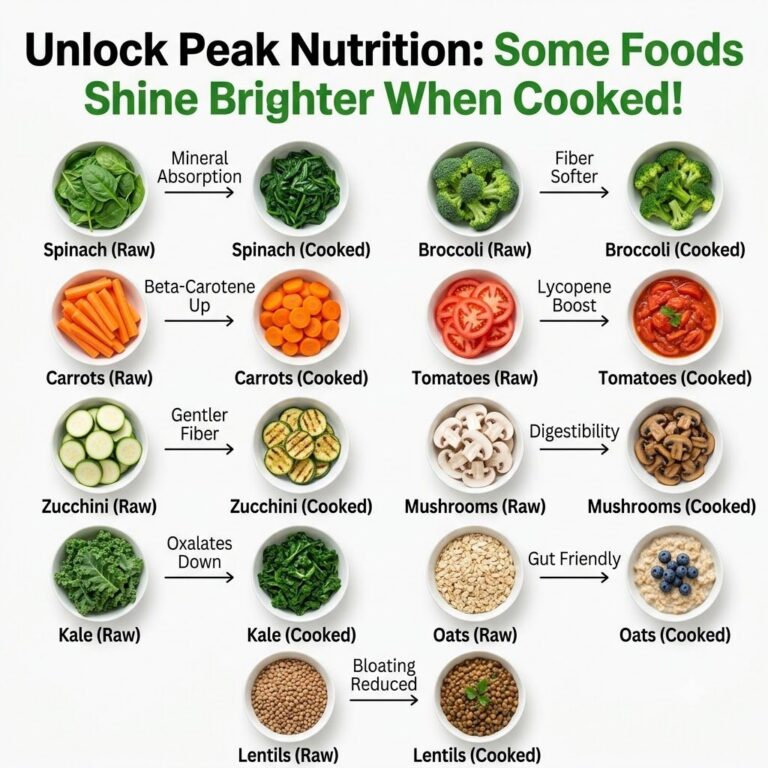
Tomatoes are renowned for their high content of lycopene, a powerful antioxidant linked to reduced risk of heart disease and certain cancers. While raw tomatoes contain lycopene, cooking them (especially with a little healthy fat like olive oil) significantly increases its bioavailability. Heat breaks down the cell walls, making the lycopene more accessible for your body to absorb.
2. Carrots: Beta-Carotene Boost
Known for their vision-supporting properties, carrots are packed with beta-carotene, which your body converts into Vitamin A. Studies show that cooked carrots provide significantly more absorbable beta-carotene than raw ones. Lightly steaming or roasting them helps release this important antioxidant.
3. Spinach and Other Leafy Greens: Mineral Absorption
Spinach, kale, and other dark leafy greens are incredibly nutritious, offering iron, calcium, and magnesium. However, they also contain oxalic acid, an anti-nutrient that can bind to these minerals and inhibit their absorption. Cooking these greens, even briefly, helps to break down the oxalic acid, allowing your body to absorb more of their vital nutrients.
4. Asparagus: More Antioxidants
Asparagus contains a variety of antioxidants, including ferulic acid. Research indicates that cooking asparagus can increase the antioxidant activity of ferulic acid, making it more potent in fighting free radicals in the body.
5. Legumes and Grains: Enhanced Digestibility and Nutrient Release
Beans, lentils, and grains are staples in many healthy diets. Cooking them is not just about making them palatable; it’s essential for safety and nutrient absorption. Raw legumes and some grains contain lectins and phytates that can interfere with digestion and nutrient uptake. Proper cooking inactivates these compounds, making the foods digestible and their protein, fiber, and mineral content fully available.
Finding the Right Balance: Cooked vs. Raw
While cooking enhances specific nutrients in certain foods, it’s also important to remember that some nutrients, like Vitamin C and certain B vitamins, are heat-sensitive and can be diminished by cooking. This is why a balanced diet that includes a variety of both raw and cooked fruits and vegetables is crucial for optimal health.
Experiment with different cooking methods – steaming, roasting, light sautéing – to retain the most nutrients while enhancing others. The goal isn’t to choose one over the other, but to understand how to best prepare each food to maximize its health benefits.
Empowering Your Culinary Journey
Embracing the knowledge that cooking can unlock peak nutrition in some foods adds another layer to your healthy eating strategy. By thoughtfully preparing your meals, you’re not just creating delicious dishes; you’re optimizing their nutritional impact on your body and well-being.
Which of these cooking insights surprised you the most? Share your thoughts below – we’d love to hear how you plan to put this knowledge into practice in your kitchen!