Finding unwanted guests like cockroaches scurrying around your home can be incredibly unsettling. If you’re looking for a more natural approach to deter these pests without resorting to harsh chemical sprays, you might be surprised to find effective solutions right in your pantry. This DIY method uses common household ingredients to create a multi-pronged defense that aims to make your home less appealing to cockroaches, giving you peace of mind and a cleaner feeling space.
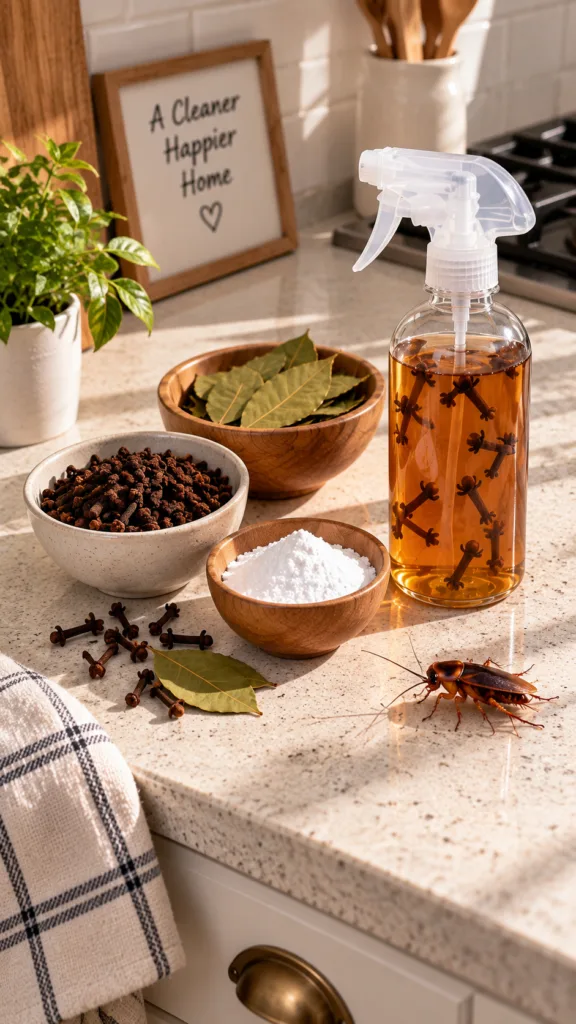 Tackle unwanted house guests with natural ingredients.
What You’ll Need
Ingredients & Materials:
- Dried Bay Leaves: 10-15 whole leaves
- Whole Cloves: 4 tablespoons (about 2 tablespoons for spray, 2 tablespoons for scattering)
- Baking Soda: 1/4 cup
- Granulated Sugar: 1/4 cup (for bait)
- Water: 2 cups (for spray)
Tools:
- Spray Bottle: One clean, empty bottle (about 16 oz or 2 cups capacity)
- Small Saucepan
- Strainer or Fine-Mesh Sieve
- Small Shallow Dishes or Bottle Caps: A few for placing bait
- Optional: Mortar and pestle or a sturdy bag and rolling pin (for crushing bay leaves)
Why This DIY Can Be Useful
This natural approach leverages the properties of common ingredients:
- Bay Leaves: These fragrant leaves contain compounds that many insects, including cockroaches, find repulsive. Placing them in key areas can act as a natural deterrent.
- Cloves: The strong, aromatic scent of cloves is also a powerful natural insect repellent. When brewed into a spray, it creates an environmental barrier that pests tend to avoid.
- Baking Soda and Sugar: This combination acts as a bait. Cockroaches are attracted to the sugar, but once they ingest the baking soda, it reacts with their stomach acids, producing gas that they cannot release, ultimately leading to their demise.
How to Make It
1. Prepare the Clove Repellent Spray
- Pour 2 cups of water into your small saucepan.
- Add 2 tablespoons of whole cloves to the water.
- Bring the water to a boil, then reduce heat and simmer for about 5-10 minutes. This allows the cloves to release their aromatic oils.
- Remove from heat and let the mixture cool completely. The longer it steeps as it cools, the stronger the solution will be.
- Once cool, strain the liquid through a fine-mesh sieve into your clean spray bottle, discarding the used cloves.
2. Mix the Baking Soda Bait
- In a small bowl, combine 1/4 cup of baking soda with 1/4 cup of granulated sugar.
- Mix thoroughly until the powder is evenly distributed.
3. Prepare the Bay Leaves
- You can use the bay leaves whole, or for a stronger scent, gently crush about half of them using a mortar and pestle or by placing them in a sturdy bag and lightly tapping with a rolling pin.
- Keep the remaining 2 tablespoons of whole cloves separate for direct placement.
How to Use It
1. Apply the Clove Repellent Spray
- Where to Use: Spray along baseboards, under sinks, inside cabinets (after removing items), around cracks and crevices, behind appliances, and near entry points like windows and doors.
- How to Apply: Ensure a light, even mist. Do not saturate surfaces.
- Frequency: Reapply every few days or weekly, especially in high-traffic areas, to maintain the deterrent effect.
2. Place Bay Leaves and Whole Cloves
- Where to Use: Distribute whole or crushed bay leaves and whole cloves in drawers, pantries, food storage areas, under the refrigerator, behind the stove, and in any dark, undisturbed spots where you’ve seen cockroach activity.
- How to Apply: Place small piles or individual leaves/cloves directly on surfaces.
- Frequency: Replace them every few weeks, or when their scent diminishes, to ensure continued effectiveness.
3. Set Out the Baking Soda Bait
- Where to Use: Place small amounts of the baking soda and sugar mixture in shallow dishes or bottle caps. Position these baits in areas where you’ve seen cockroaches, such as under sinks, in cabinets, behind toilets, or along baseboards.
- Important: Place these in spots inaccessible to children and pets.
- Frequency: Refresh the bait every few days or weekly, especially if you notice it’s been consumed.
What to Expect
These natural solutions are primarily deterrents and can help manage a mild cockroach problem or prevent one from developing. You should expect to see a reduction in cockroach activity over time, rather than an instant eradication. Consistency in application and placement is key to their effectiveness. For severe infestations, these methods may not be sufficient, and professional pest control might be necessary.
Helpful Tips
- Cleanliness is Key: No DIY solution can fully work in a cluttered or dirty environment. Keep your kitchen and home clean, wipe up spills immediately, and store food in airtight containers to reduce attractants for pests.
- Seal Entry Points: Complement your natural repellents by sealing cracks in walls, gaps around pipes, and other potential entry points for cockroaches.
- Regular Rotation: Occasionally rotate the placement of your bay leaves and cloves to keep the pests guessing and prevent them from becoming accustomed to the scent.
- Evening Application: Cockroaches are primarily nocturnal. Applying sprays and baits in the evening can be more effective as they become active.
Important Notes / Safety
- Patch Test Surfaces: Before widespread spraying, test the clove solution on a small, inconspicuous area of your surfaces (especially wood or painted areas) to ensure it doesn’t cause staining or discoloration.
- Keep Bait Away from Children and Pets: While baking soda is generally considered safe for humans in small amounts, large ingestion by pets can cause issues. Always place the bait in areas completely inaccessible to curious hands and paws.
- Ventilation: While natural, the clove spray can be potent. Ensure good ventilation when spraying indoors.
- Not a Substitute for Professional Extermination: For heavy infestations, these natural methods should be considered a supplementary measure. Professional pest control services are often required for complete eradication.
- Storage: Store the leftover clove spray in the refrigerator for up to two weeks. Discard if it develops an off-smell or becomes cloudy. Unused bay leaves, cloves, and baking soda should be stored in airtight containers in a cool, dry place.